
Quick summary
#Submit it with your main application.
When the official instructions indicate this form is required
Include it with your application package and follow official instructions for submission.
Names, dates of birth, and passport details on other forms Program checklist requirements Supporting documents and translations
Overview (What is Form IMM 1017?)
#By accurately completing this form and providing the necessary supporting documentation, applicants can effectively communicate their eligibility to IRCC and take a significant step towards securing their future in Canada as permanent residents, as described in the Generic Application Form for Canada guide.
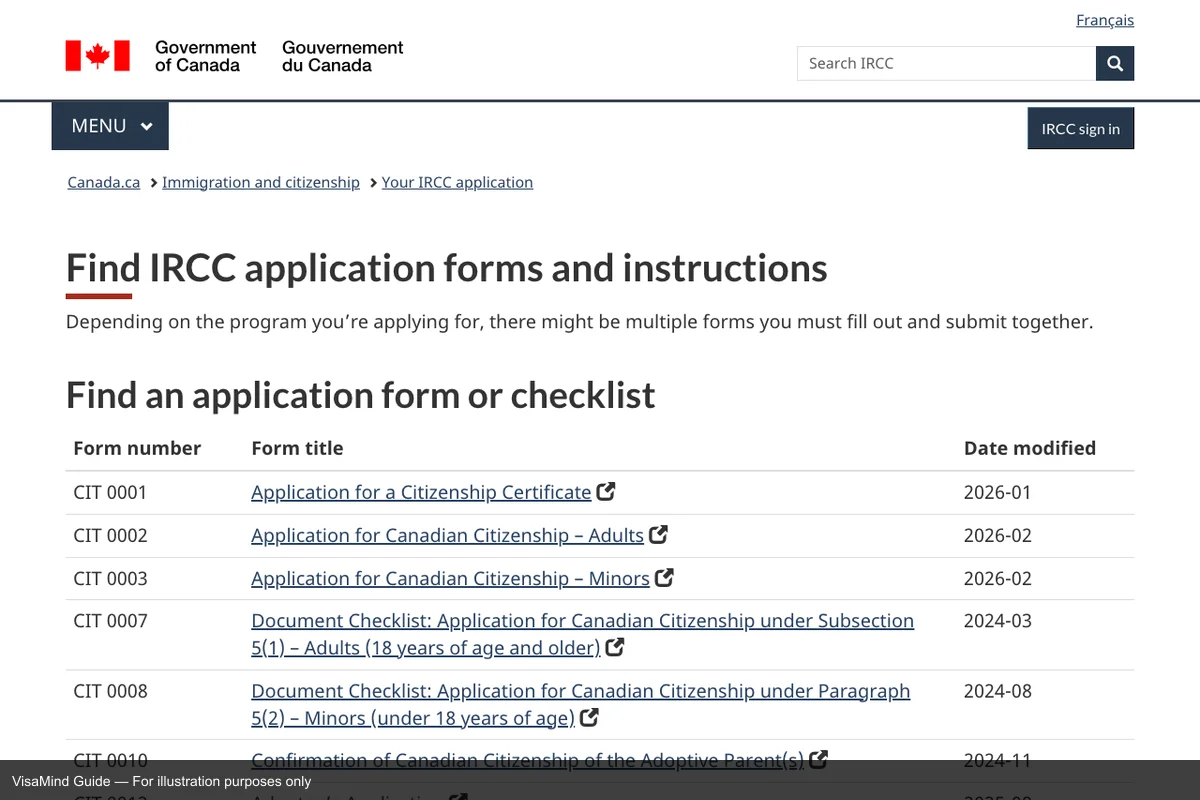
First page of IMM 1017 form
Source: IMM 1017 online portal
Context and workflow
#Processing time for IMM 1017 varies by case type and current workload — always check the official IRCC processing time tool.
Why this matters
- Small mismatches inside IMM 1017 (or between IMM 1017 and supporting evidence) can force rework later in processing.
- This form helps confirm that the application matches the program’s requirements and checklist.
Where it fits in the workflow
- Initiating step in the permanent residence application process for caregivers.
- May lead to Acknowledgement of Receipt (AOR) once submitted.
- IMM 1017 is commonly filed alongside Form IMM-0008.
Who uses it
Submit it with your main application.
When it is used
- When the official instructions indicate this form is required
- As part of a complete application package with supporting documents
- Caregiver — Caregiver immigration program
- When filing IMM 1017 alongside IMM-0008 (Schedule for caregiver PR application)
- When supplementing IMM-5548 — IMM 1017 provides additional required information
Failure prevention (What causes Form IMM 1017 rejections?)
#Technical rejections
- Submitting applications for closed caregiver programs.
- Ensure form edition is current
Substantive weaknesses
- Insufficient evidence of caregiver work experience.
- Misunderstanding eligibility criteria for closed programs.
What it asks for (What does Form IMM 1017 ask for?)
#- Details about your work experience as a caregiver.
- Home care workers
- Your current immigration status and history
- Applicant identification information
- Supporting documentation inventory
- Eligibility or purpose details
- Declarations and signatures
- Documentation related to: Complete all required sections, sign, and submit with required evidence
Sources for this section
What you need (What do you need for Form IMM 1017?)
#- The current edition of IMM 1017
- Details matching the main application
- Supporting documents as listed in the checklist
- Required signatures
- Complete all required sections, sign, and submit with required evidence.
- Copy of your filed or approved IMM-0008 (Schedule for caregiver PR application)
Checklist (What is the Form IMM 1017 checklist?)
#- Visit the official IRCC website to download the latest IMM 1017 form and accompanying instructions.
- Review the official IMM 1017 instructions before filing
- Gather required supporting documents per the instructions
- Complete all required sections of IMM 1017
- Sign, date, and submit IMM 1017 with all required supporting evidence
Sources for this section
Fees
#There is no IRCC filing fee for Form IMM 1017.
Where to file
#Submit your application at the designated IRCC office, embassy, or consulate. Check the official website for the location with jurisdiction over your place of residence.
Submit application
Submit your application at the IRCC office or designated embassy/consulate in your country of residence. Check the official instructions for the correct location.
Filing locations and procedures may change. Always verify on the official IRCC website before submitting. For related guidance, see Caregiver Immigration Programs.
Strategy tips
#Common mistakes (What mistakes are common with Form IMM 1017?)
#- Submitting applications for caregiver programs that are no longer accepting new applicants.
- Incomplete or incorrectly filled forms.
Sources for this section
Examples (What are examples for Form IMM 1017?)
#- Strong application: An applicant submits the form with all required documents and receives a timely decision.
- Common weakness: An applicant submits the form for a closed program, resulting in a rejection.
- Scenario: A caregiver who worked under a valid work permit before December 2014 applies with complete documentation. The application is processed without delays, and the applicant receives permanent residence. Ensure eligibility by verifying past work permits and providing complete documentation.
- An applicant in the Caregiver category files IMM 1017 as part of their immigration process
Common misconceptions (What misconceptions surround Form IMM 1017?)
#- These forms do not stand alone—they must be filed with the principal application
- Inconsistencies with the main application can result in delays or refusal
- IMM 1017 has no separate filing fee, but it is not optional paperwork — failing to include it when required can delay or jeopardize the underlying case.
- IMM 1017 can be rejected before substantive review for technical errors such as “Submitting applications for closed caregiver programs.”
- A complete IMM 1017 can still be denied on the merits — issues like “Insufficient evidence of caregiver work experience” are evaluated by the reviewer even when paperwork is clean.
- Submitting IMM 1017 is the start of the process — applicants should expect follow-up steps such as “Receive Acknowledgement of Receipt (AOR) from IRCC.”
Edge cases and variations
#- If you are asked to submit or update IMM 1017, treat it as a package update: check every place the same details appear and keep them consistent.
In-depth guidance
#How to complete this form reliably
Treat IMM 1017 as part of a system, not a standalone document. Most delays happen when details conflict across the form, supporting documents, and other parts of the application package. Before you start, gather the documents you will reference and decide which one is the source of truth for each field.
Fill the form in one sitting if possible. Partially-completed forms are where inconsistent edits creep in. When you finish, review each section and ask "what evidence in my package proves this statement?"
Background and timeline sections
Schedule/background forms are used to capture histories that must be gap-free. Build a master timeline first, then copy it into the form. If you had periods of unemployment, travel, or caregiving, include them as explicit entries rather than leaving blanks.
Scenarios
#A caregiver who worked under a valid work permit before December 2014 applies with complete documentation.
The application is processed without delays, and the applicant receives permanent residence.
Ensure eligibility by verifying past work permits and providing complete documentation.
Key differentiators
#- Unlike General work permit applications: Specifically targets caregivers seeking permanent residence.
- Unlike Form IMM 0008: Generic Application Form for Canada: Filed together: Schedule for caregiver PR application
- Unlike Form IMM 5548: Document Checklist: Caregivers: Supporting form: Caregiver document checklist
Why it matters
#What happens after you submit
#- Receive Acknowledgement of Receipt (AOR) from IRCC.
- Attend biometrics collection appointment if required.
- Await decision on the application.
- If approved, proceed to PR Card issuance and delivery.
Verification
#This guide is based on official IRCC instructions for IMM 1017 and is updated with changes in form editions or filing rules. Always confirm current requirements on the official IRCC website.
Resources
#Free Canada planning tools
#Itemize the government fees that go alongside Form IMM 1017.
See which Canada visas your profile fits before you finalize Form IMM 1017.
Get the typical wait time for the visa associated with Form IMM 1017.
Practice Canada interview questions if your filing route includes one.