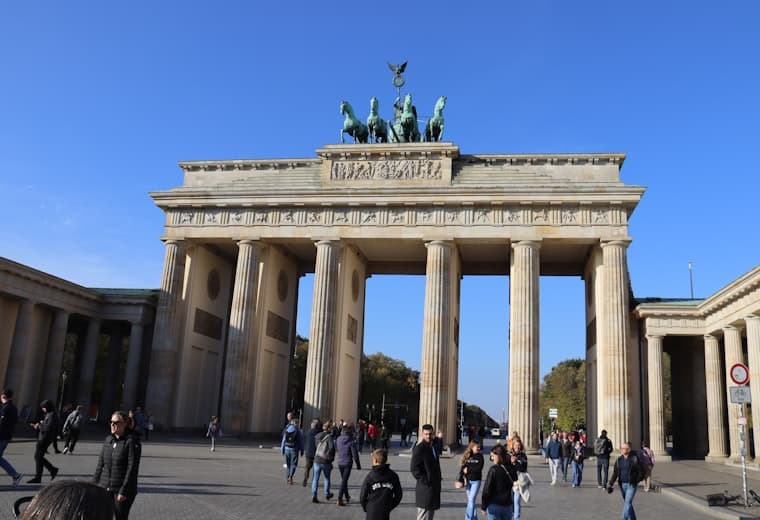
Work Visa Types at a Glance
#The table below summarizes the main visa options for this goal, including who qualifies, the key filing requirement, and reported processing times.
| Visa Option | Who It’s For | Key Filing | Processing Time |
|---|---|---|---|
| Freelance Visa | The Freelance Visa allows individuals to work independently in Germany, catering to freelancers and self-employed professionals in various fields. | Form VIDEX-NATIONAL | 2-4 months |
| Self-Employment Visa | The Self-Employment Visa allows individuals to establish and operate their own business in Germany. It is designed for entrepreneurs and self-employed professionals who can contribute to the German economy. | Form VIDEX-NATIONAL | 2-4 months |
Use the linked visa pages for full eligibility details, required documents, and step-by-step instructions.
Do You Qualify?
#Before applying, confirm that your activity fits Germany’s rules for self-employment.
Freelancers in liberal professions apply for a residence permit for self-employment under Section 21 (5) of the Residence Act (AufenthG).
You must meet the legal requirements, but approval isn’t guaranteed.
Authorities review each case individually.
Residence Status and Application Authority
If you apply from abroad, submit your visa application through the Federal Foreign Office at the German mission in your country.
If you’re already in Germany, your local Ausländerbehörde (foreigners authority) handles your residence permit.
The Federal Office for Migration and Refugees (BAMF) is responsible for asylum matters, not freelance residence permits.
Document requirements can vary by location.
Age Requirement: Over 45
If you’re over 45, you must prove adequate old-age pension provision.
Failure to provide this proof can lead to refusal.
Prepare clear documentation showing you have sufficient retirement arrangements.
If you’re unsure what qualifies, contact the German mission abroad or your local Ausländerbehörde before applying.
Tax Liability in Germany
If you have a residence in Germany, or stay in Germany for more than 183 days in a calendar year, you’re generally subject to German income tax.
Your tax obligation applies to your total income, including both German and foreign income.
The amount of income tax depends on your annual income level.
If you also receive wages as an employee, those wages are part of your taxable income.
Key Qualification Checklist
You should confirm that you:
- Qualify as a freelancer under Section 21 (5) AufenthG
- Meet any pension provision requirement if over 45
- Understand your German tax liability
- Can provide all documents requested by the competent authority
Meeting these conditions lets you apply for a Freelance Visa or Self-Employment Visa, depending on your situation.
It doesn’t guarantee approval, but it ensures your application meets the legal baseline for review.
Costs and Fees
#Official government fees for the main visa options associated with this goal are listed below. Fees may change — verify the current schedule through the linked visa pages.
| Visa / Route | Fee | Amount |
|---|---|---|
| Freelance Visa | Application fee | €75 |
| Freelance Visa | Residence permit fee | €100 |
| Self-Employment Visa | Application fee | €75 |
The Application Process
#You apply for a residence permit that allows freelance employment under Germany’s immigration rules.
The exact authority depends on where you submit your application.
If you apply from abroad, the Federal Foreign Office processes national visa applications through German consulates.
If you’re already in Germany, your local Ausländerbehörde handles the residence permit.
The Federal Office for Migration and Refugees (BAMF) oversees migration matters at the federal level.
Before You Apply
Prepare your documents before you start.
Incomplete files delay decisions.
At minimum, you need:
- A completed application form for a residence permit
- All required supporting documents for freelance activity
- A clear plan showing that you intend to work independently
If you enter Germany without a national visa, you may stay in the Schengen area for up to 180 days within a defined period.
This does not replace the need for the proper residence authorization for long-term freelance work.
Step-by-Step Procedure
Follow this sequence:
1. Gather Your Documents
Collect all required paperwork before submitting anything. Check guidance from the responsible authority to confirm document requirements.
2. Complete the Application Form
Fill out the residence permit application form accurately. Errors or missing information can slow processing.
3. Submit Your Application to the Correct Authority
Apply through the German consulate abroad if required, or submit your residence permit request to the local Ausländerbehörde if you are already in Germany.
4. Wait for Processing
Standard visa processing can take approximately 15 days. Residence permit timelines may vary depending on the local office’s workload.
Freelance Visa vs. Self-Employment Visa
Germany distinguishes between different forms of independent work.
You may see references to a Freelance Visa or a Self-Employment Visa.
Both fall under residence permits for independent professional activity.
The procedure follows the same basic approach: document preparation, formal application, and review by the competent authority.
Your application should clearly state the type of activity you intend to carry out.
The decision depends on how your work fits within Germany’s immigration framework for independent professionals.
Documents and Evidence
#You must prepare a clear and complete file before you apply for a Freelance Visa or Self-Employment Visa.
German authorities expect organized, verifiable documents.
Incomplete submissions delay processing.
Core Application Documents
Submit your application form and all supporting documents to the competent authority.
If you apply from abroad, the Federal Foreign Office handles consular visa applications.
If you apply inside Germany, your local Ausländerbehörde issues the residence permit.
The Federal Office for Migration and Refugees (BAMF) is the federal migration authority.
Prepare the following:
- Completed application form
- Proof of required professional licenses, if your activity requires authorization
- Proof of health insurance
- Proof of adequate pension provision (required if you are over 45)
Licensing requirements depend on your profession.
You must obtain any required authorization before you start working.
Health Insurance and Pension Proof
You must show valid health insurance coverage.
This applies to all applicants.
If you’re older than 45, you must also prove that you have adequate pension provision.
The authority will review this as part of your residence application.
Keep documentation clear and current.
Provide official confirmations rather than informal statements.
Tax Registration and Ongoing Evidence
Once you live and work in Germany, you become subject to German income tax.
This applies to anyone residing and working in the country.
In addition to income tax, authorities may deduct:
- Solidarity surcharge
- Church tax, if you belong to a religious community that collects it
You must submit your annual tax return by 31 July of the following calendar year.
Maintain organized financial records.
You may need to present tax assessments or filings when extending your residence permit.
| Obligation | What You Must Provide | When |
|---|---|---|
| Health insurance | Valid coverage confirmation | With application |
| Pension (45+) | Proof of adequate provision | With application |
| Tax return | Filed income tax return | By 31 July (following year) |
Workplace Compliance
If you employ staff, you must follow occupational safety and health rules.
Employees are entitled to safe working conditions.
Keep written policies and safety documentation if you hire personnel.
Authorities may request evidence of compliance during inspections or permit reviews.
Common Mistakes
#Many first-time applicants rely on outdated information.
You must check the Federal Office for Migration and Refugees (Bundesamt für Migration und Flüchtlinge) (BAMF) for current requirements before you apply for a Freelance Visa or Self-Employment Visa.
Rules change, and informal advice often omits key details.
If you act on incorrect guidance, you delay your case.
Another frequent error is submitting incomplete core documents.
At a minimum, you need:
- A valid passport
- A clear business plan
If your passport is expired or close to expiring, your application can stall.
If your business plan lacks structure or clarity, the authority may question the viability of your freelance activity.
Applicants often misunderstand which authority handles what.
This leads to misdirected inquiries and lost time.
Use the correct authority for your situation:
- Federal Foreign Office – visa applications at German missions abroad
- Local Ausländerbehörde – residence permits inside Germany
- BAMF – official federal migration guidance
Contacting the wrong office only delays answers.
Processing times vary by visa category and application location.
You must verify current timelines directly with the issuing authority handling your case.
Some freelancers also overlook occupational safety and health obligations.
You must ensure that your freelance activity complies with applicable occupational safety and health standards.
Ignoring this creates legal and professional risk.
You remain responsible for working conditions connected to your activity.
Many applicants fail to monitor official updates during preparation.
Requirements for the Freelance Visa or Self-Employment Visa may shift between the time you start planning and the time you submit.
Check the BAMF website again before filing.
Confirm document validity, processing expectations, and which authority has jurisdiction over your case.
Small oversights cause large delays.
Careful verification prevents most of them.
This Program Vs Other Options
#When planning to work independently in Germany, you must distinguish between the Freelance Visa and the Self-Employment Visa.
Both let you work for yourself, but the legal structure and review process differ.
The authority reviewing your residence status inside Germany is your local Ausländerbehörde.
If you apply from abroad, the Federal Foreign Office handles your visa application at the consulate.
BAMF (Federal Office for Migration and Refugees) does not issue freelance residence permits.
BAMF handles asylum matters, not standard freelance or self-employment residence permits.
Freelance Visa vs. Self-Employment Visa
You should compare these options based on how you plan to generate income and how authorities classify your work.
- Freelance Visa: Typically used for independent professionals who provide services directly to clients.
- Self-Employment Visa: Often associated with running a business structure or commercial enterprise.
Your local Ausländerbehörde decides which category applies to your activity.
You must present your work model clearly so the authority can classify it correctly.
Tax Treatment Compared to Employment
Freelancers and self-employed individuals handle taxes differently from employees.
If you work as an employee, income tax is automatically deducted from your wages.
This system is known as wage tax withholding.
As a freelancer or self-employed person, you don’t have automatic deductions from an employer.
You’re responsible for managing your own tax payments.
Germany applies income tax to various sources of income, including wages, pensions, and rental income.
A basic personal allowance protects a portion of your income from taxation.
Transit and Entry Considerations
Your residence category differs from short-term or transit visas.
Some non-EU nationals must hold an airport transit visa when passing through the international transit area of a Schengen airport.
This visa does not allow you to work or reside in Germany.
If you plan to freelance, you must apply for the appropriate national visa through the Federal Foreign Office before entering Germany, unless you qualify to apply from within the country.
1. Determine your activity type.
Define whether you provide independent services or operate a structured business.
2. Apply through the correct authority.
Submit your visa application to the Federal Foreign Office abroad or your residence application to the local Ausländerbehörde in Germany.
3. Register and manage taxes.
Once approved, you must comply with German income tax rules and account for your earnings independently.
Your choice between the Freelance Visa and the Self-Employment Visa affects how authorities assess your work model and how you structure your income from the start.
Your Rights Under This Program
#When you receive a Freelance Visa or Self-Employment Visa, you gain the legal right to carry out the freelance activity described in your application.
You may work independently in Germany as long as you continue to meet the approved conditions.
Your residence status is based on demonstrated commercial interest or regional demand and proof that you can finance your projects.
Authorities expect you to operate within the scope of your approved business plan.
Legal Residence and Work Authorization
You have the right to reside in Germany for the duration of your permit and to provide the services you outlined in your application.
If you applied from abroad, the Federal Foreign Office handled your visa process.
If you apply or extend your residence inside Germany, your local Ausländerbehörde decides your permit.
The Federal Office for Migration and Refugees (BAMF) oversees broader migration matters at the federal level.
processing times for a national visa for freelance work typically range from 15 to 60 days.
For current timelines, consult the Federal Foreign Office.
Social Security and Insurance
As a freelancer, you are responsible for managing your own insurance unless you are working under an employment arrangement.
- If you are employed, your employer:
Transfers income tax directly to the Tax Office.
-
Pays contributions to statutory social security, including health, pension, unemployment, long-term care, and accident insurance.
-
Shows deductions on your monthly payslip.
-
If you take out private insurance, such as private health insurance:
You pay the contributions yourself.
You must ensure continuous coverage, particularly for health insurance.
Income, Taxation, and Public Benefits
Your taxable income means your total annual income minus any legally tax-free amounts. Reporting accurately is your responsibility.
Germany’s labour market policy aims to secure employment and reduce unemployment under the Federal Ministry of Labour and Social Affairs. If you qualify, you may access certain benefits such as Citizen’s Benefit (Bürgergeld) to support a basic standard of living.
The statutory minimum wage applies to employment relationships and cannot be undercut. Labour laws also protect worker rights, including occupational safety and health.
Freelance Visa and Self-Employment Visa holders have ongoing compliance duties. You need to maintain sufficient funds, operate within your approved scope, and follow German tax and social security obligations.
What Others Have Done
#Many freelancers from non-EU countries started by checking if they needed a short-stay visa to enter the Schengen area. If this applies to you, secure the correct entry visa before traveling.
Applicants outside Germany submitted their visa applications through the Federal Foreign Office at the German consulate in their country of residence. Preparing documents early helped avoid delays.
After arriving in Germany, freelancers intending to stay long term applied for a residence permit tied to either a Freelance Visa or a Self-Employment Visa. This step was handled with their local Ausländerbehörde, which issues residence permits inside Germany.
Several applicants followed guidance from the Federal Office for Migration and Refugees (BAMF) to understand Germany’s migration and long-term residence policies. BAMF mainly handles asylum, but its publications clarify the broader immigration framework.
Freelancers who succeeded typically followed this sequence:
1. Confirm entry requirements.
Check whether you need a short-stay visa for the Schengen area.
2. Apply abroad if required.
Submit your visa application through the Federal Foreign Office.
3. Transition to residence status.
After arrival, apply for the appropriate residence permit through your local Ausländerbehörde.
Germany continues to seek skilled labor for its companies. Freelancers who align their work with this priority often present their plans professionally during the application process.