
Citizenship Pathways at a Glance
#The table below summarizes the main visa options for this goal, including who qualifies, the key filing requirement, and reported processing times.
| Visa Option | Who It’s For | Key Filing | Processing Time |
|---|---|---|---|
| Canadian Citizenship by Naturalization | Permanent residents who have been physically present in Canada for at least 1,095 days in the 5 years before applying, filed taxes, and pass a knowledge and language test. | Application for Canadian Citizenship (CIT 0002) | 12-18 months from application to ceremony |
| Citizenship for Minors | Children under 18 with a Canadian citizen parent or who are permanent residents can apply through a parent or guardian. | Application for Canadian Citizenship — Minors (CIT 0003) | 12-15 months |
Use the linked visa pages for full eligibility details, required documents, and step-by-step instructions.
Eligibility Requirements
#To qualify for Canadian Citizenship, you must meet specific criteria set by Immigration, Refugees and Citizenship Canada (IRCC).
You must satisfy each requirement before you apply.
Meeting the minimum standards does not guarantee approval.
IRCC assesses your physical presence, status, language ability, and supporting documents.
You carry the burden of proving you qualify.
Physical Presence in Canada
You must have been physically present in Canada for at least 1,095 days during the five-year eligibility period.
Those 1,095 days equal three full years.
You must show that you lived in Canada for 3 out of the last 5 years before you apply.
IRCC reviews your residency history carefully.
You should gather clear proof that confirms your time in Canada during the qualifying period.
Immigration Status
You must hold permanent resident status when you apply.
You can submit a valid or expired permanent resident (PR) card as proof of status.
Adults and minors must provide identification, such as:
- A permanent resident card
- A valid government-issued ID with your photo and signature
Your documents must clearly confirm your identity and status in Canada.
Language Requirements
You may need to prove your ability to communicate in English or French.
IRCC requires evidence of language proficiency where applicable.
You must complete a language test if required and include the official results with your application.
Do not assume language proof is optional.
If IRCC requires it in your case, you must provide acceptable evidence.
Required Documentation
You must submit documents that support every eligibility claim.
Incomplete applications can delay processing.
Prepare the following:
- Proof of physical presence for 3 years within the last 5
- Identification documents
- Evidence of language proficiency (if required)
- A valid or expired PR card
Review your application carefully before submission.
IRCC will assess whether you meet all statutory requirements for Canadian Citizenship based on the documents you provide.
Step-By-Step Naturalization
#You apply for Canadian Citizenship through Immigration, Refugees and Citizenship Canada (IRCC).
The process requires you to create an account and submit your application in the correct category.
Before you apply, confirm that you qualify for the standard process.
Some people must use a different pathway, including:
- Adopted children born outside Canada
- Stateless individuals born to a Canadian parent
- Members or veterans of the Canadian Armed Forces
- People registered under the Indian Act
If you were born outside Canada to a Canadian parent, you may apply once you have at least 1,095 days of physical presence in Canada before submitting your application.
Follow these steps in order:
1. Create your IRCC account.
You start the process by setting up an online account with IRCC. This account allows you to complete and submit your citizenship application.
2. Choose the correct application type.
You must apply either as an adult or as a minor. Select the category that matches your age and personal situation.
3. Confirm your eligibility category.
If you fall into a special group—such as an adopted child born abroad or a member of the Canadian Armed Forces—review the specific process that applies to you before submitting.
4. Submit your application through your account.
Provide complete and accurate information. Incomplete applications can delay processing.
5. Monitor processing times.
IRCC publishes standard processing times for most citizenship applications. In exceptional situations, IRCC may process some applications faster.
Handle your proof of citizenship documents carefully.
Do not laminate or re-laminate a proof of citizenship document, as doing so makes it invalid.
Use this checklist before you submit:
| Item | What to Confirm |
|---|---|
| Account created | Access to your IRCC online account |
| Correct category selected | Adult, minor, or special process |
| Physical presence met | 1,095 days if required |
| Documents intact | No laminated proof of citizenship |
You control most delays by choosing the correct stream and submitting accurate information from the start.
Language and Civics Test
#To qualify for Canadian Citizenship, you must meet language and knowledge requirements set by Immigration, Refugees and Citizenship Canada (IRCC).
These requirements apply to most applicants between ages 18 and 54.
You must show that you can communicate in English or French and that you understand Canada’s history, values, institutions, and laws.
Language Requirements
If you are 18 to 54 years old, you must provide proof of language ability in either English or French.
IRCC requires evidence that you can:
- Speak clearly enough to take part in everyday conversations
- Understand basic spoken instructions and questions
- Demonstrate practical communication skills
You submit this proof with your citizenship application.
If IRCC is not satisfied, an officer may assess your ability during a hearing.
Minor applicants under subsection 5(1) who apply alone must still meet applicable requirements if they do not have a Canadian parent or a parent applying at the same time.
Citizenship Knowledge Test
IRCC will invite you to take the citizenship test after reviewing your application.
You must respond within the timeframe listed in your invitation.
The test measures your knowledge of:
- Canadian rights and responsibilities
- Canadian history and institutions
- Canadian culture
- Federal laws and democratic processes
You must study the official guide, Discover Canada: The Rights and Responsibilities of Citizenship, before taking the test.
The written test includes 20 questions, and you must complete it within 45 minutes.
If you attend an interview or hearing, a citizenship officer may ask similar questions orally.
The oral knowledge test also includes 20 questions.
Test Day Rules and Common Issues
You must follow IRCC’s instructions carefully.
Problems can invalidate your test result.
1. Bring valid identification.
Incorrect or expired ID can void your test.
2. Follow technical requirements.
If you take the test online, unresolved technical problems may require you to retake it.
3. Stay visible on webcam.
Losing visibility during an online test can invalidate your session.
4. Answer all questions within 45 minutes.
Incomplete tests are not accepted.
If IRCC schedules you for a hearing, an officer may review your language ability and ask knowledge questions directly.
You must pass the knowledge test and meet the language requirement before IRCC can approve your Canadian Citizenship application.
What Trips Applicants Up
#Most refusals for Canadian Citizenship come down to three areas: residency, tax compliance, and undisclosed prohibitions.
You must prove each one clearly to IRCC.
If your file leaves gaps, IRCC will question your eligibility.
Residency problems often start with incomplete records.
You need to show that you meet the required residency standard, and your dates must match across all documents you submit.
If your travel history, address history, or supporting records conflict, IRCC will flag the inconsistency.
Even small discrepancies can delay your application.
Officers compare what you declare with the documents you provide.
Tax compliance also causes avoidable issues.
You must demonstrate that you met your tax filing obligations when required.
If you failed to file taxes during relevant years, IRCC may determine that you have not met the eligibility requirements.
Use this checklist before you apply:
- Confirm your residency records are complete and consistent.
- Ensure you filed required tax returns for the relevant years.
- Gather proof that supports both residency and tax compliance.
- Review your answers for accuracy before submission.
Another major issue is failing to disclose prohibitions.
If you have been under a prohibition for criminal or security reasons, you must disclose it.
Omitting this information can lead to refusal and may affect future applications.
IRCC expects full transparency.
If you were charged, convicted, or subject to a security-related restriction that triggers a prohibition, you must address it directly in your application.
The table below shows how common problems arise:
| Area | What Goes Wrong | How to Avoid It |
|---|---|---|
| Residency | Inconsistent dates or missing proof | Cross-check all records before filing |
| Tax Compliance | Unfiled or incomplete returns | Confirm filings meet legal requirements |
| Prohibitions | Failure to disclose criminal or security issues | Provide full and accurate disclosure |
Accuracy matters more than speed.
You should review every section of your application carefully and make sure your documents support what you claim.
IRCC assesses eligibility based on what you provide.
If your evidence does not clearly demonstrate residency, tax compliance, and the absence of prohibitions, your path to Canadian Citizenship can stall quickly.
Taking the Pledge
#The citizenship ceremony is the final step in your Canadian Citizenship process.
Immigration, Refugees and Citizenship Canada (IRCC) will invite you to attend once your application reaches approval.
You must attend the ceremony and take the oath to become a citizen.
Your status does not change until you complete this step.
Before the Ceremony
IRCC may review key details about you before the ceremony takes place.
You must ensure your information is accurate and up to date.
Be prepared to confirm:
- Your full legal name
- Your date of birth
- Your identity and biographical details
- Your physical presence in Canada during the last 5 years
If any of this information has changed, address it through proper communication with IRCC.
Avoid lengthy explanations about technical issues related to your application number or UCI unless IRCC specifically asks for clarification.
Keep your responses clear and limited to the requested details.
What You Must Do
Follow these steps carefully:
1. Review your ceremony notice.
IRCC will provide the date and attendance details. Confirm that you can attend as instructed.
2. Prepare your identification information.
You must be ready to confirm your name, date of birth, and other biographical details.
3. Attend the ceremony as scheduled.
Your presence is required unless IRCC authorizes a change.
4. Take the oath of citizenship.
You become a Canadian citizen only after you take the oath.
Each step is mandatory.
Missing the ceremony without proper communication can delay your citizenship.
During the Ceremony
The ceremony is a formal event conducted under IRCC’s authority.
You will take the oath along with other approved applicants.
You must listen carefully and follow the instructions provided during the event.
The oath confirms your commitment as a new Canadian citizen.
Once you complete the oath, you officially hold Canadian Citizenship.
Your responsibilities and rights begin from that moment.
Approach this stage prepared, organized, and attentive.
Accuracy in your identity details and attendance ensures a smooth completion of your application.
What Happens to Your Old Passport
#Your existing passport remains your primary travel document while you apply for Canadian Citizenship.
Immigration, Refugees and Citizenship Canada (IRCC) does not replace or cancel it during the application process.
You must keep a valid passport or travel document if you plan to travel outside Canada.
Airlines and border officials require it for international travel, and you need it to return to Canada.
While Your Application Is in Process
Your citizenship application does not change your status as a permanent resident.
You must continue to hold valid permanent resident (PR) status until you become a citizen.
Be prepared to show documents that confirm:
- Your current permanent resident status
- Your residency history in Canada
- Official proof of your PR status
IRCC may review this information as part of your Canadian Citizenship assessment.
Keep your passport valid and consistent with your residency records.
If you travel while your application is in progress, you remain responsible for meeting all requirements, including your physical presence in Canada.
You must also wait for your official invitation before taking the citizenship test.
Travel During the Citizenship Process
You can travel outside Canada as a permanent resident.
However, you must return with:
- A valid passport or travel document
- Proof of your permanent resident status
If your passport expires while you are abroad, you may face delays returning to Canada.
Renew it in advance to avoid travel issues.
Your passport also helps document your time in and out of Canada.
Accurate residency details support your citizenship application.
After You Become a Citizen
Until IRCC grants you Canadian Citizenship, your old passport remains your travel document.
Your status changes only after approval.
If you are between 14 and 17 years old, you must sign and date your citizenship application yourself.
Your passport information must match the details you provide in your application.
Keep your passport secure and up to date throughout the process.
Your citizenship application does not automatically update or replace it.
What Citizenship Gives You
#Canadian Citizenship changes your legal status from permanent resident to citizen. You must already hold permanent resident status before IRCC can grant citizenship.
Once IRCC approves your application, you receive confirmation that you are a Canadian citizen. This recognition comes directly from Immigration, Refugees and Citizenship Canada (IRCC), the federal authority that manages citizenship applications.
You also take part in a citizenship ceremony as part of the process managed by IRCC. At the ceremony, you may choose to wear traditional clothing, religious garments, or head coverings.
Your appearance at the ceremony can reflect your culture or faith. IRCC allows you to wear:
- Traditional cultural clothing
- Religious attire
- Head coverings
Citizenship does not erase your identity or background. You can present yourself in a way that aligns with your beliefs and heritage during the official process.
IRCC oversees each stage of the citizenship process, from application review to the final ceremony. When IRCC grants citizenship, your status changes under Canadian law.
The shift from permanent resident to citizen is the key legal outcome. You move from holding permanent resident status to holding Canadian Citizenship as your formal status in Canada.
This change affects how the government classifies you in its records. IRCC updates your status accordingly once your citizenship is approved and finalized.
Residency Requirements in Detail
#To qualify for Canadian Citizenship, you must first hold permanent resident status. You cannot apply as a temporary resident.
IRCC will assess whether you meet the physical presence requirement and other related conditions before approving your application.
Physical Presence in Canada
You must be physically present in Canada for at least 1,095 days within the five years before you apply. These days must fall inside the five-year eligibility period.
IRCC reviews your residency history carefully. You should keep clear records covering the entire five-year period.
Be prepared to show:
- Records of your residency in Canada for the past five years
- Accurate travel history
- Supporting documents if requested by IRCC
If your records are incomplete or inconsistent, processing may slow down.
Tax Filing Obligations
You must have filed your income taxes, if required under Canadian law. IRCC verifies compliance as part of the citizenship assessment.
Failure to file required tax returns can delay or prevent approval. Before applying, confirm that your tax filings are up to date.
Citizenship Test Requirement
As part of meeting the requirements, you must complete the online citizenship test. The test covers your rights and responsibilities as a citizen.
You must:
1. Complete the test online.
Answer all questions within the 45‑minute time limit.
2. Achieve a passing score.
You must answer at least 15 questions correctly.
3. Ensure clear identification.
You may wear reading or prescription glasses, but your face must remain clearly visible.
IRCC provides instructions on how to access and complete the test after reviewing your application.
Processing Times and Location Factors
IRCC currently processes most citizenship applications in about 10 months. This timeline can change.
If you apply from outside Canada or the United States, processing may take longer. Add three to four months for mailing time if you live outside these countries.
Applications for a minor (under 18) who lives outside Canada or the United States may also take longer.
You can check your application status directly through IRCC after submission. Before applying, confirm that you are not already a Canadian citizen and that you meet all permanent residence and residency conditions.
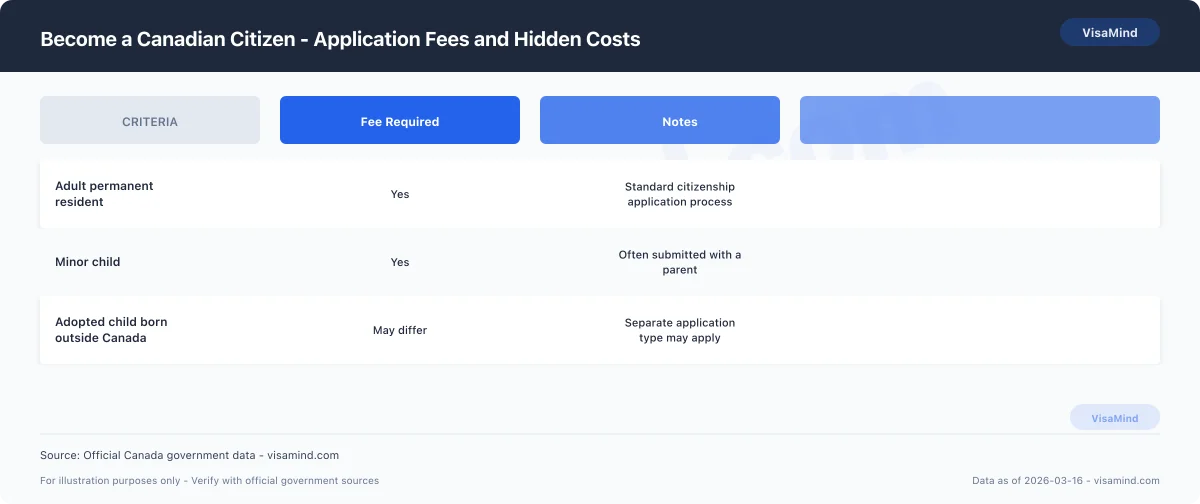
Building Your Citizenship File
#You must submit a complete and well‑organized application to Immigration, Refugees and Citizenship Canada (IRCC). Missing documents delay processing and can lead to requests for more information.
Build your file around three core areas: tax compliance, physical presence, and language proof.
Tax Filing Records
You may need to file Canadian income taxes for at least 3 years within the 5 years before the date you apply. If you were required to file, you must show that you did so.
Include clear evidence of your tax filing status:
- Notices or records confirming you filed taxes, if required
- Supporting tax documents for the relevant years
- Any documents that clarify gaps or special circumstances
IRCC can review details of your tax history. Make sure your records match the information in your application.
Proof of Physical Presence and Residency
You must show that you were physically present in Canada and that you meet the residency requirement of 3 out of the last 5 years.
Use documents that support your time in Canada, such as:
- Tax records
- Employment records
- Other documents confirming your residence during the qualifying period
Your documents should clearly align with the dates you declare in your application. Inconsistent dates can trigger further review.
Language Evidence and Identity Documents
You must prove your language skills. Include the required proof with your initial submission so IRCC does not need to request it later.
Prepare clear copies of your identity documents. If IRCC invites you to an interview, an officer may:
-
Verify your identity by reviewing original documents.
-
Authenticate photocopies you submitted.
3. Confirm your eligibility for Canadian Citizenship.
An interview does not guarantee a final decision. It allows IRCC to confirm that your documents and statements are accurate.
Submit your completed application with all required supporting documents, either online or by mail. Review your package carefully before sending it to avoid preventable delays in your Canadian citizenship process.
Real Scenarios
#You must hold valid permanent resident (PR) status before you apply for Canadian Citizenship.
IRCC will review your status and your proof carefully. Small errors, especially in how you calculate time in Canada, can delay or affect your application.
Scenario: You Let Your PR Status Lapse
You believe you qualify for Canadian Citizenship because you have lived in Canada for years. When you prepare your application, you realize your permanent resident status is not valid.
IRCC requires every adult applicant to hold valid PR status at the time of application. Without it, you cannot move forward.
You first resolve your PR status and obtain proper confirmation of permanent resident status. Only after you secure valid proof do you submit your citizenship application to IRCC.
The outcome depends on fixing your status first. Citizenship is not available unless your permanent resident status is active and documented.
Scenario: You Forget to Include Proof of PR Status
You meet the residency requirements and complete your forms. However, you do not include clear proof that you are a permanent resident.
IRCC reviews your file and looks for documentation confirming your PR status. This can include official confirmation or other accepted proof showing you hold permanent resident status in Canada.
Without this evidence, IRCC cannot finalize your application. You must provide proper documentation before processing continues.
Careful document review before submission prevents delays.
Scenario: You Miscalculate Time Spent as a Temporary Resident
You lived in Canada first as a temporary resident and later became a permanent resident. When calculating your physical presence, you incorrectly count your temporary resident time.
IRCC checks how you calculated your time in Canada. If you fail to include time spent as a temporary resident correctly, your physical presence total may be inaccurate.
You review your records and correct the calculation to reflect your actual status during each period. Clear and accurate reporting supports your eligibility.
Accurate calculations and valid PR status form the foundation of a successful Canadian Citizenship application.
Global Overview
#See how this topic works across all countries in our How to Get Citizenship Abroad.
Become a Canadian Citizen in Other Countries
#Free Canada planning tools
#Estimate Canada government fees for the visa categories tied to this goal.
See which Canada visas may match your profile for become a canadian citizen.
Typical Canada processing wait times for the visas relevant to this goal.
Rehearse common Canada interview questions before your appointment.