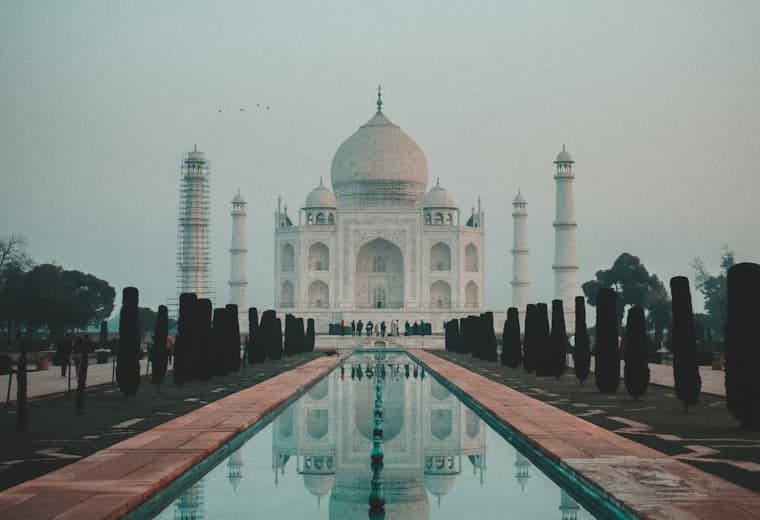
Citizenship Pathways at a Glance
#The table below summarizes the main visa options for this goal, including who qualifies, the key filing requirement, and reported processing times.
| Visa Option | Who It’s For | Key Filing | Processing Time |
|---|---|---|---|
| Indian Citizenship by Naturalisation | Foreign nationals who have resided in India for at least 12 years (including 12 months immediately before application), renounce previous citizenship, and meet good character and language adequacy requirements. India does not allow dual citizenship. | Application to the Ministry of Home Affairs (MHA) | 12-24 months |
| Citizenship by Registration | Persons of Indian origin who have been residents for 7 years, or persons married to Indian citizens for 7 years. Also available for minor children of Indian citizens. | Application to the District Collector or Indian Mission abroad | 6-12 months |
Use the linked visa pages for full eligibility details, required documents, and step-by-step instructions.
Meeting the Requirements
#Before you apply, confirm that you qualify under one of the recognized pathways such as birth, descent, registration, or Indian Citizenship (Naturalization). Each pathway has its own eligibility standards, and you must select the correct basis for your claim.
You apply using the prescribed citizenship application form. Submitting the form alone does not secure approval, even if you believe you meet the criteria.
Confirming Your Eligibility Category
Start by identifying the legal basis for your application:
- Birth – You claim citizenship based on being born in India under the applicable rules.
- Descent – You rely on your parent’s Indian citizenship.
- Registration – You qualify under a specific registration provision.
- Naturalization – You apply under Indian Citizenship (Naturalization) rules after meeting the required conditions.
You must ensure that your personal circumstances clearly fit within one category. Partial eligibility won’t suffice.
The Government of India has also identified certain individuals as eligible under the Citizenship (Amendment) Act, 2019 (CAA, 2019). If you believe this applies to you, verify that you meet the specific conditions set for that group before proceeding.
Registration and Immigration Compliance
If you are residing in India as a foreign national, you must maintain proper immigration status. The Foreigners Regional Registration Office (FRRO) manages registration and visa-related compliance inside India.
You should ensure:
- Your registration with the FRRO is current, if required.
- Your visa status remains valid during the process.
- Your personal details match your official records.
Inconsistencies can delay review or affect your application.
OCI Considerations
If you hold an Overseas Citizen of India (OCI) card, re-issuance is no longer required each time a new passport is issued up to 20 years of age, and once again after completing 50 years of age. You should still keep your documents updated according to current rules.
Authorities review each case individually and assess whether you satisfy the legal standards in full.
How to Apply for Citizenship
#You apply for Indian Citizenship (Naturalization) under the Citizenship Act, 1955 through a structured government process. You must complete the application online and then attend in-person verification.
Prepare carefully before you begin. Missing documents or skipping verification can lead to refusal.
Confirm Your Eligibility Category
You must first identify the correct legal basis for your application.
One category covers persons belonging to the Hindu, Sikh, Buddhist, Jain, Parsi, or Christian communities from Afghanistan, Bangladesh, or Pakistan who entered India on or before 31 December 2014 and received exemption from certain legal provisions.
If you fall within this group, ensure you have documents proving:
- Your country of origin
- Your date of entry into India
- Your community status
- Your exemption status under applicable provisions
Do not proceed until you can document each requirement.
Complete the Online Application
Follow this sequence carefully:
-
Gather Required Documents – Collect original identity, entry, and exemption records before starting the online form. You will need originals for verification.
-
Submit the Online Application – Complete all required fields accurately. Inconsistent information can delay processing.
-
Print and Preserve the Application Record – Keep a copy for your records and future reference.
-
Submit to the District Level Committee (DLC) – File your application with the appropriate DLC as directed in the process.
-
Attend In‑Person Document Verification – Appear in person with your original documents for scrutiny.
You must attend the verification appointment. If you fail to appear, authorities may forward your case for consideration of refusal.
Document Verification and Registration Considerations
During verification, officials review your original records and confirm the information you submitted online. Bring complete and organized documentation.
Present originals, not copies alone. If you are residing in India on a long-term visa or are subject to registration requirements, ensure your records with the Foreigners Regional Registration Office (FRRO) are up to date before your appointment.
FRRO manages registration and visa compliance inside India. Accurate records support your credibility.
Incomplete or inconsistent documentation can slow your case or lead to adverse action. You control much of the outcome by preparing thoroughly and appearing as required.
The Citizenship Test
#When you apply for Indian Citizenship (Naturalization), the government may assess whether you meet specific professional and eligibility standards tied to regulated fields and national examinations. You must prepare carefully and ensure your records are accurate before submission.
Indian authorities expect complete and verifiable information. You must provide a unique email ID and mobile number with your application so officials can contact you directly about your case.
Regulated Professions
If you intend to practice certain licensed professions in India after naturalization, you must comply with the governing laws for those fields. These professions include:
- Doctors
- Dentists
- Nurses
- Pharmacists
- Advocates
- Architects
- Chartered Accountants
You must meet the requirements set under the relevant Indian laws that regulate each profession. Citizenship alone does not authorize you to practice; you must satisfy the standards of the applicable professional body.
If your naturalization is approved, you remain subject to these regulatory frameworks. Plan for this early so your professional pathway aligns with your citizenship status.
National Entrance Examinations
If you seek eligibility for medical education in India, you must qualify through the appropriate national-level entrance examination. This includes:
- The All India Pre-Medical Test, or
- Another recognized test required under the applicable legal framework
You cannot bypass these examinations through naturalization. Admission depends on meeting the criteria established under the relevant Acts governing medical education.
Role of the FRRO
The Foreigners Regional Registration Office (FRRO) manages registration and immigration compliance matters while you reside in India. If you hold foreign status during your naturalization process, you must keep your registration details current with the FRRO.
Ensure that:
- Your contact details match your application records
- Your immigration status remains valid during processing
- Any updates are reported promptly
Failure to maintain accurate records may delay your citizenship review. Prepare your documentation carefully, confirm your professional eligibility where relevant, and ensure your contact information remains active throughout the process.
Mistakes to Avoid
#You must not confuse Indian Citizenship (Naturalization) with Overseas Citizenship of India (OCI). They are not the same status.
OCI does not equal full Indian citizenship, and treating it as such can derail your planning. Do not apply under the wrong category because of the name alone.
Many applicants misunderstand the role of different authorities. The Foreigners Regional Registration Office (FRRO) handles registration and visa extensions inside India, but it does not control entry or exit at the border.
The Bureau of Immigration (BOI) manages entry and departure. If you have travel issues, you address them at the port of entry or exit, not with FRRO.
Another common error involves application centers. BLS or VFS centers may accept and forward your application, but they do not make decisions.
Do not argue your eligibility with a submission center. Decisions come from the competent government authority, not the service provider that collected your documents.
Avoid these procedural mistakes:
- Submitting incomplete documents and assuming the center will fix them
- Failing to follow FRRO registration requirements while staying in India
- Ignoring official instructions because of informal advice
- Treating OCI as a substitute for Indian Citizenship (Naturalization)
- Assuming the place where you submit documents controls the final outcome
You also risk delays if you ignore registration duties while residing in India. If your stay requires interaction with FRRO, complete that step properly and on time.
Do not rely on outdated information from friends or online forums. Immigration rules change, and informal guidance often confuses OCI with full citizenship.
Avoid making travel plans before your status is formally resolved. BOI controls entry and exit, and unresolved status issues can affect your movement.
You protect your application by understanding who does what, choosing the correct status, and following official procedures exactly as written.
Your Ceremony Day
#Your ceremony day marks the formal grant of Indian Citizenship (Naturalization) or registration. On this day, you receive your official status as an Indian citizen.
The key outcome is the issuance of one of the following documents:
- Certificate of Registration, or
- Certificate of Naturalization
This certificate serves as your legal proof of Indian citizenship. You must keep it secure, as government authorities may require it for future applications or records.
What Happens at the Appointment
You attend the scheduled ceremony at the designated authority. Officials verify your identity and confirm that your approval remains valid.
You should bring:
- Your current passport
- Any identification documents requested in your approval notice
- Any documents specifically referenced in your communication from the authorities
Do not assume additional requirements. Follow the exact instructions provided in your approval communication.
Role of FRRO
If you previously completed registration formalities inside India, the Foreigners Regional Registration Office (FRRO) may have handled aspects of your immigration record, including your long-term stay documentation.
By the time you reach ceremony day, your immigration status transitions from a foreign national registered with FRRO to an Indian citizen recognized under the law. Your certificate reflects that change in status.
After You Receive the Certificate
Once you receive your Certificate of Registration or Certificate of Naturalization, you hold formal proof of citizenship under Indian law.
You should:
- Review the certificate for accuracy
- Ensure your name and personal details are correct
- Store the original document safely
If you identify any errors, raise them immediately with the issuing authority. Corrections are easier to address at this stage than later.
Your ceremony day finalizes the legal process. From that point forward, your status is no longer based on a visa or registration record but on your confirmed Indian citizenship.
Multiple Nationalities
#If you hold more than one nationality, review how this affects your Indian citizenship pathway before you apply. Different categories, including Indian Citizenship (Naturalization), may involve distinct documentation and review steps.
You must rely on official guidance from the Bureau of Immigration (BOI) for current nationality rules. Policies can change, and officers assess applications based on the rules in force at the time of review.
Processing times vary by category and by where your application is handled. You should confirm current timelines directly with the issuing authority before making travel or relocation plans.
When you live in India during the process, you will interact with the Foreigners Regional Registration Office (FRRO) for registration and visa extensions. FRRO manages in-country compliance, not final citizenship decisions.
BOI oversees entry and exit at the border. If you travel while your matter is pending, confirm that your status and documentation remain valid for re-entry.
Third-party service centers such as BLS or VFS may accept and forward applications. They do not decide citizenship cases.
Use this checklist to stay organized if you have multiple nationalities:
- Valid passports for each nationality you hold
- Clear records of your entries and exits from India
- Proof of your current immigration status in India, if applicable
- Copies of prior applications or approvals related to Indian status
Keep your records consistent across all documents. Differences in names, dates of birth, or passport numbers can delay review.
The authority that reviews your case may examine how and when you acquired each nationality. You should ensure that your documentation clearly shows the timeline.
The table below clarifies who handles what:
| Authority | Role in Your Case |
|---|---|
| FRRO | Registration and visa extensions inside India |
| BOI | Entry, exit, and official immigration guidance |
| BLS/VFS | Application intake and forwarding only |
You remain responsible for compliance with Indian immigration rules throughout the process. Verify current requirements and processing standards directly with BOI before you submit or travel.
Rights After Citizenship
#When you receive Indian Citizenship (Naturalization), you gain the legal status of an Indian citizen. Your documentation must stay current, and you must follow ongoing record requirements tied to your passport.
Your passport becomes your primary proof of citizenship for travel and identity purposes. Each time a new passport is issued, you must provide an updated photograph.
Passport and Photograph Updates
You must submit:
- A copy of your new passport each time it is reissued
- A recent photograph with each new passport issuance up to age 20
- One updated photograph after you turn 50
These updates apply every time your passport changes during those age periods. You should keep personal records organized so you can respond promptly when required.
If you obtained citizenship through naturalization, treat these updates as part of your ongoing compliance responsibilities. Delays or missing documents can complicate your official records.
Interaction With FRRO
The Foreigners Regional Registration Office (FRRO) manages registration matters inside India. Citizenship changes your legal status, but you still need to make sure your records reflect that change accurately.
You should confirm that your passport details and photograph submissions are properly recorded when applicable. It's a good idea to keep copies of all submissions for your records.
If your passport is renewed multiple times before age 20, you must provide a new photograph each time. After age 50, submit one updated photograph following passport issuance.
Practical Record Checklist
Use this checklist to stay compliant:
- Keep copies of every passport issued
- Track passport renewal dates
- Submit required photographs within the applicable age ranges
- Store confirmation receipts or acknowledgments
Residency Requirements in Detail
Residency forms the foundation of your application for Indian Citizenship (Naturalization). You must show that your stay in India has been lawful, continuous, and properly documented.
Your visa status, registration records, and compliance history will be reviewed closely. Any gaps, overstays, or unregistered changes of address can delay or disrupt your case.
Maintaining Lawful Status
You must hold a valid visa throughout your residence in India. If you entered on an e‑Visa or a Regular Visa, you must ensure it remains valid and properly extended where required.
The Foreigners Regional Registration Office (FRRO) manages registration and visa extensions inside India. You're responsible for keeping your registration current and updating your details when needed.
Pay attention to these core compliance points:
- Maintain a valid passport and visa at all times
- Complete FRRO registration if your visa category requires it
- Keep your contact details accurate and updated
- Retain copies of approval notices and extension confirmations
Failure to comply can affect how authorities assess your physical presence and overall eligibility.
Digital Identity and Contact Requirements
You must use your own unique email ID and mobile number when submitting your application. Shared or duplicate contact details can create verification problems.
Authorities use these details to communicate updates and authentication notices. If your email or phone number changes, update your records promptly through the appropriate official channel.
Accurate contact information helps avoid missed deadlines or requests for clarification.
Processing Time Considerations
Citizenship processing under the “e‑Visa and Regular Visa” category currently takes 3 to 5 days for certain stages of review, as of February 2026.
This timeframe does not replace substantive residency requirements. It only reflects processing efficiency once your documentation is properly submitted and verified.
How Much Does Citizenship Cost?
#You must pay a government fee when you apply for Indian Citizenship (Naturalization). The exact amount depends on the form and category you select.
The fee is payable in INR (₹) at the time you submit your application. If you do not complete the payment step, authorities will not process your request.
What the Fee Covers
Your payment generally relates to:
- Processing your personal details
- Reviewing your stated reason for applying
- Examining the required supporting documents
- Issuing a citizenship certificate (if you request one during the application)
You must decide at the application stage whether you want a physical certificate issued. Authorities issue the certificate only if you select that option and complete the required payment.
Where Payment Fits in the Process
The fee is part of your formal submission. You cannot separate it from the application itself.
-
Complete the application form with your personal information and reason for seeking citizenship.
-
Upload or attach all required documents listed in the form.
-
Pay the prescribed fee in INR (₹) as instructed in the application system.
-
Submit the application for review.
If you live in India, the Foreigners Regional Registration Office (FRRO) handles immigration-related registration and compliance matters. While FRRO manages registration and related processes, citizenship decisions follow the formal naturalization framework under the Government of India.
Additional Costs to Plan
For Beyond the official government fee, you may face practical expenses such as:
- Document preparation
- Translation, if required
- Travel to an FRRO or related office
- Copies and notarization, where necessary
These are not government citizenship fees, but you should budget for them.
Fees must be paid in Indian Rupees (₹) and according to the instructions provided in the application system.
Supporting Evidence
#You must prove that you meet the eligibility requirements under the Citizenship Act before the government will approve your application for Indian Citizenship (Naturalization). If you do not submit all required documents, the authorities can reject your case.
Provide clear, complete, and consistent records. Incomplete submissions delay processing and often lead to refusal.
Prepare documents that confirm your identity, status, and compliance with legal requirements. Your file should include:
- Proof of identity
- Proof of lawful stay in India
- Evidence supporting your eligibility category under the Citizenship Act
- Any records required to confirm your declarations
If you previously registered or extended your stay inside India, ensure your records with the Foreigners Regional Registration Office (FRRO) are accurate and up to date. Inconsistencies between your FRRO history and your citizenship application can raise concerns.
Present copies that are legible and complete. If a document is missing, obtain it before filing rather than submitting a partial application.
Use the checklist below to review your file before submission:
| Review Item | What to Confirm |
|---|---|
| Identity documents | Names and dates match across all records |
| Status records | Lawful stay aligns with your claim |
| Supporting evidence | Directly supports your eligibility category |
| Completeness | No required document is missing |
You carry the burden of proof. Submit a complete and organized set of documents to reduce the risk of rejection.
Global Overview
#See how this topic works across all countries in our How to Get Citizenship Abroad.