
Is This Guide for You?
#The Post-Graduation Work Permit (PGWP) allows international graduates from Canadian institutions to gain valuable work experience in Canada. Many graduates use this experience as a stepping stone to apply for Permanent Residency (PR) through various immigration pathways. Understanding the transition from a PGWP to PR is essential for those looking to make Canada their permanent home. The roadmap elaborates on official guidance from IRCC to help international graduates transition smoothly.
Identifying Prospective PGWP to PR Candidates
Ideal candidates for this roadmap are international graduates who hold a PGWP and are considering pathways to PR in Canada. This guide is particularly relevant for those who have recently completed their studies and want to leverage their Canadian work experience for immigration purposes.
- Holders of a valid PGWP
- Graduates from eligible Canadian post-secondary institutions
- Individuals seeking information on Canadian PR pathways
Tip: Ensure your PGWP is valid and check the expiration date to plan your PR application timeline effectively.
When to Use This
Roadmap should be used by those ready to explore their options for transitioning from a PGWP to PR. It is especially useful at the end of your studies when you are beginning to work in Canada and want to understand your eligibility for various PR programs. Reviewing this guide early can help you align your work experience and other requirements with the demands of PR pathways like Express Entry and Provincial Nominee Programs (PNP). Express Entry and PNP Guide provide additional information on these processes.
Who Benefits Most from This
Guide is most beneficial for those who have completed their education in Canada and are working under a PGWP. Understanding the pathways to PR early in your career in Canada can significantly improve your success rate. Individuals aiming to gain permanent residency through Canadian work experience will find the roadmap invaluable. It outlines the steps required and helps identify the most suitable PR programs based on your specific situation.
Important: Check the specific requirements for each PR pathway to ensure your work experience aligns with program criteria.
Eligibility and Requirements
#Canada's Post-Graduation Work Permit (PGWP) offers international students the chance to gain Canadian work experience, a necessary step towards permanent residency (PR). Understanding the eligibility criteria and requirements is vital as you plan your transition from a PGWP holder to a permanent resident of Canada.
Understanding PGWP Eligibility Criteria
Tip: Ensure your passport is valid for the entire duration you wish to work, as the PGWP cannot be issued for longer than your passport validity.
PR Transition Requirements in Canada
Transitioning from a PGWP to permanent residency involves meeting specific requirements set by Immigration, Refugees and Citizenship Canada (IRCC). One common pathway is through the Express Entry system, where you may qualify under the Canadian Experience Class (CEC).
- Gain at least one year of skilled work experience in Canada.
- Achieve a minimum Canadian Language Benchmark (CLB) level depending on your job type.
- Have a valid job offer or be eligible to work in Canada.
- Meet the points requirement for Express Entry, which can vary based on the draw.
Tip: Consider the Express Entry Guide for a detailed understanding of how to improve your score and chances of receiving an Invitation to Apply (ITA).
Important: Ensure you meet the minimum language requirements for your chosen PR pathway. Language proficiency is a critical factor in the PR application process.
What Experienced Applicants Recommend
#Success with PGWP to PR - Gather all required documents before starting your application process. This preparation can save you time and avoid unnecessary delays. PGWP
- Stay updated with the latest requirements on the official IRCC website. Requirements may change, and staying informed ensures your application is complete and accurate. PR Pathways Overview
- Consider gaining work experience in a high-demand occupation or region, which can boost your profile's competitiveness in programs like the Provincial Nominee Program (PNP Guide).
Important: Meeting the listed requirements does not guarantee approval. A strong application and thorough documentation are key to increasing your chances.
Avoiding Common Pitfalls in Application
Avoid opening application forms on tablets or mobile phones. Use a computer with Adobe Acrobat Reader for the best results and to prevent technical issues.
- Do not leave application requirements until the last minute. Start early to gather necessary documents and ensure all information is accurate.
- Double-check that your work experience aligns with the National Occupational Classification (NOC) codes used in your PR application. Misalignment can lead to application rejection.
Warning: Attempting to open forms on unsupported devices can lead to errors or incomplete submissions. Always use a computer.
- Identify which PR pathway is most suitable for you, whether it's Express Entry or another program. Plan your career and educational goals around gaining Canadian work experience in key sectors, enhancing your eligibility for PR. Consider consulting an immigration consultant or lawyer to review your application and provide tailored advice based on your circumstances.
Tip: Strategically planning your work experience and educational path in Canada can significantly improve your PR application prospects.
What Goes Wrong Most Often
#Tip: Always check the PGWP page on the IRCC website for the latest requirements and updates.
Missteps in Transitioning to PR
- Relying solely on work experience gained through PGWP without considering additional factors like language proficiency and adaptability.
Important: Explore pathways such as Express Entry and PNP Guide to enhance your PR application.
Avoiding Delays in Canadian PR Process
Delays in obtaining necessary police certificates and medical exams.
- Inaccurate or incomplete information provided in the application, leading to processing delays.
- Not keeping track of application timelines and missing important deadlines.
- Regularly check the Processing Times Explained guide for updates. Ensure all information is accurate and complete before submission. Set reminders for key dates and deadlines to avoid missing them.
Overview
#PGWP to PR pathway is an essential transition process for international graduates who wish to remain in Canada permanently. After completing their studies, graduates can apply for a PGWP that allows them to work in Canada for up to three years, depending on the length of their study program. This work experience is critical as it contributes to their eligibility for permanent residency through various immigration programs.
- Work experience gained through PGWP can be used for programs like Express Entry and Canadian Experience Class (CEC).
- The PGWP is an open work permit, allowing graduates to work for any employer in Canada.
Tip: Check the IRCC website regularly for updates on eligibility criteria and program changes.
How the Canadian PR Process Works
The Canadian permanent residency process involves several steps and depends on the specific program for which an individual applies. For many PGWP holders, the Express Entry system is a popular choice. This system manages applications for three main economic immigration programs: Federal Skilled Worker Program, Federal Skilled Trades Program, and Canadian Experience Class.
- Create an Express Entry profile and receive a Comprehensive Ranking System (CRS) score. Receive an Invitation to Apply (ITA) if your score meets the cut-off in a specific draw.
Important: Meeting the requirements does not guarantee an invitation to apply. Ensure your profile is as competitive as possible by gaining additional work experience or improving language test scores.
Key Features of PGWP Transition
Key features of transitioning from a PGWP to permanent residency include the accumulation of Canadian work experience and the use of the Express Entry system. This transition is streamlined for those who have studied and worked in Canada, as it demonstrates their ability to integrate into the Canadian job market. | Work Experience | Counts toward eligibility for programs like the Canadian Experience Class. | | Express Entry | A system that ranks candidates based on their CRS score for an invitation to apply. | For more detailed guidance, explore resources like the Canadian Experience Class and Express Entry Guide.
Fees, Timeline, and What to Expect
#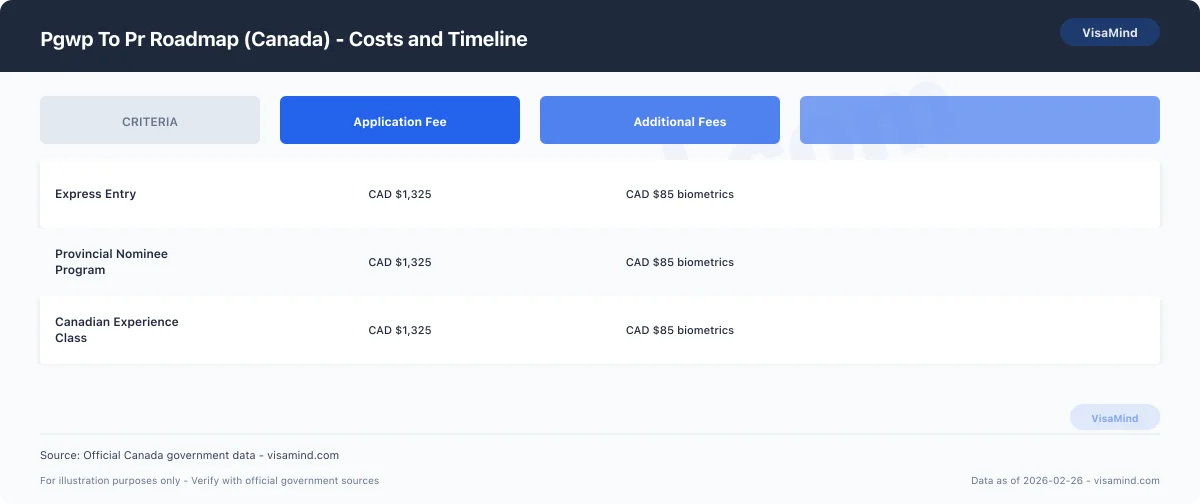
The transition from a Post-Graduation Work Permit (PGWP) to Permanent Residence (PR) in Canada involves specific fees and processing timelines. Understanding these costs and timelines is required for planning your path to Canadian PR.
Expected
Fees for PGWP to PR When applying for Canadian PR, several fees are involved. These fees vary depending on your chosen immigration pathway, such as Express Entry or Provincial Nominee Program (PNP).
Processing Times for Canadian PR
Processing times for PR applications in Canada can vary significantly based on the immigration program you choose. For instance, Express Entry applications are typically processed faster than other pathways.
Budgeting for Your PR Journey
Budgeting for your PR journey in Canada involves more than just application fees. You should also account for costs related to document preparation, travel, and settling in Canada.
- Application and biometrics fees
- Document translation and certification costs
- Medical exams and police certificates
- Travel expenses for potential interviews
Tip: Review the PR Settlement Funds guide to understand financial requirements for settling in Canada.
Step-by-Step Process
#As a PGWP holder, your journey to Permanent Residence begins with evaluating your eligibility for various immigration programs. Your Canadian work experience is a significant asset in this process.
- Review the criteria for programs like the Canadian Experience Class (CEC) and Provincial Nominee Program (PNP). Ensure your work experience aligns with the National Occupational Classification (NOC) skill levels required for these programs. Gather necessary documents such as proof of employment, language test results, and educational credentials.
Important: Check the official IRCC website for the most up-to-date requirements and guidelines to avoid any processing delays.
PR Application Process
Once you've determined your eligibility, you can proceed with the PR application process. This phase requires careful preparation and timely submission of documents.
- Create an online profile in the Express Entry system if applying through the CEC or PNP. Submit your profile and enter the pool of candidates. Receive an Invitation to Apply (ITA) if selected from the pool, and complete the PR application within the specified deadline.
- Valid passport and travel documents
- Language proficiency test results
- Proof of Canadian work experience
- Police certificates
- Medical examination results
Tip: Consider using the services of a registered immigration consultant or lawyer to guide you through the application process.
Warning: Meeting all listed requirements does not guarantee approval. Each application is subject to a comprehensive review by IRCC.
Finalizing Your Canadian PR Status
After applying, it's necessary to regularly check your application status and ensure all contact information with IRCC is current. Finalizing your PR status involves several key steps.
- Receive confirmation of PR approval from IRCC. Complete any additional requirements, such as biometrics, if requested. Receive your Confirmation of Permanent Residence (COPR) and Permanent Resident Card. Once you have your PR status, you can enjoy the benefits of living and working in Canada permanently. It's important to maintain your status by fulfilling residency obligations and renewing your PR card as needed.
Important: Keep a copy of your COPR and PR card secure, as these documents are essential for proving your status in Canada.
Real-World Examples
#Transitioning from a Post-Graduation Work Permit (PGWP) to Permanent Residence (PR) in Canada can be a transformative journey for many international graduates. The Pgwp To Pr Roadmap (Canada) guides applicants through this process, emphasizing adherence to IRCC guidelines. By understanding real-world scenarios, you can gain insights into common challenges and successful strategies. This section presents examples based on the practical experiences of past PGWP holders.
Case Study: Successful PGWP Transition
A software engineer from India completed her studies in Toronto and secured a PGWP. With two years of work experience, she applied through the Canadian Experience Class (CEC) under the Express Entry system. Her comprehensive work history and adherence to IRCC's documentation requirements ensured her application was processed smoothly.
Tip: Ensure your work experience aligns with the National Occupational Classification (NOC) codes required by the CEC program.
Common Challenges and Solutions
A common challenge faced by PGWP holders is meeting the language proficiency requirements.This allowed her to meet the necessary criteria for her PR application.
Warning: Delays in improving language proficiency can impact your eligibility for PR programs such as the CEC. Plan your language test preparation early.
Lessons from Past PGWP
Applicants One lesson from past applicants is the importance of early planning.By gathering all required documents, such as employment letters and proof of funds he minimized delays. Another important lesson is the benefit of consulting with immigration professionals.
Important: Consulting with professionals can provide valuable insights and prevent potential pitfalls in your PR application process.