Do You Need a Visa?
#
Do You Need a Visa to Visit Brazil?
Brazil is a vibrant destination that attracts millions of tourists each year. One of the initial questions travelers have is whether a visa is necessary to enter the country. The answer depends on your nationality and the purpose of your visit.
Visa-Free Entry
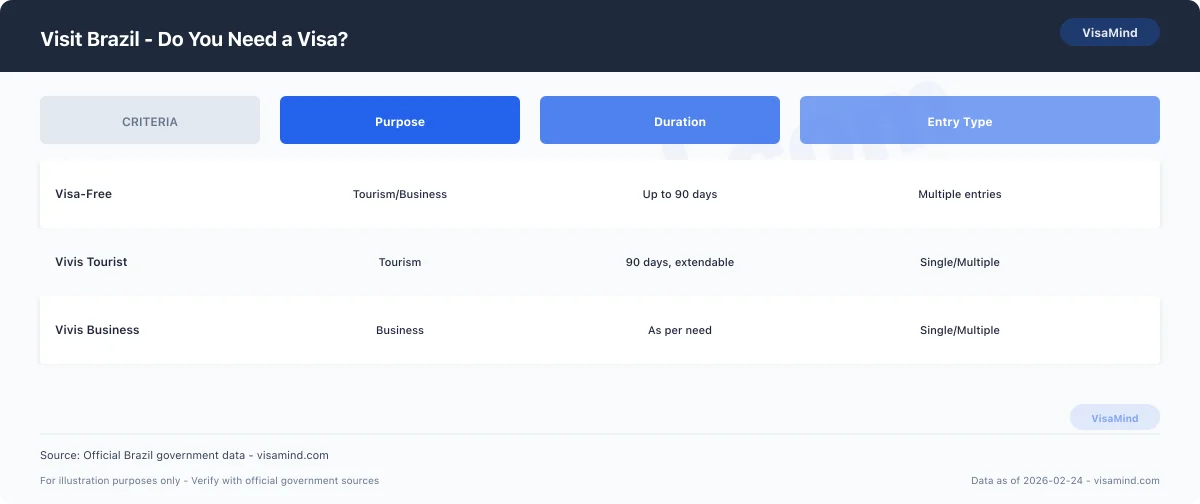
Citizens from select countries can enter Brazil without a visa for tourism purposes. Generally, this visa-free stay is limited to 90 days within a 180-day period. It's important to check if your country is on the visa-exempt list, as this can save you both time and effort in planning your trip.
e-Visa for Tourism
For those not eligible for visa-free entry, Brazil offers an e-Visa option for tourism. This electronic visa is convenient and typically involves a straightforward online application process. The e-Visa is valid for two years and allows for multiple entries, with each visit not exceeding 90 days. To learn more about how an e-Visa compares to a traditional visa, visit the Vivis Tourist Vs E Visa Tourist guide.
When Is a Visa Required?
If your stay exceeds the allowed duration for visa-free or e-Visa entry, or if your country is not on the exempt list, you will need to apply for a Visit Visa - Tourism (VIVIS). This visa is necessary for longer stays or if you plan to engage in activities beyond tourism, such as business meetings or short-term courses. For detailed information on the VIVIS, refer to the Vivis Tourist section.
Quick Reference Table
| Visa Option | Eligibility | Stay Duration | Validity |
|---|---|---|---|
| Visa-Free | Select nationalities | Up to 90 days | 90 days in 180 |
| e-Visa | Eligible nationalities (online process) | Up to 90 days/entry | 2 years |
| Visit Visa | Non-exempt nationalities | As per visa terms | As per visa terms |
For a comprehensive understanding of the application process and to ensure you gather all necessary documentation, refer to the How To Apply and Documents Checklist. Always verify the latest requirements on the official Polícia Federal website before making your travel arrangements.
Types of Visitor Visas
#Types of Visitor Visas to Brazil
When planning a visit to Brazil, it’s important to understand the different types of visitor visas available. This will help you determine which one best suits your purpose and duration of stay. Here is a comparison of the main visitor visas available for Brazil:
| Visa Type | Eligibility | Cost (USD) | Timeline |
|---|---|---|---|
| Visit Visa - Tourism (VIVIS) | For tourists visiting Brazil for leisure activities. Not for paid work or study. | Varies by nationality; verify on the official website | Typically processed within 10-15 days |
| e-Visa (Tourism) | Available to citizens of certain countries for tourism purposes. Easier online application process. | Approximately $40; verify on the official website | Usually processed within 5 business days |
What is the Visit Visa - Tourism (VIVIS)?
The Visit Visa - Tourism (VIVIS) is designed for travelers who wish to explore Brazil for leisure. This visa is suitable for individuals who intend to engage in tourism-related activities, such as sightseeing, visiting friends, or attending cultural events. It’s important to note that this visa does not permit any form of paid work or long-term study. Processing times can vary, but applications are generally processed within 10 to 15 days. For more detailed information, you can refer to the Vivis Tourist page.
How Does the e-Visa (Tourism) Work?
The e-Visa (Tourism) is a convenient option for travelers from eligible countries. This electronic visa allows you to apply online, making the process quicker and often more streamlined. The e-Visa is specifically for tourism purposes and is typically processed within 5 business days. As of the latest update, the cost is around $40, but it’s essential to verify this on the official website as fees can change. For more insights into the differences between the VIVIS and e-Visa, you can explore the Vivis Tourist Vs E Visa Tourist guide.
Choosing the Right Visa for Your Visit
When deciding between these visitor visas, consider your nationality, the purpose of your visit, and how quickly you need the visa. Both the VIVIS and e-Visa facilitate tourism, but the application process and eligibility criteria differ slightly. For a step-by-step guide on how to apply and the documents you’ll need, check out the How To Apply and Documents Checklist resources.
In summary, selecting the appropriate visa is crucial for a smooth and enjoyable visit to Brazil. Ensure you review the most current requirements and processing times on the official Polícia Federal website to stay informed.
What You Need to Apply
#Passport and Personal Documents
To visit Brazil, you need to ensure your personal documentation is in order. Here's what you'll need:
- Valid Passport: Your passport must be valid for at least six months from your planned date of entry into Brazil. Ensure you have at least two blank pages for stamps.
- Visa: Depending on your nationality, you may require a visa. You can explore your options through the Vivis Tourist and E Visa Tourist categories, which cater to tourism purposes.
- Passport Photos: Two recent passport-sized photographs meeting Brazil's specific requirements regarding size and background.
Financial Proof
Financial proof is a critical component of your application to assure the authorities that you can support yourself during your stay:
- Bank Statements: Recent bank statements from the past three months demonstrating sufficient funds to cover your stay in Brazil.
- Employment Letter: If applicable, a letter from your employer confirming your employment status and salary.
- Sponsorship Letter: If someone else is funding your trip, a letter of sponsorship and their financial documents are required.
You can refer to the Financial Requirements Guide for detailed information on what constitutes sufficient financial proof.
Additional Documents
Depending on your specific situation, further documents may be needed:
- Travel Itinerary: Details of your flights, including return or onward travel, and your accommodation plans.
- Invitation Letter: If you are visiting friends or family, an invitation letter from your host in Brazil may be required.
For a comprehensive list and personalized guidance, consult the Documents Checklist.
Country-Specific Requirements
Some countries have unique requirements for entry into Brazil. Always check for specific conditions applicable to your nationality:
- Vaccination Certificates: Proof of yellow fever vaccination is required for travelers from certain countries. Check the latest health advisories.
- Police Clearance: Some applicants may need to provide a police clearance certificate.
For more details on specific requirements, you may visit the How To Apply Guide to ensure your documentation aligns with the necessary criteria.
By ensuring you have all the required documents prepared and organized, your application process with Brazil's Polícia Federal will be more seamless and efficient.
The Application Process
#How to Apply for a Visit Visa to Brazil
Applying for a visit visa to Brazil involves several key steps, whether you choose to apply online or through an embassy or consulate. Below, you'll find a detailed walkthrough of the application process, which will help you determine the best approach for your situation.
1. Determine Your Eligibility and Visa Type
Before proceeding, it’s important to identify the appropriate visa type for your visit to Brazil. Common options include the Visit Visa - Tourism (VIVIS) and the e-Visa (Tourism). For more information on these visa types, you can explore the Vivis Tourist and E Visa Tourist.
2. Choose Your Application Method
You have two primary options for applying: online or through an embassy or consulate. Each method has its own steps and requirements:
Online Application
-
Visit the Official Website: Start by visiting the Polícia Federal (Federal Police) website to access the necessary forms and instructions for your specific visa type.
-
Complete the Application: Carefully fill out the application form, ensuring all required sections are completed accurately.
-
Gather Required Documents: Collect all necessary documents, such as a valid passport, recent photographs, and any additional evidence specified in the application instructions.
4.Check the How To Apply guide for more detailed steps.
Embassy or Consulate Application
-
Locate the Nearest Embassy or Consulate: Find the Brazilian embassy or consulate closest to you, as you will need to schedule an appointment.
-
Schedule an Appointment: Contact the embassy or consulate to arrange a date for your visa application appointment.
-
Prepare Your Documents: Similar to the online application, gather all necessary documents and ensure they meet the requirements specified by the embassy or consulate.
-
Attend the Appointment: Attend your appointment with all prepared documents. You may also need to provide biometrics or attend an interview, depending on the embassy’s procedures.
3. Submit Supporting Documents
Regardless of the method chosen, you must submit supporting documents alongside your application. These typically include:
- A valid passport with at least six months of validity
- Passport-sized photographs
- Proof of travel plans or accommodation
- Evidence of sufficient financial means
For a full list, refer to the Documents Checklist.
4. Await Processing and Decision
After submission, your application will be processed by the Polícia Federal or the embassy/consulate. Processing times can vary, so it's advisable to consult the Processing Times guide for an estimate.
Once a decision is made, you will be notified. If your application is approved, ensure you understand the terms of your visa, including the duration of stay and any conditions attached.
Conclusion
Navigating the application process for visiting Brazil requires careful preparation and attention to detail. Whether you apply online or through an embassy, following these steps will help ensure a smooth and successful application.
At the Border
#What to Expect at the Brazilian Border
Upon arriving in Brazil, you will encounter the Federal Police (Polícia Federal) at the border. This is a crucial step in your entry process, and understanding what to expect can help you prepare effectively.
Fingerprinting and Security Checks
One of the first steps at the border is fingerprinting, which is a standard security measure. The Federal Police will collect your fingerprints to verify your identity and ensure that all visitors comply with Brazil’s security protocols.
- Biometric Collection: Your fingerprints and possibly a photograph will be taken.
- Identity Verification: Ensure your passport and any relevant visa documents are easily accessible.
Immigration Interviews
Depending on your circumstances, you may be required to participate in a brief interview with an immigration officer. This interview is generally straightforward but may involve questions about your visit's purpose, duration, and accommodations.
- Typical Questions: Reason for visit, intended length of stay, and accommodation details.
- Documents to Have Ready: Passport, return ticket, and any other supporting documents, such as a Vivis Tourist or an e-Visa Tourist.
Use of E-Gates
In some major airports, Brazil has implemented e-gates to streamline the entry process. These electronic gates are designed for quicker processing and are available to certain travelers.
- Eligibility: Check if your nationality and visa type allow for e-gate use.
- Procedure: Follow on-screen instructions to scan your passport and biometric data.
For more detailed preparation, consider reviewing our Interview Prep Guide to ensure you're ready for any questions you may face.
Conclusion
Navigating through Brazilian immigration at the border involves several steps, from biometric collection to potential interviews. Being familiar with what to expect can make your entry smoother and more efficient. Always ensure that your travel documents are in order and easily accessible for a seamless experience.
Extending Your Stay
#Can You Extend Your Stay in Brazil?
If you wish to extend your stay in Brazil beyond the initial period granted by your visa, you have the option to apply for an extension. This process is overseen by the Federal Police (Polícia Federal), who assess applications on a case-by-case basis. It's important to ensure that you begin this process well before your current visa expires to avoid any legal issues. Typically, tourists can apply for an extension of their stay by an additional 90 days, making it possible to remain in Brazil for up to 180 days in a calendar year. However, verify specific eligibility requirements and timelines on the official website.
How to Apply for a Visa Extension
To apply for a visa extension, you will need to prepare a set of documents and submit them to the Federal Police in Brazil. While specific requirements may vary depending on your visa type, general steps include:
-
Gather Required Documents: Collect all necessary documentation, which may include a valid passport, proof of financial means, and a return ticket. For a comprehensive checklist, refer to the Documents Checklist.
-
Lodge an Application: Visit the nearest Federal Police office in Brazil to lodge your application. Ensure you have all the completed forms and required evidence with you. It might be useful to consult the Visa Extension Guide for detailed steps.
-
Pay Any Applicable Fees: There might be a fee associated with extending your stay, which can vary. Check the latest fee structure on the official website.
-
Await Decision: Processing times can vary, so it's advisable to apply well in advance. You can check typical timelines via the Processing Times guide.
Considerations for Different Visa Types
Different visa categories may have specific considerations when applying for an extension. For instance, holders of a Vivis Business visa may have different requirements compared to those on a Vitem Student visa. Ensure that you are aware of the unique conditions applicable to your visa type to avoid complications.
By understanding the extension process and preparing adequately, you can make the most of your time in Brazil. Always check for the most current information and guidelines on the official website of the Federal Police to ensure compliance.
Common Mistakes Visitors Make
#Overstaying Your Visa
- Understand Your Allowed Stay: When you receive a Visit Visa - Tourism (VIVIS) or an e-Visa (Tourism), pay close attention to the duration of stay allowed. Typically, this is up to 90 days. Overstaying can result in fines and future entry bans.
- Apply for Extensions: If you plan to extend your stay, make sure to apply for a visa extension well before your current visa expires. Check the Visa Extension Guide for detailed instructions.
- Monitor Your Travel Dates: Keep track of your entry and exit dates to avoid accidental overstays. It's advisable to set calendar reminders.
Working on a Tourist Visa
- Tourist Visa Restrictions: Both the VIVIS and e-Visa (Tourism) strictly prohibit any form of employment. Engaging in work activities can lead to deportation and future visa denials.
- Seek Appropriate Visas: If you intend to work, you should apply for a visa that permits employment, such as the Vitem Work visa. Compare options using the Vitem Work Vs Vitem Digital Nomad guide.
Insufficient Funds
- Financial Requirements: Visitors must demonstrate sufficient financial resources to cover their stay. This often includes showing bank statements or proof of income.
- Prepare Documentation: Before traveling, review the Financial Requirements to ensure you have the necessary evidence. This can include credit card statements or a letter from a financial institution.
- Avoid Assumptions: Do not assume short visits exempt you from financial scrutiny. Even brief stays require proof of adequate funds.
By avoiding these common pitfalls, you can enjoy your visit to Brazil without unnecessary complications. Always verify the most current information on the official Polícia Federal website or consult the Visa Refusal Reasons guide for more insights.
Real Scenarios
#Navigating Real Scenarios When Visiting Brazil
When planning to visit Brazil for tourism or business, it's important to understand how different situations can affect your travel plans. For instance, if you're traveling for tourism, you'll likely need to explore options like the Vivis Tourist or the E Visa Tourist. Each of these visas has specific requirements and benefits that cater to different traveler needs, whether you're visiting the beautiful beaches of Rio de Janeiro or exploring the Amazon rainforest.
What If Your Plans Change?
Changes are common in travel plans, and Brazil offers some flexibility for extending your stay. If you decide you need more time to explore the rich culture and landscapes, you might consider applying for a visa extension. The Visa Extension Guide provides detailed information on the process. It's crucial to apply before your current visa expires to avoid any legal complications. However, keep in mind that extensions are not guaranteed, and it's essential to present a valid reason for your request.
Considering a Business Visit?
For those traveling to Brazil for business purposes, the Vivis Business visa might be the appropriate choice. This visa type is tailored to accommodate business meetings, conferences, or negotiations. It's important to gather all necessary documentation and evidence of your business activities in Brazil to ensure a smooth application process. Consulting the Documents Checklist can help you prepare effectively, ensuring you have all the required documents at hand.
Handling Unforeseen Circumstances
Life is unpredictable, and sometimes unforeseen circumstances, such as health issues or family emergencies, can arise during your stay. In such cases, it’s advisable to contact the local Polícia Federal office immediately to seek guidance on maintaining your legal status in Brazil. Understanding the Visa Refusal Reasons can also provide insights into common pitfalls to avoid during your application process.
By exploring these scenarios and understanding the available resources and guides, you can ensure a well-prepared and enjoyable experience when visiting Brazil. Always check the official Polícia Federal website for the most current information and guidelines.
FAQs
How long does it take to process a Brazil visitor visa?
Can I extend my stay in Brazil after my visitor visa expires?
What happens if I overstay my Brazil visitor visa?
Can I switch from a Brazil tourist visa to a work visa while in the country?
Can I bring my family with me on a Brazil visitor visa?
What are common mistakes visitors make when applying for a Brazil visa?
Can I apply for permanent residency while on a Brazil visitor visa?
Sources
Last reviewed: February 25, 2026
VisaMind provides informational guidance only and is not a government agency. This is not legal advice. Requirements can change and eligibility depends on your specific facts. If your case is complex or high-stakes, consult a licensed immigration attorney.
Next steps
Requirements vary by nationality, purpose, timeline, and case details. VisaMind turns uncertainty into a sequenced checklist with official source citations.
Find my visa