Who Should Read This
#Over 20 countries have agreements with Japan allowing young citizens to apply for a Working Holiday Visa. This visa is designed for those aged 18 to 30 seeking to explore Japan while working to supplement their travel funds.
Young Travelers Seeking Adventure
If you're between 18 and 30 and eager to explore Japan beyond the typical tourist experience, the Working Holiday Visa offers an exciting opportunity. This visa allows you to experience Japan's culture while supporting your travels through short-term employment.
Tip: Check if your country is part of the Working Holiday agreement with Japan to see if you're eligible.
Important: Ensure you have travel insurance as it is highly recommended for all Working Holiday Visa holders.
Gap Year Enthusiasts
For those taking a gap year, the Working Holiday Visa lets you spend an extended period in Japan. You can work in various sectors like hospitality and retail, earning money to fund your travels. - Work in Japan for up to one year
- Explore different regions of Japan
- Engage in cultural exchange activities
Cultural Explorers
Immerse yourself in Japan's unique culture through the Working Holiday program. This visa allows you to live like a local, participate in cultural events, and even take language courses.
- Apply for a Working Holiday Visa
- Plan your travel itinerary
- Engage with local communities
Tip: Visit the Working Holiday Visa page for detailed application procedures.
The Process from Start to Finish
#Japan issues over 10,000 Working Holiday visas annually, offering young travelers the chance to work and explore the country. This visa is a unique opportunity for citizens of certain countries to immerse themselves in Japanese culture while supporting their stay through short-term work. The application process for Japan's Working Holiday visa involves several steps, including the submission of documents to the Immigration Services Agency of Japan. Understanding each phase can help ensure a smooth journey from application to arrival.
Application Submission Steps
-
Begin by gathering all required documents. This includes your valid passport, a recent passport-sized photograph, and proof of sufficient funds for your stay.
-
Visit the consular section nearest to you or apply online through the designated eVISA platform. Ensure to check if your country requires applications to be made via accredited travel agencies.
-
Submit your application to the appropriate Japanese embassy or consulate. Be mindful of providing complete and accurate information to avoid common pitfalls like entering incorrect details.
-
Pay the applicable visa fee, which varies by country. Confirm the fee amount on the official embassy website before submitting your application.
Important: Ensure all documents are complete and correctly filled out before submission to avoid delays in processing.
Tip: Check the official Immigration Services Agency of Japan website for the most current visa requirements and updates.
Interview Preparation and Tips
An interview may be required as part of your visa application process. This step is designed to assess your intentions and readiness for the working holiday program. - Prepare to discuss your travel plans and how you intend to support yourself financially during your stay. - Be ready to explain your understanding of the working holiday program and how it aligns with your personal and professional goals. - Dress appropriately and arrive on time for your interview, as first impressions matter.
Tip: Practice common interview questions with a friend or family member to build confidence before your appointment.
Document Checklist for Submission -
Valid passport with at least one blank page
- Recent passport-sized photograph
- Proof of sufficient funds, such as bank statements
- Return ticket or proof of onward travel
- Completed visa application form
Important: Double-check the list of documents specific to your country on the official Japan embassy website to avoid missing any required items.
Post-Arrival Registration Process
-
Upon arrival in Japan, present your visa and passport to the immigration officer to receive landing permission.
-
Register your residence at the local municipal office within 14 days of finding accommodation. This is mandatory for all foreigners staying in Japan for more than 90 days.
-
Enroll in the National Health Insurance system at the same municipal office to ensure you have coverage during your stay. Completing these steps promptly ensures compliance with Japanese regulations and helps you settle into your new environment smoothly.
Tip: Keep a copy of all your documents, including your residence card, as they may be required for various services during your stay.
Tips and Best Practices
#Japan's working holiday visa program allows young people from select countries to immerse themselves in Japanese culture while working to fund their stay. The Immigration Services Agency of Japan plays a central role in managing applications and ensuring compliance with entry requirements. process can be complex, but understanding the nuances of Japanese bureaucracy, cultural expectations, and how to make the most of your visit can greatly enhance your experience.
Navigating Japanese Bureaucracy -
Prepare all documents thoroughly to avoid delays. Use the Working Holiday Visa page for guidance. - Ensure that all information is accurate to prevent issues with the Immigration Services Agency of Japan. - Applications must be complete; submitting incomplete applications is a common pitfall.
Important: Always verify the latest requirements on the official Immigration Services Agency of Japan website to avoid outdated information.
Building a Network in Japan
Connecting with locals and other expatriates can enrich your stay. Joining language classes or cultural workshops is a great way to meet people. - Attend events organized by local community centers or international associations. - Use social media and online platforms to connect with fellow travelers and expatriates.
Cultural Etiquette and Expectations Understanding
Japanese cultural norms is required for a respectful and successful stay. Observing etiquette can foster positive interactions. - Always remove shoes before entering homes or certain traditional accommodations. - Be punctual for appointments and social gatherings, as time management is highly valued.
Tip: Learning basic Japanese phrases can greatly enhance communication and show respect for local customs.
Maximizing Your Holiday Experience
Japan offers a wealth of experiences beyond work. Exploring the country's cultural and natural attractions can make your visit memorable. - Visit historical sites, such as Kyoto's temples and Hiroshima's Peace Memorial Park. - Engage in seasonal activities, like cherry blossom viewing in spring or skiing in winter.
Tip: Purchase a Japan Rail Pass for economical travel around the country, enabling you to see more of Japan during your stay.
Who Qualifies
#Japan's Working Holiday Visa program allows young people from participating countries to stay and work in Japan for up to one year. This opportunity is designed to foster cultural exchange and understanding between Japan and other nations. To qualify for this visa, applicants must meet specific criteria set by the Immigration Services Agency of Japan. These include age restrictions, financial requirements, and health standards.
Age and Nationality Criteria The Working Holiday
Visa is available to nationals of countries that have signed bilateral working holiday agreements with Japan. These include nations such as Australia, Canada, and the United Kingdom. - Applicants must be between 18 and 30 years old at the time of application. - Only citizens of countries with existing agreements with Japan are eligible.
Tip: Check the Working Holiday page to see if your country is listed as a participating nation.
Financial Proof and Insurance Needs
Applicants must demonstrate sufficient financial resources to support themselves upon arrival in Japan. This is to ensure that they can cover initial costs until they find employment. - Proof of funds, such as bank statements, showing a minimum balance (amount varies by country, verify on the official website).
- International travel medical insurance is highly recommended to cover potential health expenses during your stay.
Important: Ensure your financial documents are accurate and up-to-date to avoid application delays or rejections.
Educational Qualifications Needed
While there are no specific educational requirements for the Working Holiday Visa, having a certain level of education may enhance your job prospects in Japan. - No minimum educational qualifications are mandated. - Higher education or specialized skills can be beneficial for securing employment.
Health and Character Requirements
Applicants must meet health and character standards as part of the visa application process. This ensures that they are fit to travel and reside in Japan. - A health examination may be required, depending on your country of origin. - Character references or police certificates might be needed to prove good conduct.
Warning: Failure to meet health or character requirements can result in visa denial. Review the Visa Refusal Reasons guide for more details.

Common Mistakes
#Each year, many applicants make common mistakes during the Japan Working Holiday Visa process, causing delays and rejections. Avoid these pitfalls by understanding key issues that past applicants have faced.
Incomplete Documentation Issues
One major issue is submitting incomplete documentation. The Immigration Services Agency of Japan requires a complete set of documents to process your application. - Ensure your Certificate of Eligibility is included if applicable. - Double-check that every document is properly filled out and signed where necessary. - Include proof of sufficient funds and any required guarantees.
Tip: Refer to the Documents Checklist to ensure you have all the necessary paperwork before applying.
Ignoring Visa Conditions
Some applicants misunderstand or overlook the specific conditions attached to their visa, leading to potential legal issues. - Abide by the employment restrictions set by your visa. - Ensure you do not overstay the duration allowed by your visa. - Comply with any mandatory reporting requirements to local authorities.
Warning: Not adhering to visa conditions can result in deportation and a ban on re-entry.
Misunderstanding Language
Requirements can confuse applicants, especially regarding necessary proficiency levels for working in Japan. - While not always mandatory, Japanese language skills can significantly impact your job prospects. - Some employers may require a certain level of proficiency or certification.
Tip: Consider taking language courses before your trip to improve your job opportunities and daily interactions.
Underestimating Cost of Living
Japan can be an expensive place to live, and many applicants underestimate the cost of living. - Average monthly expenses in cities like Tokyo can exceed ¥150,000. - Include costs for accommodation, food, transportation, and utilities in your budget.
Important: Review the Financial Requirements to ensure you have adequate funds before your arrival.
Costs and Timeline
#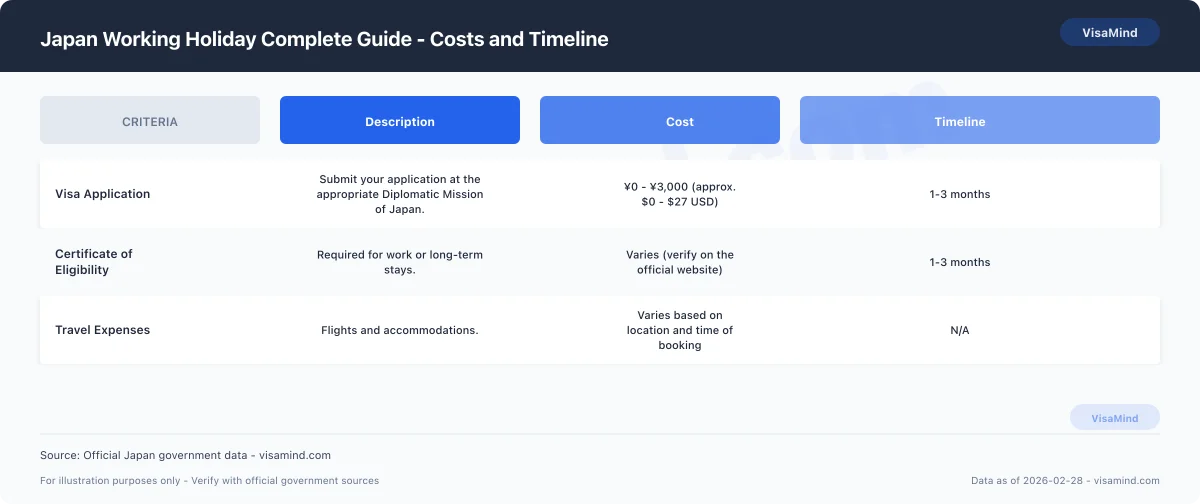
A Japan Working Holiday Visa application involves several costs, including a standard fee of ¥3,000. This fee is non-refundable, regardless of the application outcome, so it's important to be prepared. Understanding the timeline and associated expenses will help you plan your working holiday in Japan more effectively. Below, we cover the costs, average processing times, and budgeting tips specific to Japan.
Visa Application Fees
| Item | Cost (JPY) |
|---|---|
| Visa Application Fee | ¥3,000 |
| Travel Insurance (recommended) | Varies |
| Initial Accommodation | Varies |
Tip: Check the official Immigration Services Agency of Japan (ISA) website for any updates on visa fees.
Average Processing Times
Visa processing times generally range from two to four weeks. However, during peak seasons, expect potential delays.
Important: Start your application process well in advance to accommodate any unforeseen delays in processing times. Keep in mind that incomplete applications or missing documents can significantly delay your application. Double-check your submission for accuracy.
Budgeting for Initial Expenses - Visa Application Fee: ¥3,000
- Travel Insurance: Variable, depending on the provider
- First Month's Accommodation: ¥50,000 to ¥100,000
- Daily Expenses: ¥3,000 to ¥5,000 per day Planning your finances for the initial phase of your stay is required. Consider costs like accommodation and daily expenses alongside your visa fee.
Tip: Research cost-effective accommodation options in advance to manage your budget more efficiently.
Seasonal Considerations
Japan experiences peak tourist seasons in spring (March to May) and autumn (September to November). During these times, demand for accommodation and flights increases, potentially raising costs.
Important: If possible, plan your arrival and initial stay outside of these peak seasons to save on travel and accommodation expenses.
The Big Picture
#In 2026, Japan offers the Working Holiday Visa to citizens from 26 countries, allowing young travelers to explore Japan while working to support their stay. This unique program is part of Japan's efforts to promote cultural exchange and strengthen international relationships. Administered by the Immigration Services Agency of Japan, the Working Holiday Visa provides an opportunity for individuals aged 18 to 30 to experience life in Japan for up to one year. The program is based on reciprocal agreements, which means that only citizens from partner countries are eligible.
Understanding the Working Holiday
Visa is designed for young individuals who wish to explore Japan while engaging in part-time or temporary work. It's a special arrangement that allows participants to immerse themselves in Japanese culture and society, beyond the typical tourist experience. - Age requirement: 18-30 years old. - Duration: Up to 12 months. - Purpose: Cultural exchange and travel.
Tip: Check the Working Holiday page for detailed eligibility requirements specific to your country.
Benefits of Working in Japan
Japan's working holiday program offers numerous benefits, including the chance to learn Japanese language skills and understand its unique work culture. Participants can gain valuable international work experience, which can enhance their career prospects. - Cultural immersion and language acquisition. - Variety of job opportunities in sectors like hospitality and education. - Networking with locals and other internationals.
Important: Ensure you have adequate international travel medical insurance, as recommended by the Immigration Services Agency of Japan.
Challenges and Opportunities
While the working holiday program presents numerous opportunities, it also comes with challenges such as navigating language barriers and adapting to cultural differences. However, these challenges can be rewarding, leading to personal growth and development. - Language barrier: Limited Japanese proficiency can be a hurdle. - Cultural adjustment: Adapting to Japan's societal norms. - Job market competition: Finding suitable work can be competitive.
Warning: Incomplete applications or incorrect information during the visa application process can lead to delays or rejections. Verify your details meticulously.
Integration into Japanese Society
Integrating into Japanese society involves more than just understanding the language; it requires an appreciation of cultural nuances and social etiquette. Engaging in local activities and forming friendships with Japanese nationals can greatly enhance your experience.
| Activity | Benefits |
|---|---|
| Language classes | Improves communication skills. |
| Local clubs | Builds friendships and community ties. |
| Volunteer work | Enhances cultural understanding. |
Tip: Explore the Student Vs Working Holiday guide to understand different pathways for cultural immersion in Japan.
What Other Applicants Experienced
#Over 10,000 young travelers participate in Japan's Working Holiday Program annually. These experiences often vary widely, highlighting the diverse challenges and successes found in this unique cultural and professional exchange.
Success
Story of a Travel Blogger from Australia decided to explore Japan under the Working Holiday Visa program. She documented her journey, focusing on Japan's unique cultural landscapes and culinary delights. By sharing her experiences online, she gained a considerable following, which eventually led to collaborations with local tourism agencies in Japan. Her blog became a platform for promoting lesser-known destinations, helping her build a successful career in travel writing while funding her stay.
Challenges of a First-Time Traveler
A recent university graduate from Canada faced hurdles as a first-time traveler to Japan. Upon arrival, he realized that his lack of familiarity with Japanese customs and language was a significant barrier. He had to adapt quickly by enrolling in a basic Japanese language course in Tokyo. Although initially challenging, this experience improved his communication skills and enriched his cultural immersion, making his stay more rewarding.
Important: It's necessary to have a basic understanding of Japanese language and culture to enhance your experience and avoid misunderstandings during your stay.
Cultural Shock Experiences
An intern from New Zealand found the cultural differences in Japan both fascinating and overwhelming. The formality in workplace interactions and the indirect communication style were initially perplexing. Over time, she adapted by observing her colleagues and seeking advice from her Japanese friends. This adjustment not only improved her work relations but also deepened her appreciation for Japanese customs.
Tip: Engage actively with locals and participate in cultural activities to overcome cultural shock and integrate more smoothly into Japanese society.
Networking Success in Urban Areas
A software developer from the UK leveraged his Working Holiday Visa to expand his professional network in Japan. He attended tech meetups and workshops in cities like Osaka and Tokyo, which are hubs for innovation. Through these events, he connected with industry leaders and landed a project with a prominent Japanese tech company, significantly enhancing his career prospects.
Tip: Urban areas like Tokyo and Osaka offer numerous networking opportunities that can be pivotal for career advancement during your stay.