
Is This Comparison for You?
#In New Zealand, the Working Holiday Visa generally allows young people from recognized countries to work and travel for up to 12 months. Meanwhile, a Post Study Work Visa is available for those who have recently completed an approved qualification in New Zealand, offering an opportunity to gain work experience after studying. These two pathways provide distinct options for exploring career opportunities in New Zealand, each catering to different life stages and goals.
Planning Extended Stay in NZ
For those considering an extended stay in New Zealand, choosing between a Working Holiday Visa and a Post Study Work Visa depends on your goals. The Working Holiday Visa is more flexible for those looking to explore and work casually, while the Post Study Work Visa can be a stepping stone to longer-term employment and residency.
Important: Ensure you maintain a valid visa while in New Zealand to avoid any legal issues. Refer to Immigration New Zealand for updates.
Balancing Work and Travel Goals
If your goal is to balance work and travel, the Working Holiday Visa offers opportunities to fund your travels through short-term employment. Meanwhile, the Post Study Work Visa allows you to focus on establishing a career in your field of study, which may include travel as part of job opportunities.
Tip: For those prioritizing career growth in New Zealand, the Post Study Work Visa offers a structured pathway to employment in your area of qualification.
Common Misconceptions
#In New Zealand, Working Holiday Visas allow young people from certain countries to work and travel, normally for up to 12 months. On the other hand, a Post Study Work Visa is available for individuals who have recently completed an approved qualification in New Zealand. Understanding the differences between these visas helps clarify common misconceptions.
Eligibility Myths and Realities -
A common misconception is that anyone can apply for a Working Holiday Visa. In reality, it's only available to young people from specific countries.
- For a Post Study Work Visa, some believe any study qualifies. However, you must have completed an approved qualification in New Zealand.
- Some mistakenly think medical exams aren't needed for a Working Holiday Visa, but you may require a chest X-ray or medical examination.
Tip: Check if your country is eligible for a Working Holiday Visa here.
Visa Duration Confusions -
Many assume both visas offer the same duration. The Working Holiday Visa typically allows stays up to 12 months.
- Post Study Work Visas can be granted for different lengths depending on your qualification level and where you studied in New Zealand.
Important: Verify the specific duration of your Post Study Work Visa based on your qualification and study location here.
Work Restrictions Clarified - A Working Holiday
Visa is often misunderstood as allowing any type of work. While generally flexible, there may be restrictions based on your nationality. - Post Study Work Visa holders can work in almost any job, but the job should ideally suit their skills and qualifications obtained in New Zealand.
Warning: Ensure you understand the specific work conditions attached to your visa type to avoid any compliance issues.
When to Pick the Second Option
#Over 50,000 international students study in New Zealand each year, with many choosing to stay and work post-graduation. For those who have completed their studies, the Post-Study Work Visa provides an opportunity to gain valuable work experience in their field.
Seeking Permanent Employment
Graduates aiming to settle in New Zealand often consider the Post-Study Work Visa. This visa allows you to work for any employer in almost any job, providing flexibility and a pathway to permanent residency. - You have completed a qualification that qualifies you for a job in a skilled occupation. - You plan to work in New Zealand long-term and eventually apply for residency. - You seek employment that aligns with your completed studies.
Important: Ensure your qualification is listed on New Zealand's Long Term Skill Shortage List for better residency prospects.
Tip: A job offer from a company on New Zealand's Accredited Employer list might simplify the visa process.
Focusing on Career Growth
Graduates focused on advancing their careers in New Zealand will find the Post-Study Work Visa beneficial. This visa provides the opportunity to gain relevant work experience, enhancing your resume for future positions. - You wish to gain industry-specific experience that is valued globally. - You are aiming to build a professional network within New Zealand. - You plan to take advantage of New Zealand's work culture and opportunities for career growth.
Warning: Failing to apply for the Post-Study Work Visa within the specified timeframe after your student visa expires can result in being unable to remain in New Zealand legally.
What Really Sets Them Apart
#New Zealand offers unique opportunities for young travelers and recent graduates through the Working Holiday Visa and the Post-Study Work Visa. While both options provide pathways to work in New Zealand, they cater to different needs and backgrounds.
Duration and Validity Periods
The duration and validity of these visas differ significantly. A Working Holiday Visa usually allows you to stay in New Zealand for up to 12 months. This is designed for young people from eligible countries who wish to work and travel across New Zealand. In contrast, the Post-Study Work Visa offers more flexibility in terms of length. Depending on your qualification and the region where you studied, it can be valid for 1 to 3 years.
| Visa Type | Maximum Duration |
|---|---|
| Working Holiday Visa | 12 months |
| Post-Study Work Visa | 1-3 years |
Tip: The Post-Study Work Visa duration depends on your level of qualification and where you studied. Verify specifics on the Post Study Work page.
Work Flexibility and Restrictions
While both visas allow you to work, the type of work and the flexibility vary. The Working Holiday Visa generally permits work in any field but often comes with restrictions on the length of time you can work for one employer. This visa is ideal for those wanting to experience different job roles during their stay. The Post-Study Work Visa, conversely, is more aligned with your field of study, offering the opportunity to gain relevant experience in your chosen career. This visa does not impose restrictions on the type of work or employer, making it a better option for career advancement. - Working Holiday Visa: flexible job roles, limited duration with each employer. - Post-Study Work Visa: career-specific roles, no restriction on employer type.
Pathways to Residency
Both visas can act as stepping stones toward residency, but the pathways are different. The Post-Study Work Visa is often more directly linked to residency pathways through the Skilled Migrant Category, given its alignment with gaining relevant work experience in your field of study. A Working Holiday Visa does not directly lead to residency but can serve as an introduction to New Zealand's work environment, potentially leading to long-term opportunities.
Important: For a strategic move towards residency, consider your long-term career goals and how each visa aligns with them. More information can be found in the PR Pathway Guide.
Converting Between Options
#New Zealand offers two distinct visa options for individuals seeking work experiences: the Working Holiday Visa and the Post-Study Work Visa. Each provides unique pathways and opportunities, depending on your personal circumstances and future goals.
Transitioning from Working Holiday
If you're on a Working Holiday Visa and wish to stay longer in New Zealand, you can consider transitioning to a Post-Study Work Visa. This requires enrolling in and completing an approved qualification in the country.
-
Complete an approved course of study in New Zealand.
-
Gather necessary documents like your qualification and proof of financial means.
-
Apply for a Post-Study Work Visa.
Important: Ensure you maintain a valid visa status throughout this transition to prevent any legal issues with Immigration New Zealand.
Converting Post-Study to Permanent
After completing your Post-Study Work Visa, you might want to pursue permanent residency. This involves meeting criteria set by Immigration New Zealand, including skills assessment and employment history. - Secure a job offer relevant to your qualification. - Meet the requirements for skilled migrant categories. - Gather necessary documents for the residency application.
Tip: Consult the PR Pathway Guide for detailed steps on transitioning to permanent residency.
Visa Transfer Requirements
Transferring from a Working Holiday Visa to a Post-Study Work Visa or from a Post-Study Work Visa to permanent residency involves specific requirements.
| Visa Type | Key Requirements |
|---|---|
| Working Holiday to Post-Study | Completion of an approved qualification |
| Post-Study to Permanent | Job offer and skills assessment |
Warning: Failure to provide updated police certificates or evidence of funds may result in delays or refusal of your application.
Option A Is Better When...
#In New Zealand, the Working Holiday Visa allows young people from selected countries to work and travel for up to 12 months. This option is ideal for those who want to explore the country while engaging in short-term employment. If you are not yet ready to commit to a long-term career path or are unsure of your future plans, the Working Holiday Visa may be the better choice compared to a Post-Study Work Visa.
Exploring and Experiencing NZ
For many young travelers, the primary appeal of the Working Holiday Visa is the opportunity to experience New Zealand's stunning landscapes and vibrant culture. This visa allows for flexible travel and work, making it ideal for those who prioritize exploration. - You can immerse yourself in local culture by working in various regions. - Opportunities to engage in seasonal jobs, such as fruit picking or hospitality, abound. - The flexibility to travel across both the North and South Islands while earning an income.
Important: Ensure you have at least NZD $5,000 to cover your living expenses while exploring New Zealand. This financial requirement is necessary for maintaining your stay.
Short-Term Work with Travel The Working Holiday
Visa is especially suitable if you aim to combine work with short-term travel. It offers the freedom to take up various temporary jobs, which can fund your travels and add unique experiences to your journey. - Flexibility to switch jobs without long-term commitments. - Gaining diverse work experiences in sectors like agriculture, tourism, and hospitality. - Building a network of friends and colleagues from different parts of the world.
Tip: Consider the Working Holiday Guide for more insights on job opportunities and travel tips.
Uncertain Future Plans
If your future plans are still undefined, the Working Holiday Visa provides a low-risk way to spend time in New Zealand while figuring out your next steps. This visa offers the flexibility to make decisions on the go without the pressure of a permanent commitment. - Use your time in New Zealand to assess potential career opportunities. - Evaluate whether a longer-term stay or further study might be appealing. - Experience living in a new environment, which can help clarify future goals.
Warning: Remember, exceeding the visa duration without a valid extension or transition plan could affect future visa applications. Always maintain valid visa status.
At a Glance
#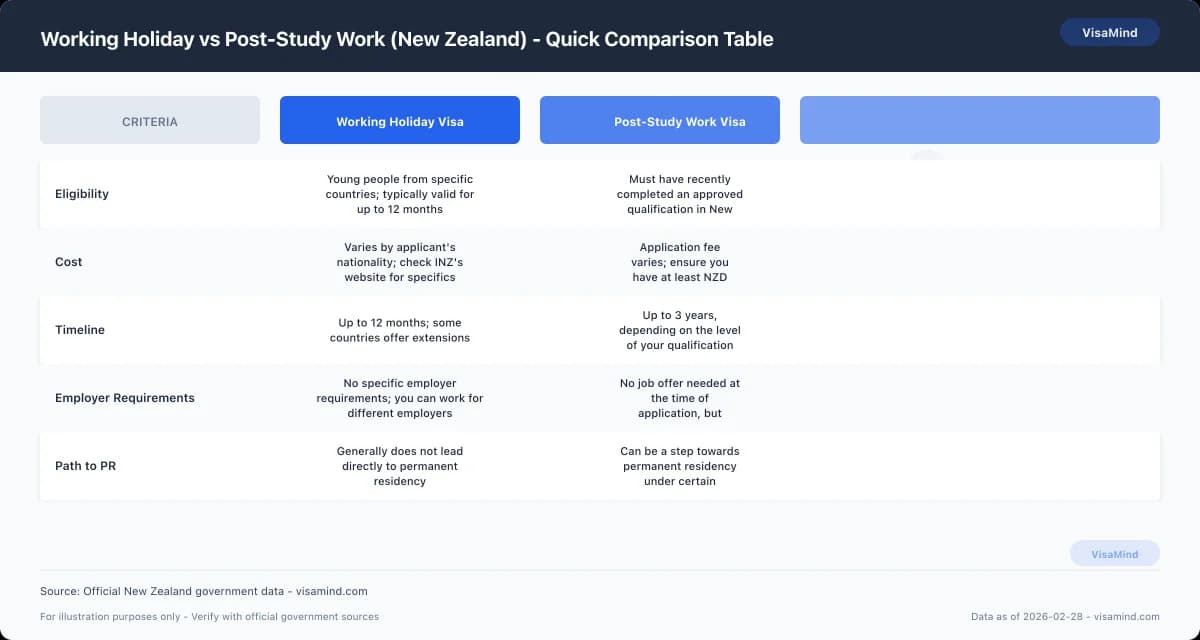
Both the Working Holiday Visa and Post-Study Work Visa in New Zealand offer unique opportunities for young people and recent graduates. The Working Holiday Visa allows individuals to explore and work in New Zealand for up to 12 months, while the Post-Study Work Visa supports recent graduates in gaining work experience related to their field of study.
Eligibility Criteria Overview
Eligibility for these visas varies significantly. The Working Holiday Visa targets young individuals aged 18-30 from specific countries, allowing them to travel and work in New Zealand for a limited period. In contrast, the Post-Study Work Visa is designed for those who have completed a qualification in New Zealand, enabling them to work in the country to gain relevant experience.
| Visa Type | Eligibility Requirements |
|---|---|
| Working Holiday Visa | Aged 18-30, from eligible countries, sufficient funds (NZD $5,000) |
| Post-Study Work Visa | Completed an approved qualification in New Zealand |
Important: Ensure you meet the specific eligibility criteria for each visa type by consulting Working Holiday and Post Study Work.
Cost Breakdown of Each Visa
The application fees for each visa are subject to change. As of the latest update, the fees for the Working Holiday Visa and Post-Study Work Visa differ based on the applicant's nationality and specific requirements. - Working Holiday Visa: Fees vary by country; verify on the official Immigration New Zealand website. - Post-Study Work Visa: Check the current fee structure on the official website.
Warning: Application fees are non-refundable, so ensure all eligibility and documentation requirements are met before applying.
Processing Times and Procedures
The processing times can vary based on demand and completeness of the application. For the Working Holiday Visa, applicants typically experience quicker processing times compared to the Post-Study Work Visa, which requires verification of qualifications.
-
Gather necessary documents, including proof of identity and qualification.
-
Submit your application through the Immigration New Zealand portal.
-
Regularly check your application status online.
Tip: Consider applying well ahead of your planned start date to accommodate potential delays.
Employer Sponsorship Needs
Neither visa requires employer sponsorship, but the Post-Study Work Visa is beneficial for those seeking employment relevant to their qualifications. Employers may prefer candidates with this visa due to its alignment with work experience in their field of study. For the Working Holiday Visa, job flexibility is a key advantage, allowing visa holders to take up various short-term jobs without the need for sponsorship.
Important: Employers in New Zealand value the skills and experience brought by international graduates and working holiday participants, enhancing workplace diversity.
Real Scenarios
#Each year, many young adults explore New Zealand through Working Holiday Visas, while recent graduates look to extend their stay with a Post-Study Work Visa. These visa options cater to different needs and aspirations, providing unique opportunities for work and travel.
Tip: Ensure your police certificates are less than six months old when applying, as outdated documentation can delay your application process.
Backpacker Seeks Career Opportunities
A backpacker visiting New Zealand on a Working Holiday Visa wanted to explore career opportunities beyond the typical seasonal work. They decided to use their time to network and gain experience in their field of interest. By participating in local events and reaching out to potential employers, they found a company willing to sponsor them for a different work visa. This transition required careful planning and coordination with INZ to ensure they maintained a valid visa status throughout the process.
Important: If you're on a Working Holiday Visa and considering a different work visa, ensure you apply for the new visa before your current one expires to avoid legal issues.
Student Weighs Work Options
While studying in New Zealand, an international student evaluated their options for working in the country post-graduation. They considered the Post-Study Work Visa, which would allow them to work full-time after completing their studies. After discussing with their educational advisor, they decided to apply for the Post-Study Work Visa, gathering all necessary documentation, such as their academic transcript and proof of their qualification. The application was lodged online through INZ's portal, and they received their visa approval shortly after their graduation ceremony.
Warning: Failing to apply for a Post-Study Work Visa soon after graduation may result in losing eligibility. It's required to keep track of your student visa expiration dates.