
When to Read This
#Achieving Indefinite Leave to Remain (ILR) or British Citizenship in the UK involves distinct paths and eligibility requirements. Understanding when to consider each option can greatly impact your long-term plans in the UK.
Who Should Consider This Comparison?
If you have lived and worked in the UK for at least 5 years on a work visa, this comparison is crucial for determining your next steps towards permanent residency or full citizenship. For those on a Tier 1 visa, the timeframe might be as short as 2 to 3 years. Additionally, individuals who have resided in the UK for 10 years could also be eligible for ILR. The decision between remaining indefinitely with ILR or progressing to British citizenship involves evaluating your personal circumstances, eligibility, and future intentions.
Why This Matters
Choosing between ILR and British citizenship is significant because each status affords different rights and responsibilities. ILR grants the right to live, work, and study in the UK without time limitations and access to certain benefits if eligible. However, obtaining British citizenship not only includes these rights but also allows for a UK passport, voting rights in general elections, and the ability to live without immigration restrictions. Understanding these distinctions helps you align your immigration status with your personal and professional goals.
When to Navigate Your Options
The timing of your application is crucial. For example, to apply for British citizenship, you typically need to have held ILR for 12 months, unless you are married to a British citizen, in which case the requirement is 3 years of residence in the UK. Equally, being physically present in the UK exactly 5 years before your application is a requirement for both ILR and citizenship, emphasizing the need to carefully plan your application timelines.
Important: Ensure you have passed the Life in the UK Test and gathered all necessary documentation before proceeding with your application. Missing these steps can delay your path to permanent residency or citizenship.
Side-by-Side Comparison
#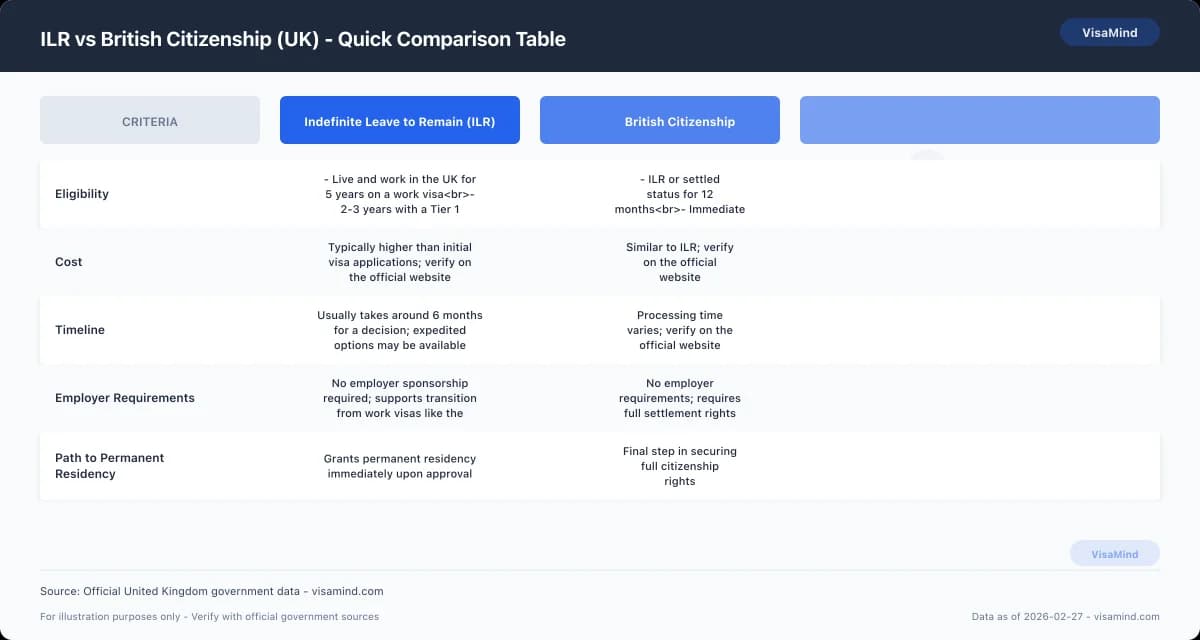
| Dimension | Indefinite Leave to Remain (ILR) | British Citizenship |
|---|---|---|
| Eligibility | - Live and work in the UK for 5 years on a work visa<br>- Tier 1 visa holders after 2 or 3 years<br>- 10 years of lawful residence | - ILR holders living in the UK for 12 months<br>- Married to a British citizen and lived in the UK for 3 years<br>- Born in the UK and not automatically a citizen |
| Cost | £2,404 (as of early 2026 — always verify current amounts with the official authority, verify on the official website) | £1,330 (as of early 2026 — always verify current amounts with the official authority, verify on the official website) |
| Timeline | 6 months for a decision on ILR applications | 3-6 months for citizenship applications |
| Employer Requirements | No employer sponsorship needed | Not applicable |
| Path to Permanent Residence | ILR is a form of permanent residence, allowing you to live, work, and study in the UK indefinitely | British citizenship grants full rights as a citizen, including the right to vote in UK elections |
Eligibility Criteria
To apply for Indefinite Leave to Remain (ILR), you must have been living and working in the UK generally for 5 years. This period can be shorter for those on a Tier 1 visa, where eligibility might be reached in 2 or 3 years, depending on your specific visa type. Alternatively, if you have been legally residing in the UK for 10 years, you may also qualify for ILR. In contrast, for British Citizenship, holding ILR for at least 12 months is a common requirement unless you are married to a British citizen, in which case you may apply after 3 years of residence.
Costs
The financial commitment is a significant consideration for both ILR and British Citizenship. as of early 2026 — always verify current amounts with the official authority, the fee for applying for ILR is £2,404, while acquiring British Citizenship costs £1,330. It's crucial to verify the latest fees on the official UKVI website, as these can change.
Important: Ensure you have the necessary funds ready for application fees, as these are non-refundable.
Timelines for Application
The processing time for ILR applications is typically around 6 months, whereas obtaining a decision on British Citizenship can take between 3 to 6 months. Planning your application timeline is essential, especially if your current visa is nearing expiration.
Employer Requirements
For ILR, there are no ongoing employer requirements once the application is made, distinguishing it from some other visas such as the Skilled Worker Visa. British Citizenship, being more about your relationship to the UK rather than employment, does not require any employer involvement.
Tip: Consider applying for ILR even if you are eligible for British Citizenship, as it provides a solid foundation before taking the final step to citizenship.
Path to Permanent Residence
While ILR itself signifies a status of permanent residence, British Citizenship elevates your rights, allowing you to participate fully in UK society, including voting in national elections. Understanding the distinction between ILR and British Citizenship is crucial in planning your long-term stay in the UK.
When to Pick the First Option
#A software engineer, having lived and worked in the UK for five years under a Skilled Worker Visa, was considering applying for Indefinite Leave to Remain (ILR) to secure their future in the UK. They had met the residency requirement and were eager to ensure a stable life without the periodic renewals associated with their current visa.
To proceed, the engineer gathered necessary documentation, such as proof of residency and employment history, and took the Life in the UK Test. Their application was lodged through the UK Visas and Immigration (UKVI) portal. Upon successful approval, they were granted ILR, allowing them to live and work in the UK indefinitely. This outcome provided them peace of mind and the freedom to make long-term plans without the constraints of their previous visa.
Scenario: Tier 1 Investor Opting for ILR
An entrepreneur who had been residing in the UK on a Tier 1 Investor visa for three years was evaluating their options for permanent residency. With substantial investments made in the UK, they were eligible to apply for ILR sooner than the typical five-year requirement for other visas.
The entrepreneur worked closely with their immigration advisor to ensure all financial documentation was in order, demonstrating that their investments met the criteria set by UKVI. They successfully submitted their application online and provided their biometric information as part of the process. Within six months, they received ILR status, which not only secured their stay in the UK but also allowed them greater freedom to expand their business interests without the need for further visa renewals.
Scenario: Long-term Student Transitioning to ILR
A doctoral candidate, who had completed their studies and worked in the UK on a Graduate Visa, had lived in the UK for a decade. This long-term residency qualified them for ILR under the 10-year rule.
Throughout their time in the UK, they maintained meticulous records of residency and employment to meet the ILR application requirements. After successfully passing the Life in the UK Test, they submitted their ILR application via the UKVI system. Within a few months, they received their ILR status, enabling them to remain in the UK indefinitely and pursue job opportunities without visa restrictions. This provided a sense of security and the ability to fully integrate into the UK workforce.
Choose Option B If...
#A software engineer who has been living and working in the UK on a Skilled Worker Visa for the past five years is considering applying for Indefinite Leave to Remain (ILR). They meet the required residency period and have maintained a stable income above the financial threshold required for their visa type. Familiar with the process, they gathered their employment records, pay slips, and proof of residency. They successfully navigated the UKVI portal to lodge their ILR application and booked their Life in the UK Test online. After submitting their biometric information at a designated centre, they received their ILR status within six months, allowing them to reside in the UK indefinitely.
Scenario: Spouse of a British Citizen Seeking Citizenship
A marketing professional married to a British citizen has been living in the UK for three years on a Spouse Partner Visa. With the eligibility to apply for British citizenship, they decided to pursue this route. They collected documents proving their marriage and residency in the UK, including utility bills and joint bank statements. Using the UKVI online portal, they submitted their citizenship application, having already passed the Life in the UK Test. Within a few months, they were invited to a citizenship ceremony, officially becoming a British citizen.
Scenario: Tier 1 Visa Holder Transitioning to Citizenship
An entrepreneur holding a Tier 1 visa has been in the UK for three years and recently obtained ILR. A year after securing ILR, they decided to apply for British citizenship. They ensured to meet the residency requirements and had their financial documents ready to demonstrate continued economic activity in the UK. The application was submitted through the UKVI site, accompanied by evidence of their business activities and Life in the UK Test pass certificate. The process culminated with their successful integration as a British citizen, enhancing their business opportunities in the UK.
Key Differences Explained
#Understanding the key differences between Indefinite Leave to Remain (ILR) and British Citizenship is essential. Each offers distinct rights and responsibilities, and the choice between them depends on your long-term goals and current eligibility. Here's a closer look at the primary differences.
Rights and Privileges
ILR and British Citizenship both provide significant rights, but they differ in terms of political and international privileges.
-
Indefinite Leave to Remain (ILR):
- Grants the right to live, work, and study in the UK indefinitely.
- You can apply for public benefits if eligible.
- ILR holders do not have the right to vote in general elections or hold a British passport.
-
British Citizenship:
- Includes all rights granted by ILR, plus the right to vote in all elections.
- Allows you to apply for a British passport, facilitating international travel.
- Offers full protection by the UK government when abroad.
Important: ILR can expire if you leave the UK for more than two years, whereas British Citizenship is permanent and unaffected by travel.
Eligibility Requirements
Eligibility for ILR and British Citizenship requires different residency periods and conditions.
-
ILR Eligibility:
- Typically requires 5 years of continuous residence in the UK on a qualifying visa, such as the Skilled Worker Visa.
- Certain visas, like the Global Talent Visa, may reduce this requirement to 2 or 3 years.
- You must demonstrate knowledge of English and life in the UK by passing the Life in the UK test.
-
British Citizenship Eligibility:
- Requires holding ILR for at least 12 months, unless married to a British citizen, in which case you can apply after 3 years of residence.
- Must meet residency requirements, including physical presence in the UK exactly 5 years before the application is received by UKVI.
- The Life in the UK test and English language requirements apply here as well.
Application Process
The application process for ILR and British Citizenship involves gathering documentation, meeting specific requirements, and potentially different timelines.
-
ILR Process:
- Gather evidence of residency, identity, and financial status if required by your visa type.
- Submit biometric information and pass the Life in the UK test before applying.
-
British Citizenship Process:
- Requires all documents needed for ILR plus evidence of good character, such as no significant criminal record.
- Attend a citizenship ceremony upon approval of your application.
Tip: Applying for citizenship without waiting 12 months after obtaining ILR is a common mistake. Ensure you meet all timing requirements to avoid delays.
By understanding these key differences, you can better navigate your journey towards settling in the UK. Whether aiming for the stability of ILR or the full privileges of British Citizenship, make sure to consider both your current circumstances and future aspirations. For more detailed guidance, explore resources like the Indefinite Leave to Remain and British Citizenship pages.
What People Get Wrong
#-
Residency Requirements: Many people mistakenly believe that any length of stay in the UK qualifies them for Indefinite Leave to Remain (ILR). However, you must have resided in the UK for a specific period, such as 5 years on a work visa or 10 years continuously. This requirement often varies depending on your visa type, like the Skilled Worker Visa or Tier 1 Visa.
-
Financial Requirements: Some applicants overlook the need to meet specific salary or financial thresholds, which can be a critical factor depending on your visa category. For example, certain visas require a minimum salary to qualify for ILR.
Important: Ensure you have documented proof of your residency and meet any applicable financial thresholds before applying for ILR. Incomplete documentation can lead to delays or rejections.
Confusion About British Citizenship Requirements
-
Timing After ILR: A common misconception is that you can apply for British citizenship immediately after obtaining ILR. In reality, you must wait 12 months after receiving ILR before applying for citizenship, unless you are married to a British citizen.
-
Physical Presence Rule: Another frequent oversight is not being physically present in the UK exactly 5 years before the application date for citizenship. This is a strict requirement and missing this can jeopardize your application.
-
Life in the UK Test: Some applicants are unaware that passing the Life in the UK test is mandatory for both ILR and citizenship applications. Failing to pass the test before submitting your application can result in delays or denials.
General Misconceptions
-
Automatic Transition from ILR to Citizenship: Many assume that obtaining ILR automatically leads to British citizenship. However, these are distinct processes with separate requirements and applications.
-
Eligible Pathways: There is a common belief that only one pathway to ILR or citizenship exists. In fact, you might be eligible through multiple routes, such as long residency or as a spouse of a British citizen. It's crucial to explore all potential pathways to choose the most suitable one for your situation.
For more detailed information on eligibility and application processes, consider reviewing the Indefinite Leave to Remain and British Citizenship guides.
Can You Switch Later?
#When considering a transition from Indefinite Leave to Remain (ILR) to British Citizenship, it's important to understand the requirements and processes involved in making such a switch. This section will guide you through the possibilities and steps required to change your immigration status in the UK.
Is Switching Possible?
Yes, switching from ILR to British Citizenship is a common pathway for many residents in the UK. Once you have obtained ILR, you may become eligible to apply for British Citizenship after living in the UK for an additional 12 months, as long as you meet the necessary criteria. This process allows you to acquire full citizenship rights, including the ability to vote and obtain a British passport.
Eligibility Criteria for Switching
To be eligible for British Citizenship after obtaining ILR, you must meet the following requirements:
- Residency Duration: You must have held ILR for at least 12 months.
- Physical Presence: You must have been physically present in the UK exactly 5 years before the UKVI receives your citizenship application.
- Additional Criteria: You may also need to demonstrate proficiency in English and pass the Life in the UK test.
For those married to a British citizen, the pathway can be shorter. You can apply for citizenship after living in the UK for 3 years, provided you have ILR.
Application Process for British Citizenship
- Gather Necessary Documents: This includes proof of ILR status, residency documents for the required period, and evidence of passing the Life in the UK test.
- Complete the Online Application: Submit your application through the UK Visas and Immigration (UKVI) portal.
- Biometric Information: You will need to provide your biometric information as part of the process.
Tip: Ensure you have passed the Life in the UK test before starting your application to avoid delays.
Considerations Before Switching
- Timeframe: Consider how long you have held ILR and whether you meet the residency requirements.
- Benefits of Citizenship: Becoming a British citizen offers advantages such as the right to vote and the ability to travel with a British passport.
- Costs and Requirements: Be prepared for application fees and ensure you meet all the necessary requirements.
For more detailed information on the steps involved, you might want to consult guides like How To Apply and check the eligibility specifics under British Citizenship.
Who Chose What and Why
#A software engineer named Raj had been working in the UK on a Skilled Worker Visa for five years. He enjoyed his job and had settled into life in the UK with his family. Raj wanted the stability to continue living and working in the UK without the need for frequent visa renewals. He decided to apply for Indefinite Leave to Remain (ILR). Raj collected evidence of his five-year residency, including employment records and utility bills. He booked and passed the Life in the UK Test, a requirement for ILR. After submitting his biometric information to UK Visas and Immigration (UKVI), Raj was granted ILR within a few months. This status allowed him to live and work indefinitely in the UK, providing the security he sought for his family's future.
Scenario: Entrepreneur Opting for British Citizenship
Linda, an entrepreneur from Canada, had lived in the UK for over six years, having initially moved on a Global Talent Visa. After obtaining ILR, she waited the required 12 months before considering British citizenship. Linda wanted to solidify her personal and business ties to the UK, as well as enjoy the benefits of a British passport. She applied for citizenship through the UKVI portal, providing her ILR documentation, proof of residency, and evidence of passing the Life in the UK Test. After a thorough review process that lasted several months, Linda was invited to attend a citizenship ceremony, where she officially became a British citizen. This new status allowed her to participate fully in British civic life and travel with fewer visa restrictions.
Scenario: Family Decision for British Citizenship
Carlos, originally from Spain, had been living in the UK for over a decade, initially on a Student Visa and later on a Spouse Partner Visa. Married to a British citizen, Carlos had already secured ILR and was contemplating citizenship. He wanted to ensure his children, who were born in the UK, could easily integrate into British society and have the same rights as their peers. After meeting the three-year residency requirement as a spouse of a British citizen, Carlos applied for citizenship. He submitted the necessary documents through the UKVI process and attended a citizenship ceremony, completing his journey to becoming a British national. This decision not only benefited Carlos but also provided his family with a unified national identity.