
Overview (What is Form e-Visa Application?)
#By completing the application online and adhering to the specified requirements, travelers can enjoy a hassle-free process, allowing them to focus on their visit to Vietnam, whether for business, tourism, or other approved activities.
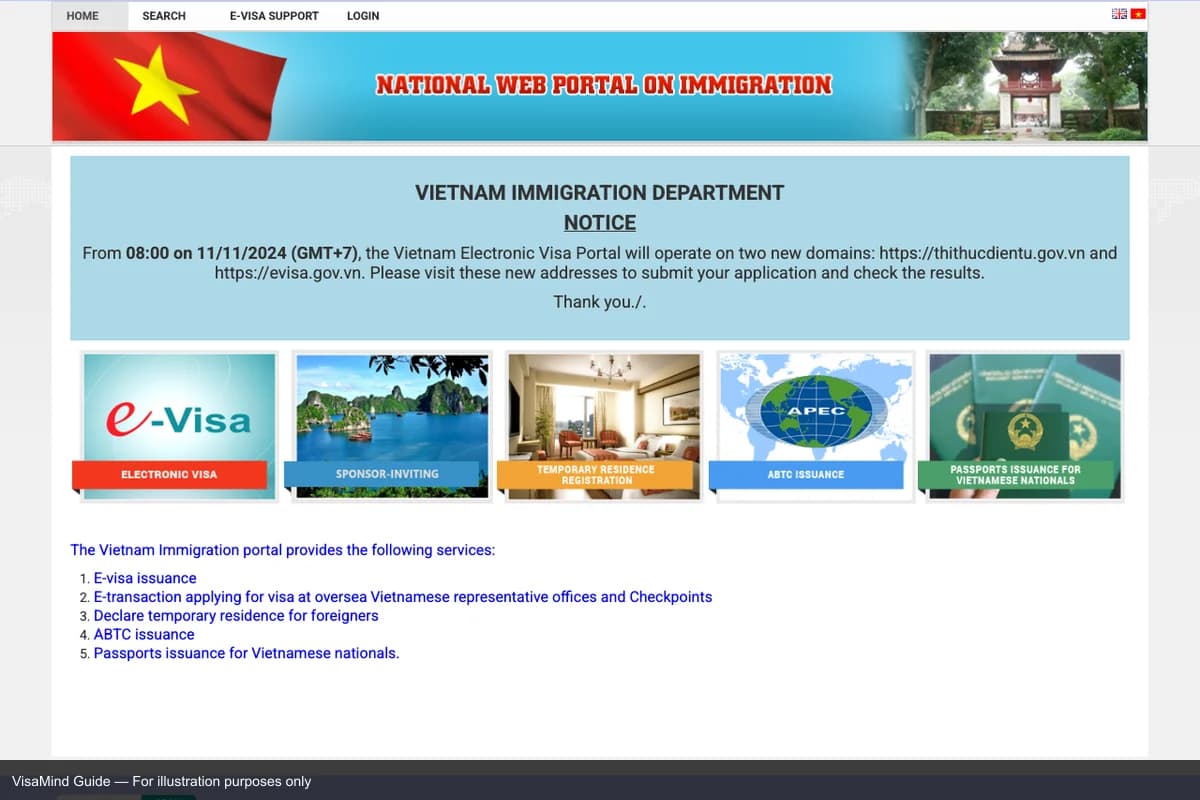
Official portal interface for e-Visa Application
Source: e-Visa Application online portal
Context and workflow
#Processing time for e-Visa Application varies by case type and current workload — always check the official Immigration Dept.
Where it fits in the workflow
- processing time tool.
- Initiating the visa application process
- Application receipt by the Immigration Department
- Review and decision on visa eligibility
Who uses it
Therefore, you need to meet these conditions to be eligible for an electronic visa
When it is used
- E-VISA: e-Visa (Electronic Visa)
- TOURIST-DL: Tourist Visa (DL Symbol)
- BUSINESS-DN: Business Visa (DN Symbol)
Requirements snapshot
#- Answer: The applicant must declare and provide complete, accurate, and truthful information in response to all questions on the declaration form
Failure prevention (What causes Form e-Visa Application rejections?)
#Technical rejections
- Failure to upload required documents in the correct format
- Ensure form edition is current
Substantive weaknesses
- Using an emergency passport, which may not be accepted
What it asks for (What does Form e-Visa Application ask for?)
#- Full name, including surname, middle name, and given name, exactly as it appears on the ICAO line in your passport.
- Detailed information about trips taken within the past year, including the duration of each trip.
- Confirmation of compliance with Vietnamese laws upon entry.
- Applicant identification information
- Supporting documentation inventory
- Eligibility or purpose details
- Declarations and signatures
What you need (What do you need for Form e-Visa Application?)
#- The current edition of e-Visa Application
- Proof of current immigration status
- Government-issued photo identification
- Passport-style photographs meeting specifications
- A printed copy of the e-Visa for presentation upon entry into Vietnam
Checklist (What is the Form e-Visa Application checklist?)
#- Download the current e-Visa Application and instructions from the official Immigration Dept. website
- Gather required supporting documents per the instructions
- Complete all required sections of e-Visa Application
- Sign, date, and submit e-Visa Application with all required supporting evidence
Common mistakes (What mistakes are common with Form e-Visa Application?)
#- Failure to declare complete, accurate, and truthful information on the declaration form.
- Not presenting valid residence documents to immigration officers at the border.
- Entering Vietnam without presenting the electronic visa and being allowed entry under visa exemption.
- Errors on the e-Visa, such as typos in names or missing middle names, may may result in delays or denial of entry.
- Applying for an e-Visa using an emergency passport may may result in delays or denial.
- Incomplete or inaccurate online form submission
- Providing incorrect or misleading information about travel history
Examples (What are examples for Form e-Visa Application?)
#- Strong application: An applicant submits the form with all required documents and receives a timely decision.
- Common weakness: An applicant provides an incorrect passport number, leading to a delay in processing.
Common misconceptions (What misconceptions surround Form e-Visa Application?)
#- Some applicants assume that having a valid passport is enough for entry into Vietnam; however, a printed e-Visa is also required.
- E-VISA APPLICATION can be rejected before substantive review for technical errors such as “Failure to upload required documents in the correct format.”
- A complete E-VISA APPLICATION can still be denied on the merits — issues like “Using an emergency passport, which may not be accepted” are evaluated by the reviewer even when paperwork is clean.
- Submitting E-VISA APPLICATION is the start of the process — applicants should expect follow-up steps such as “Application receipt by the Immigration Department.”
- An e-visa obtained through E-VISA APPLICATION has a strict validity period and authorized stay — overstaying can result in penalties or future visa denials.
- E-VISA APPLICATION is for specific travel purposes named on the application; using it for work, study, or long-term residence is a violation.
Scenarios
#A software engineer submitted their petition with all supporting documents
The case was approved within the standard timeline
Prepare all evidence before filing to avoid delays
Why it matters
#Electronic visas are only issued to foreigners outside Vietnam.
Why it matters: Applicants currently in Vietnam cannot apply for an e-Visa and must exit the country first.
The validity of the electronic visa must be at least 30 days shorter than the passport validity.
Why it matters: Ensures that the visa remains valid for the duration of the stay without passport expiration issues.
Foreigners using e-visas must enter and exit Vietnam through designated international border gates.
Why it matters: Entering or exiting through non-designated gates can lead to entry denial or legal issues.
Electronic visas can only be used for entry and exit through specific border gates.
Why it matters: Entering or exiting through an unapproved gate can result in denial of entry or exit.
What happens after you submit
#- Application receipt by the Immigration Department
- Review of submitted information and documents
- Decision on visa approval or denial
- Notification of decision to the applicant
- If approved, travel to Vietnam and present the e-Visa at the border
Verification
#This guide is derived from official Immigration Dept. instructions for e-Visa Application and is updated when form editions or filing rules change. Always verify current requirements at the official Immigration Dept. website.