
Latest Processing Estimates
#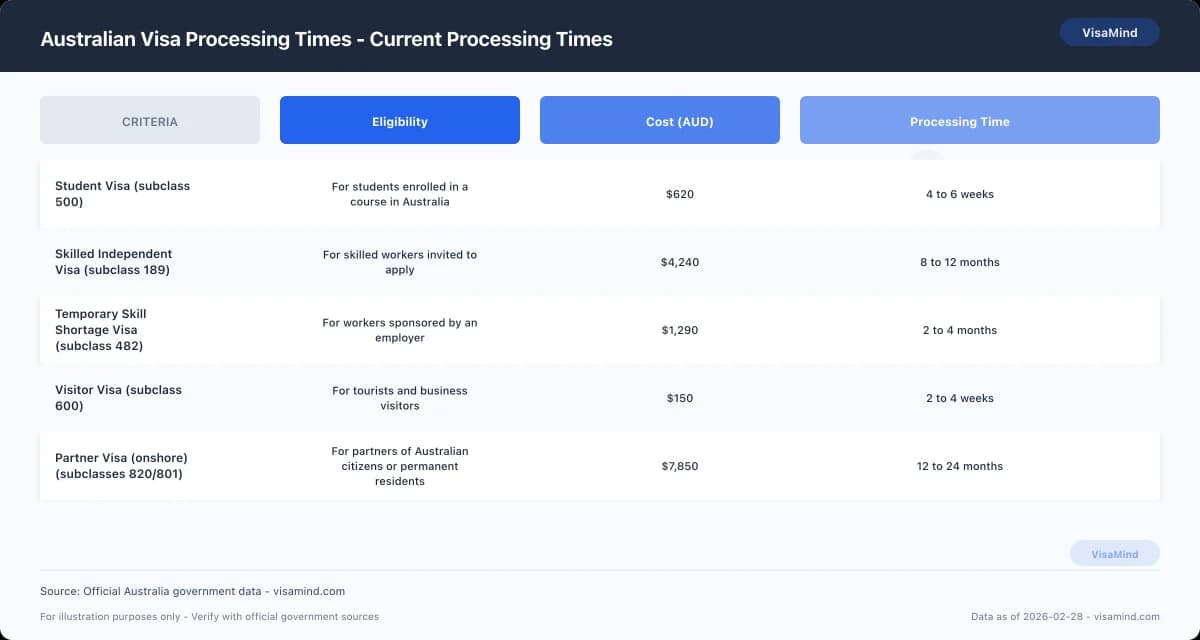
Australian visa processing times vary by subclass and change as Home Affairs decides new cases. Use the official processing-time guide for the visa and application date you care about instead of treating an old multi-visa table as a promise.
For the Student Visa (subclass 500), Home Affairs reports results by education sector. Offshore student applications are also handled under published processing priorities. Provider priority, sector, application completeness, health and character checks, and requests for more information can materially change the timeline.
For other visas, select the exact subclass in the live tool. A median or percentile describes recently decided applications; it is not a deadline or guarantee for a pending case.
If It Is Taking Longer Than Expected
#Visa processing times for Australia can vary significantly, often depending on the specific visa type. While the Department of Home Affairs provides estimates based on recent processing times, these are not guarantees, and delays can occur for various reasons. If your visa application is taking longer than expected, there are steps you can take to address the situation.
Steps for Escalation
-
Verify the standard processing times for your visa type on the Department of Home Affairs website.
-
Ensure all required documents and information were submitted correctly.
-
Contact the Department of Home Affairs to inquire about your application status.
-
If delays persist without clear justification, consider seeking assistance from a Member of Parliament (MP) or lodging a complaint with the Commonwealth Ombudsman.
Tip: Check if your visa type qualifies for priority processing to expedite the application.
Contacting Your MP for Assistance In Australia,
MPs can sometimes assist constituents with immigration issues. If you're experiencing significant delays, reaching out to your local MP may help expedite your case.
-
Identify your local MP using the Australian Parliament's official website.
-
Prepare a concise summary of your situation, including your application details and any correspondence with the Department of Home Affairs.
-
Contact your MP's office to request their assistance with your visa delay.
Important: While MPs can advocate on your behalf, they do not have the authority to change visa decisions.
Ombudsman Complaints Process
If you believe your application has been mishandled or delayed without reason, you can lodge a complaint with the Commonwealth Ombudsman. The Ombudsman investigates complaints about Australian Government agencies, including the Department of Home Affairs.
-
Gather all relevant documentation, including application details and correspondence with Home Affairs.
-
Visit the Commonwealth Ombudsman's website to submit your complaint.
-
Provide a clear and detailed account of your issue, including any evidence of unreasonable delays or errors.
Tip: The Ombudsman can recommend corrective actions but cannot overturn visa decisions.
Your Rights While Processing
#In Australia, bridging visas play a necessary role in maintaining legal status while your primary visa application is being processed. These visas ensure you can remain in the country lawfully and continue your daily activities without interruption. Understanding your rights and entitlements during this period is important, especially regarding work rights and legal status. This section provides insights into what you can expect while your visa application is under review.
Bridging Visa Entitlements
Bridging visas are typically granted to individuals who have submitted a valid visa application and are awaiting a decision from the Department of Home Affairs. These visas act as a temporary permit, allowing you to stay legally in Australia during the processing period. - Bridging Visa A (BVA): Granted to individuals within Australia who hold a substantive visa. - Bridging Visa B (BVB): Allows travel outside Australia and return once. - Bridging Visa C (BVC): Available for those who apply for a visa while onshore without a substantive visa.
Tip: It is essential to understand the specific conditions attached to your bridging visa, as they can vary depending on your circumstances and the type of bridging visa granted.
Maintaining Legal Status During Processing
While your application is being processed, holding a bridging visa ensures you remain in Australia legally. This status is required for accessing public services and continuing your daily life without legal interruptions. - Ensure your bridging visa remains valid by adhering to its conditions. - Monitor any notifications from the Department of Home Affairs regarding your application status.
Important: Bridging visas do not automatically grant the right to re-enter Australia if you leave. Always check the conditions before planning travel.
Work Rights While Waiting
Your ability to work while holding a bridging visa depends on the specific conditions of that visa. Often, work rights are granted to those with pending applications for visas that usually allow work, such as the Student Visa (subclass 500) and Skilled Independent Visa (subclass 189).
| Visa Type | Work Rights |
|---|---|
| Bridging Visa A | No work rights unless applied for and granted |
| Bridging Visa B | Work rights may be granted, depending on original visa type |
| Bridging Visa C | Work rights subject to application conditions |
Tip: If your bridging visa does not automatically allow work, you may apply for work rights, demonstrating financial hardship or other compelling circumstances.
How to Track Your Application
#The Department of Home Affairs offers several options for tracking the status of your visa application. Understanding these tracking methods can help you stay informed about your application progress. With tools like VEVO and ImmiAccount, you can easily access updates and information about your Australian visa application. These platforms provide reliable ways to stay updated on your application status.
Using VEVO for Status Updates
Visa Entitlement Verification Online (VEVO) is a useful tool for checking your visa details and conditions. It allows you to verify your current visa status at any time. - Access VEVO through the official Department of Home Affairs website. - Enter your passport and visa details to view your visa status. - Check any conditions attached to your visa.
Tip: VEVO is particularly handy if you need to quickly confirm your visa status when seeking employment or accessing services in Australia.
Accessing ImmiAccount for Tracking
ImmiAccount is an essential portal for managing and tracking your visa applications. It provides real-time updates and allows you to view the progress of your application.
-
Log in to your ImmiAccount using your credentials.
-
Navigate to the 'My Applications' section to view your application status.
-
Check for any alerts or messages related to your application.
Important: Ensure your contact details are up-to-date in ImmiAccount to receive timely notifications.
Country-Specific Tracking Methods
Apart from VEVO and ImmiAccount, you can also contact the Department of Home Affairs for updates. They provide assistance through their call center for application-specific queries. - Use the online enquiry form available on the Home Affairs website. - Call the Department of Home Affairs for direct assistance.
Warning: Avoid using third-party services for visa tracking as they may not provide accurate or up-to-date information.
What Affects Your Timeline
#Understanding these factors can help you anticipate potential delays and manage your application timeline effectively.
Factors Impacting Processing Times
Visa Type: Different visa categories have varying processing times. For example, a Student Visa (subclass 500) might be processed faster than a complex Business Innovation and Investment (Provisional) visa (subclass 188).
- Volume of Applications: High demand for certain visas can lead to longer processing times. This is particularly common during peak periods, such as the start of the academic year for student visas. - Completeness of Application: Ensure all required documents are gathered and your application is fully completed to avoid delays. Missing information can significantly extend processing times. - Security and Health Checks: Some visas require thorough background checks and medical examinations, which may take additional time.
Tip: Regularly check the Department of Home Affairs website for the most current visa processing times to stay informed about potential changes.
Country-Specific Delays Explained
Several factors specific to Australia can cause delays in visa processing. For instance, increased scrutiny around certain visa types may lead to extended processing times. This is often due to policy changes or increased security measures. - Policy Changes: Government updates to immigration policies can affect processing times. These changes may prioritize certain visa types over others, impacting timelines. - Document Verification: The thorough verification of documents by Australian authorities ensures compliance with local laws and regulations, which can take additional time. - Quota Limits: Some visa categories have annual quotas. Once these limits are reached, further applications may face delays until the next cycle.
Important: If your application is taking longer than expected, visit the Visa Refusal Reasons guide to understand potential issues and solutions.
Priority and Expedited Processing
#For certain Australian visas, expedited processing can significantly reduce waiting times, allowing you to receive a decision in a matter of weeks rather than months. Understanding these priority options can help you plan your application process more effectively.
Expedited Processing Options The Department of Home
Affairs offers expedited processing for select visa categories.Expedited processing can be particularly beneficial if you need to travel urgently or have specific time constraints. - Electronic Travel Authority (subclass 601)
- Visitor Visa (subclass 600)
- Certain Skilled Visa categories
Costs of Priority Services
Priority processing incurs additional costs, which vary depending on the visa category. The fees for expedited services can range from A$100 to A$1,000. It is essential to verify the exact fee on the official website before applying.
| Visa Type | Priority Processing Fee |
|---|---|
| Electronic Travel Authority (subclass 601) | A$100 |
| Visitor Visa (subclass 600) | A$200 |
| Skilled Independent Visa (subclass 189) | A$1,000 |
Important: Ensure you check the official Department of Home Affairs website for the most current fees, as they can change.
Availability of Premium
Processing is not universally available for all visa types. It is typically offered for temporary entry visas or where urgent travel is necessary. However, not all applicants will qualify, and the service must be requested at the time of lodging your application.