
Who This Guide Is For
#The Provincial Nominee Program (PNP) empowers Canadian provinces and territories to nominate individuals who possess the skills, education, and work experience to contribute to their local economies. This program is necessary for those aiming to become permanent residents of Canada. Each province and territory has distinct requirements for nomination, making it essential to understand the specific criteria of your chosen destination. Before you can apply for permanent residence, you must first secure a nomination from a province or territory through the PNP.
Prospective Immigrants to Canada
The guide is tailored for individuals who aim to immigrate to Canada through the Provincial Nominee Program (PNP). It is particularly beneficial for those seeking to leverage their skills, education, and work experience to contribute to a specific province or territory in Canada. If you are planning to apply for permanent residency in Canada and have identified a province or territory that resonates with your professional background, this guide will offer valuable insights.
- Skilled workers looking to settle in a specific province.
- Students who have completed their studies in Canada and wish to remain.
- Entrepreneurs interested in starting a business in a particular region.
Tip: Check if your skills and experience align with the needs of the province you are interested in.
Best Time to Use This Guide
The best time to utilize this guide is when you have decided on a province or territory in Canada where you wish to live and work. This decision should align with the province's economic needs, as each has unique streams targeting specific skills and industries.
Important: Ensure that you meet both the general requirements set by Immigration, Refugees and Citizenship Canada (IRCC) and the specific criteria of your chosen province. Consider using this guide if you are exploring pathways to permanent residence or are already in Canada on a temporary visa and looking to transition to permanent status. The Express Entry system can also interact with the PNP, providing another avenue for potential applicants.
Do You Meet the Requirements?
#Canada's Provincial Nominee Program (PNP) offers a pathway to permanent residency for skilled individuals who meet specific provincial criteria. Each province and territory in Canada has its own set of requirements, giving them the ability to nominate candidates who will contribute to their economic needs. Before applying for permanent residency through the PNP, you must first secure a nomination from a particular province or territory. This process requires you to meet specific criteria and demonstrate eligibility through various documents.
Provincial Nominee Program Criteria
Each province and territory in Canada has unique criteria for nominating individuals under the Provincial Nominee Program. These criteria are tailored to address specific economic and demographic needs.
- Skills and experience in high-demand occupations.
- Specific education credentials that align with local labor market needs.
- A valid job offer from an employer in the province or territory.
- Intention to live in the province or territory after nomination.
Important: Ensure you thoroughly research the specific requirements of the province or territory you are interested in, as these can significantly differ across regions.
Key Documents for Eligibility
Gathering the necessary documents is necessary for proving your eligibility for nomination. These documents support your claims about skills, work experience, and education.
- Proof of work experience such as reference letters from previous employers.
- Educational credentials and assessments if required.
- Proof of language proficiency through recognized tests.
- Valid job offer letters if applicable.
Tip: Keep copies of all documents submitted as part of your application for your records and future reference.
Minimum Language Proficiency Levels
Language proficiency is a critical component of the PNP criteria. Demonstrating your language skills can enhance your eligibility and improve your chances of nomination.
- Take a recognized language test such as IELTS or CELPIP for English.
- TEF is the approved test for French language proficiency.
- Achieve a minimum score as specified by the province or territory.
Warning: Check the specific language requirements of the province or territory as they may vary and affect your eligibility.
Your Action Plan
#Canada's Provincial Nominee Program (PNP) offers a path to permanent residency for individuals who secure a nomination from a province or territory. With processing times potentially stretching to 13 months, understanding each step in the process is important. Approximately 7 months are required to process applications lodged through the non-Express Entry stream. Begin your PNP journey by applying to the specific province or territory that aligns with your skills and experience.
-
Determine which province or territory's PNP stream you qualify for. Gather all necessary documents to support your application, such as proof of education and work experience.
-
Submit your nomination application to the chosen province or territory. Each province and territory in Canada has its own unique PNP streams targeting specific skills and occupations. It's vital to research and select the one that best suits your qualifications.
Tip: Consult the official IRCC website frequently to ensure you have the most up-to-date requirements for your application.
Receiving a Nomination
- Wait for a decision from the province or territory regarding your nomination. If approved, receive your nomination certificate, which is essential for the next steps. Receiving a nomination is a significant milestone in your immigration journey. It confirms that the province or territory has recognized your potential contribution to their economy.
Warning: Failing to secure a nomination before applying for permanent residence can result in the rejection of your application.
Post-Nomination Process
-
Create an Express Entry profile if your stream is linked to it, or apply for permanent residence through the non-Express Entry process. Submit all required documents and pay the necessary fees for your permanent residence application.
-
Monitor your application status through the IRCC online portal. Depending on whether your nomination is linked to Express Entry, the subsequent steps can vary. Express Entry-linked streams often offer faster processing times.
Important: Processing times can fluctuate due to the number of applications received and Canada's annual Immigration Levels Plan. For more detailed information on the Express Entry process and its requirements, refer to the Express Entry Guide.
What It Costs and How Long It Takes
#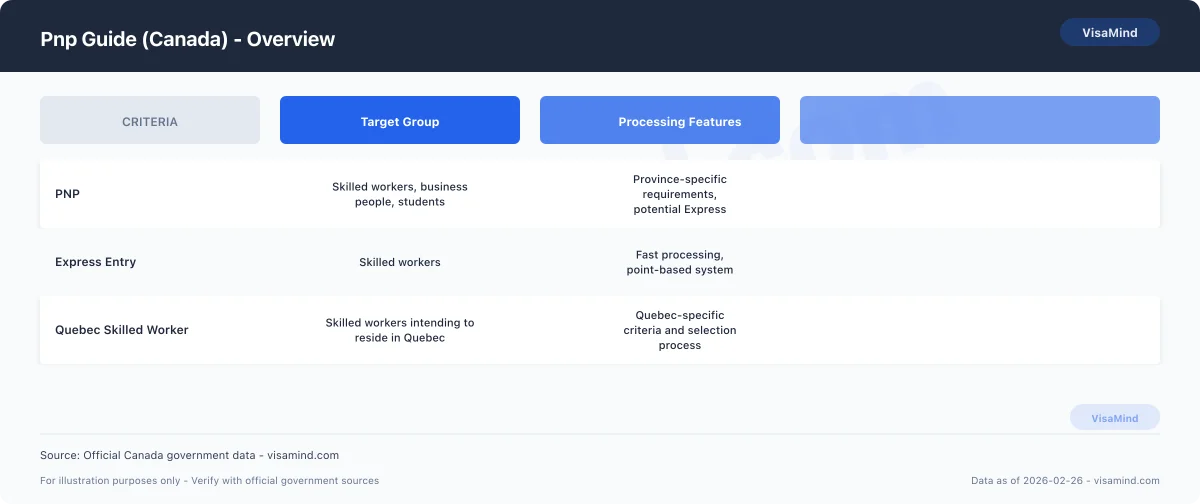
It's important to check the specific requirements of the province or territory you are applying to, as they set their own fees.
Budgeting for Additional Costs
In addition to application fees, you should budget for other potential costs. These might include fees for language tests, educational credential assessments, and medical examinations.
Practical Advice
#Each stream has specific requirements tailored to meet local economic and demographic needs. Successfully PNP process requires understanding both federal and provincial guidelines. Applicants must follow precise steps to increase their chances of securing a nomination and ultimately, permanent residency.
Maximizing Application Success
Ensure you meet all provincial criteria before applying. Missing a single requirement can lead to rejection.
- Stay updated on the latest information by regularly checking the official IRCC website.
- Consider seeking professional advice from a licensed immigration consultant or lawyer to strengthen your application. Each application is assessed individually.
Navigating Provincial Differences
Provinces and territories in Canada have distinct immigration priorities and processes. Understanding these differences is necessary for a successful application.
- Research specific program streams offered by the province or territory you are interested in. Each has unique application procedures and requirements.
- Consider the province's economic needs. For instance, some focus on skilled trades, while others prioritize technology professionals.
- Be aware of different timelines. Processing times can vary significantly between provinces.
Tip: Visit the Pnp page for detailed information on specific provincial programs.
Effective Document Preparation
Proper document preparation is vital for a successful PNP application. Gathering all necessary documents before starting the application can save time and reduce stress.
-
Compile personal information, including telephone, email, and Social Insurance Number (SIN). Prepare financial documents to demonstrate your ability to support yourself and any accompanying family members.
-
Arrange for medical and police clearances as required by the specific provincial stream.
Important: Document checklists can vary by province.
Tip: Consult the Express Entry Vs Pnp guide to understand differences in document requirements.
Pitfalls to Avoid
#It's essential to be aware of common pitfalls to improve your chances of success.
Incorrect Form Submission
Submitting incorrect forms is a frequent mistake among applicants. Each province or territory has specific forms and criteria, which can vary significantly.
- Ensure you are using the correct forms for your chosen province or territory.
- Verify that all information is accurate and matches your supporting documents.
- Consult the province's official resources for updates or changes in form requirements.
Warning: Using the wrong form can lead to delays or rejection of your application.
Missing
Deadlines can severely impact your application process. Each stream has specific timelines that applicants must adhere to.
- Note the application submission deadlines for your specific stream.
- Keep track of any additional deadlines for supplementary documents or responses.
- Set reminders to ensure you meet all critical deadlines.
Tip: Consider creating a checklist to track required actions and their respective deadlines.
Inadequate Proof of Funds
Providing inadequate proof of funds is another common issue. Each province has specific financial requirements that must be met to demonstrate your ability to settle in Canada. Ensure your proof of funds meets the specified threshold and is presented using acceptable financial documents.
- Review the minimum financial requirements for your chosen stream.
- Gather acceptable financial documents, such as bank statements or investment certificates.
- Ensure documents are recent and clearly show sufficient funds.
What You Need to Know
#Each province or territory has its own specific requirements and streams that target different needs such as labor shortages or regional development. The PNP provides a pathway to Canadian permanent residency, especially for those who may not qualify through the federal immigration programs alone. This system is key for addressing specific economic needs across Canada's diverse regions.
Understanding Provincial Nominee Programs
Provinces and territories in Canada design their own streams under the Provincial Nominee Program, tailored to meet their specific economic needs. These streams may focus on skilled workers, semi-skilled workers, business immigrants, or students.
- Each stream targets different applicant profiles, such as specific occupations or skills in demand.
- Programs often require a job offer from an employer within the province or territory.
- Some streams are aligned with the federal Express Entry system.
Tip: Research the specific requirements of each province or territory to identify where your skills and experience are most needed.
Integration with Canadian Immigration System
The PNP is integrated into the broader Canadian immigration system, allowing nominated individuals to apply for permanent residency. Once a province or territory nominates you, you can apply for permanent residence through IRCC.
-
Apply to a province or territory for a nomination. If nominated, create an Express Entry profile or apply through a non-Express Entry process.
-
Submit your application for permanent residency to IRCC.
Important: Ensure that you apply for a nomination before applying for permanent residency, as this is a critical step in the process.
Real Scenarios
#Each year, thousands of individuals successfully navigate Canada's Provincial Nominee Program (PNP), contributing to the country's diverse workforce and economy. However, the journey is not without its challenges, from understanding diverse provincial requirements to manage lengthy processing times. A skilled software developer from India, Raj, applied for the British Columbia PNP due to his expertise in technology. After ensuring that his skills and work experience matched the province's specific criteria, he applied for a nomination. Raj used the IRCC's Express Entry system to create his profile once he received the nomination, which streamlined his path to permanent residency. Within months of receiving his permanent residency, Raj secured a position at a leading tech firm in Vancouver, contributing significantly to the local economy. Maria, a nurse from the Philippines, chose the Manitoba PNP due to the province's demand for healthcare professionals. She applied directly to the province for a nomination by highlighting her extensive work experience and credentials. Once nominated, Maria applied through the non-Express Entry process for permanent residency. Her application was processed within seven months, allowing her to move to Winnipeg, where she now works in a well-regarded hospital, helping fill critical staffing needs.
Common Challenges Faced by Applicants
Many applicants struggle with understanding the specific requirements set by each province or territory. For instance, failing to apply for a provincial nomination before seeking permanent residency is a common pitfall. This oversight can lead to delays or even application rejections, emphasizing the importance of following the correct sequence: applying for a nomination first, followed by the residency application.