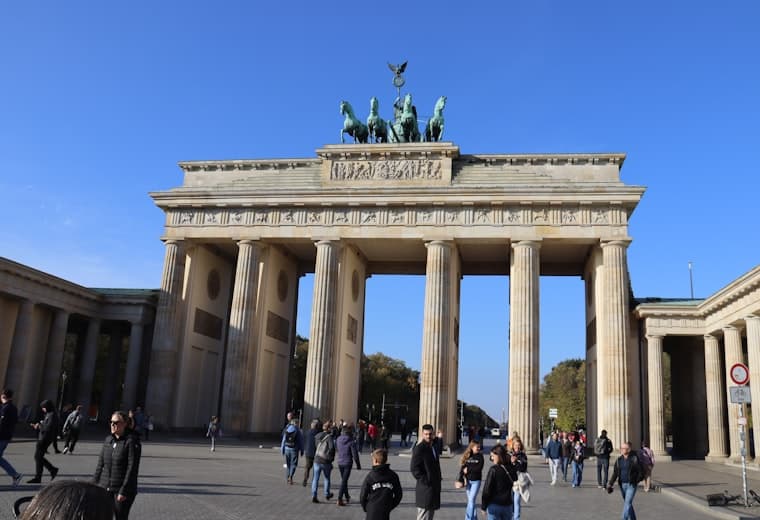
Germany working holiday visa: Overview
#The Germany working holiday visa gives young adults from partner countries the option to live in Germany for up to 12 months while working and traveling. Applications are handled by the Federal Foreign Office abroad.
The program is part of Germany’s immigration system and is intended for cultural exchange. It allows you to earn money with short-term jobs as you travel.
You submit your application through the Federal Foreign Office at a German mission abroad. Inside Germany, residence matters are handled by your local Ausländerbehörde.
Key features:
- Age range: 18 to 30 years
- Only for citizens of a partner country
- Maximum stay: 12 months
- Purpose: combine travel with temporary work
This visa is different from the EU Blue Card, Skilled Worker Visa, or Self-Employment Visa, which focus on qualified employment or business.
| Feature | Working Holiday Visa |
|---|---|
| Main purpose | Travel with incidental work |
| Target group | Young adults (18–30) |
| Length of stay | Up to 12 months |
| Long-term settlement path | Not designed for this |
Who can apply
Eligibility requires meeting the age limit and holding citizenship from a country with a working holiday agreement with Germany.
Core criteria:
- Between 18 and 30 years old at the time of application.
- Citizen of a partner country.
- Application submitted from abroad through the German mission.
This program is not a substitute for skilled migration routes. If you want long-term qualified employment, consider the EU Blue Card, Skilled Worker Visa, or Job Seeker Visa.
Visa applications abroad are not processed by BAMF; that office mainly handles asylum. Consular sections of the Federal Foreign Office process working holiday visas.
Duration and purpose
The working holiday visa grants a stay of up to 12 months. It isn't a direct path to permanent residence.
The visa's main purpose is cultural exchange. You can take temporary work to help fund your travel.
Your stay involves:
-
Experiencing daily life in Germany.
-
Short-term jobs to support your travel.
-
Cultural exchange, not career development.
If you find qualified employment later, you must change your status through the local Ausländerbehörde. This depends on meeting the requirements for a new visa type.
For application forms and appointment procedures, refer to the Federal Foreign Office.
How to Apply (working holiday Germany)
#Applications must be submitted in your country of residence. Prepare all documents before booking your appointment.
Accuracy and complete information are key. Incomplete files can delay processing.
Where to apply
Apply for a Working Holiday visa at the German mission responsible for your country of residence. The Federal Foreign Office handles consular visa applications abroad through embassies and consulates.
If you're already in Germany, the local Ausländerbehörde manages residence permits. BAMF deals with asylum, not working holiday visas.
| Authority | Role |
|---|---|
| Federal Foreign Office (via embassies/consulates) | Processes visa applications abroad |
| Local Ausländerbehörde | Handles residence permits inside Germany |
| BAMF | Handles asylum procedures |
Don't confuse the Working Holiday visa with other residence options like the EU Blue Card, Skilled Worker Visa, Job Seeker Visa, or Self-Employment Visa. Each has separate requirements.
If you're eligible for Visa Exemption, check with the German mission if you need to apply before travel.
Application steps
Follow these steps:
-
Confirm your eligibility under the Working Holiday visa rules.
-
Prepare all required documents.
-
Complete the visa application form fully.
-
Submit your application to the German mission in your country of residence.
Check that all sections of the form are filled out. Your answers should match your supporting documents.
Review the application for accuracy before submitting. Incomplete submissions can hold up your case.
For current procedural details, appointment instructions, or fee information in EUR (€), refer to the Federal Foreign Office for your country.
Tips for completing the form
Fill out every section of the form carefully. Don't leave required fields blank.
Double-check your answers before submission. Inconsistencies between your form and documents can cause delays.
Focus on:
- Correct spelling of your legal name
- Accurate passport details
- Consistent dates (travel, residence, employment history)
- Clear, truthful answers
If a question doesn't apply, follow the form’s guidance. Don't guess.
You're responsible for the content, even if someone helps you.
Fees and Processing Times
#There’s a fixed government fee and, in most cases, a separate visa application center service fee. Processing usually takes 2 to 4 weeks, but it depends on where and how you apply.
Application and VAC fees
The visa application fee is €100.
If you use a Visa Application Center (VAC) like VFS or TLS, expect a €60 service fee. That covers document intake and forwarding.
| Fee Type | Amount (EUR) | Who Receives It |
|---|---|---|
| Visa application fee | €100 | German consular authority (Federal Foreign Office abroad) |
| VAC service fee | €60 | Visa Application Center (e.g., VFS or TLS) |
You complete your national visa form through Form VIDEX before your appointment. The fee remains the same even if you later apply for a different status.
If you qualify for Visa Exemption and apply from within Germany, confirm current fees with the local Ausländerbehörde. BAMF doesn’t handle working holiday visas.
Processing time estimates
Standard processing is 2 to 4 weeks for a Germany Working Holiday Visa.
This applies to typical applications through a German mission abroad. It’s not a guarantee of approval within that time.
| Processing Type | Estimated Time |
|---|---|
| Standard working holiday visa | 2–4 weeks |
Processing starts after you submit a complete application and attend your appointment. Missing documents will slow things down.
If you switch to another residence title later, like the EU Blue Card or Skilled Worker Visa, you'll need to follow a separate process. processing times can change, so check with the German embassy or consulate handling your case.
Variable processing locations
Where you apply affects how your case moves through the system.
Abroad, the Federal Foreign Office processes your visa through the relevant German embassy or consulate. If you enter Germany under a Visa Exemption (if eligible) and apply locally, your case goes to the Ausländerbehörde for your area.
Some places use providers like VFS or TLS to collect biometrics and documents. These centers don’t decide your case.
Processing speed depends on:
- Application volume at your consulate
- Local staffing
- Whether your file is complete through VIDEX
- Your post-arrival registration, including the Form Residence Declaration (Anmeldung)
Confirm which authority handles your case before booking travel.
Eligibility Requirements
#You must meet identity, nationality, and financial standards before Germany will issue a working holiday visa. Authorities expect all documentation to be in order at the time of application.
Age and nationality
Your nationality affects whether you need a visa before entering Germany or qualify for Visa Exemption for short stays. Third-country nationals must hold a valid, recognized passport.
If you aren't an EU citizen, you fall under Germany’s third-country national rules. Entry and visa requirements differ from long-term residence permits like the EU Blue Card, Skilled Worker Visa, Job Seeker Visa, or Self-Employment Visa.
You must:
- Hold citizenship of an eligible country.
- Follow Germany’s entry rules for your nationality.
- Apply through the Federal Foreign Office if a visa is needed before travel.
If you're unsure about your eligibility, confirm with the Federal Foreign Office. BAMF doesn't process working holiday visas.
| Requirement Area | Authority Involved |
|---|---|
| Visa application abroad | Federal Foreign Office |
| Residence permit in Germany | Local Ausländerbehörde |
| Asylum matters | Federal Office for Migration and Refugees (BAMF) |
Passport and identity
You need to prove your identity and nationality with a valid passport. Germany won’t admit third-country nationals without a recognized travel document.
Your passport must:
- Be valid at the time of application.
- Be recognized by German authorities.
- Accurately show your identity and nationality.
You submit personal details during the visa process, usually through the Form VIDEX system. Discrepancies between your passport and application can cause problems.
If you register your address in Germany later, you may need to complete a Form Residence Declaration with local authorities. This doesn't replace your passport—it's additional documentation.
Proof of funds
You need to show you can support yourself financially during your stay. German authorities want evidence that you can cover living expenses without public funds.
Acceptable proof usually includes documentation showing available resources in your name. The authorities check if your funds are enough for your planned stay.
Prepare to provide:
- Official financial statements or similar evidence
- Documentation showing you as the account holder
- Proof the funds are accessible
If your financial proof is insufficient, the visa can be refused. Confirm current documentation standards with the Federal Foreign Office before you apply.
Work and Travel Rules
#You must follow the conditions printed on your visa sticker and any residence document issued after arrival. German authorities enforce these conditions strictly.
Work rights
Work permission depends on the conditions attached to your Germany Working Holiday Visa. The visa label states if employment is allowed and any limits.
Review:
- The wording on your visa
- Any remarks about employer restrictions
- Whether you need additional approval from the local Ausländerbehörde
If you want to switch to another residence title, like the EU Blue Card or Skilled Worker Visa, you must apply through your local Ausländerbehörde. Each category has its own requirements.
For confirmation of work permissions, consult the Federal Foreign Office or your local Ausländerbehörde. BAMF does not issue work permits for this visa.
| Authority | Role |
|---|---|
| Federal Foreign Office | Issues visas abroad |
| Ausländerbehörde | Handles residence permits inside Germany |
| BAMF | Responsible for asylum matters |
Always comply with the employment limits attached to your visa.
Travel and study
You can travel in and out of Germany only during the dates printed on your visa. Always carry valid travel documents.
If you entered Germany under a Visa Exemption and applied locally, make sure your stay remains lawful while your residence status is being processed.
Use the official Form VIDEX system if you’re told to complete visa forms before an appointment abroad.
You may join short-term study or language courses only if your visa conditions specifically allow it. The Ausländerbehörde will decide whether your study plans fit your residence status.
After arriving, you need to complete any required Form Residence Declaration (Anmeldung) at the local registration office. This doesn’t replace your immigration status, but it does support your lawful stay.
Insurance requirement
You must have valid health insurance from your first day in Germany. Insurance coverage cannot begin after you arrive.
Your insurance has to be:
- Active on your entry date
- Valid for your whole authorized stay
- Meeting German legal requirements
Border officials or the Federal Foreign Office might ask for proof of insurance during visa processing or entry. The Ausländerbehörde can also require confirmation when issuing or extending your permit.
If you change your residence status, double-check that your insurance still meets the requirements for your new category. Gaps in coverage can affect your legal stay.
Why Applications Get Rejected
#German authorities refuse working holiday visa applications when your file contains errors, contradictions, or missing details. Most issues come from mistakes in the form or supporting documents.
Top reasons for refusal
The most common reason for refusal is incomplete or inconsistent information in your application.
If details in your form don’t match your passport or documents, the consulate may reject your file. Even small differences in spelling, dates, or document numbers can cause problems.
Common issues include:
- Different passport numbers across documents
- Mismatched birth dates or name spellings
- Missing answers in required fields
- Conflicting information about your travel history or plans
If you use the Form VIDEX system to fill out your form, check every field before submitting. The Federal Foreign Office processes visa applications abroad, and inconsistencies usually lead to immediate refusal.
Confusion can also arise if you mix up visa categories. The Working Holiday Visa isn’t the same as an EU Blue Card, Skilled Worker Visa, Job Seeker Visa, or Self-Employment Visa. Choosing the wrong purpose of stay or describing activities that fit another visa category can raise doubts about your intent.
How to avoid rejection
You lower your risk of refusal by making sure every detail in your application matches your official documents.
Follow these steps before you submit:
-
Enter your name, date of birth, and passport number exactly as in your passport.
-
Make sure all answers in VIDEX are complete.
-
Confirm your stated purpose of stay matches the Working Holiday Visa conditions.
-
Review your application for internal consistency.
Use this checklist:
| Item to Verify | What to Check |
|---|---|
| Passport details | Exact spelling, number, and validity dates |
| Personal data | Same information across all forms |
| Visa category | Correct selection: Working Holiday, not EU Blue Card or Skilled Worker Visa |
| Declarations | No unanswered required fields |
If you apply from abroad, the Federal Foreign Office handles your file. If you later apply for a residence permit inside Germany, your local Ausländerbehörde will review your records.
Inconsistent information can affect future applications, including a Form Residence Declaration or a different residence title.
Fees
#| Component | Amount |
|---|---|
| Application feeExtracted from guide content — verify against official source | €100 (approx $108 USD) |
| VAC service feeVisa application center — verify by location (VFS/TLS) | €60 (approx $65 USD) |
Fees change; always verify on AA.
Next steps
#Use Find My Visa to build a sequenced plan with official sources and deadlines.
FAQs
What does the program offer?
The program is an official BAMF form titled “Working Holiday Visa” used by applicants filing with the Federal Office for Migration and Refugees (BAMF). It is for young people (18–30) from partner countries and provides a 12-month stay for work and travel.
Who can apply for this visa?
The visa is for young people (18–30) from partner countries.
How long can I stay in Germany on this visa?
The visa provides a 12-month stay for work and travel.
What identity documents do I need to apply?
You must prove your identity and nationality with a valid passport when applying. You need a valid passport or a recognised document in lieu of a passport to enter Germany; as a third-country national you can only enter Germany with a valid and recognised passport.
Do I need health insurance?
Yes. You need health insurance coverage from the first day you arrive in Germany.
Where should I apply for the visa?
Apply for the visa in your country of residence and prepare the necessary documents for your visa application.
Does filing the form guarantee approval?
No. Filing the working-holiday form does not guarantee approval.
What are the fees for applying?
The application fee is €100 (approx $108 USD) and the VAC service fee is €60 (approx $65 USD). Verify VAC arrangements by location (VFS/TLS).
How long does processing usually take?
Standard processing time is 2–4 weeks (as of March 2026). processing times vary by category and processing location; verify current processing times with the issuing authority.
What common mistakes lead to rejection?
A common rejection reason is incomplete or inconsistent information across the form. Avoid this by using exact passport and document details and reviewing all answers before submission.
Official sources referenced
Last reviewed: 2026-03-13
VisaMind provides informational guidance only and is not a government agency. This is not legal advice. Requirements can change and eligibility depends on your specific facts. If your case is complex or high-stakes, consult a licensed immigration attorney.
Next steps
Every Germany visa case depends on your nationality, purpose, and timeline. Get a personalized plan with official sources and deadlines.
Get my Working Holiday Visa plan