How Long Applications Take Right Now
#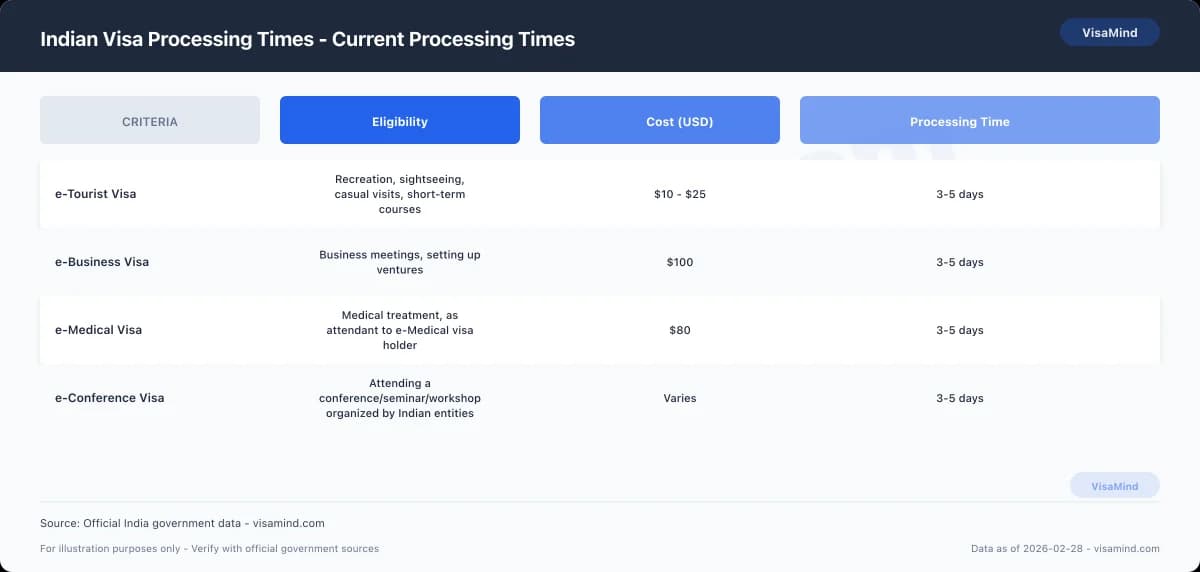
For those planning a trip to India, the e-Tourist Visa is typically processed within 3 to 5 working days. However, this timeframe can fluctuate due to the volume of applications and specific applicant circumstances.
Tourist Visa Processing Durations
Several factors can influence the processing time for Indian tourist visas. Generally, an e-Tourist Visa is processed within 3 to 5 working days. Delays are possible during peak travel seasons or when there is a surge in applications.
| Visa Type | Processing Time | Validity |
|---|---|---|
| e-Tourist Visa | 3-5 working days | 30 days |
| Regular Tourist Visa | 10-15 working days | Up to 1 year |
Tip: Ensure your passport is valid for at least six months and carry a printed copy of your Electronic Travel Authorization (ETA) when arriving in India.
Business Visa Current Wait Times
Business travelers can opt for the e-Business Visa, which usually takes 3 to 5 working days to process. This period may extend if additional documentation or verification is necessary.
| Visa Type | Processing Time | Purpose |
|---|---|---|
| e-Business Visa | 3-5 working days | Business activities |
| Regular Business Visa | 10-15 working days | Business meetings, trade |
Important: Verify the list of designated entry points for e-Visa holders to prevent issues upon arrival.
Student Visa Approval Speeds
Students aiming to study in India should apply for a student visa, which typically takes 15 to 20 working days for approval. This includes time for document verification and any required interviews.
| Visa Type | Processing Time | Duration |
|---|---|---|
| Student Visa | 15-20 working days | Course duration + 1 year |
| Research Visa | 15-20 working days | Course duration |
Tip: Ensure all educational and financial documents are prepared to avoid delays in the student visa process.
Factors That Speed Up or Slow Down Your Case
#Visa processing times in India can vary widely due to several influencing factors. While some applications are processed swiftly, others may take longer. Understanding these factors can help you better estimate your visa application timeline and plan your travel accordingly.
Impact of Application Completeness
Submitting a complete and error-free application is essential for smooth processing. Missing documents or incorrect information can cause delays. - Submit a clear, front-facing photograph with a white background. - Provide a scanned bio page of your passport showing your photograph and details. - Ensure your passport is valid for at least six months from the application date.
Warning: Uploading unclear or non-compliant documents may result in processing delays.
Influence of Indian Public Holidays
Numerous public holidays in India can affect visa processing times. During these periods, government offices, including those handling visas, may be closed or operate with reduced staff. - Republic Day on January 26
- Independence Day on August 15
- Mahatma Gandhi's Birthday on October 2
Tip: Submit your application well before these major holidays to minimize potential delays.
Role of Regional Consulate Workloads
The workload at regional consulates can significantly impact processing times. Consulates in high-demand areas may experience backlogs, leading to longer wait times. Checking the current workload of your regional consulate can help estimate processing times. Applying well in advance is advisable, especially during peak travel seasons.
Important: Larger consulates may have more resources to process applications faster but can also face higher demand.
What to Do While You Wait
#Visa processing times for India can vary based on the visa type and applicant's nationality. While waiting for your visa decision, it's required to understand your options and rights during this period.
Eligibility for Bridging Visas in India
India does not offer 'bridging visas' as seen in some countries. However, if your current visa is nearing expiration and you have applied for another visa, you might be eligible for a temporary extension through the Foreigners Regional Registration Office (FRRO). - Visit the nearest FRRO office to apply for an extension. - Ensure you have all necessary documentation, including proof of your pending application. - This temporary extension allows you to remain in India legally while your new visa is processed.
Tip: Keep copies of your application and extension requests to avoid complications during your stay.
Understanding Implied Status Rights
Indian visa applicants do not have 'implied status' as in some other countries, but you may remain in India legally if your current visa is valid and you have applied for a new one.
Important: Apply for your new visa well before your current one expires to avoid legal issues. If your application is being processed and your current visa is still valid, you can continue to stay in India under the existing terms. Contact the FRRO for specific guidance related to your visa type.
Work Permissions During Processing
Work permissions in India depend on the type of visa you hold. For instance, those on an Employment Visa may continue working while their visa is under renewal processing, provided their current visa is still valid.
| Visa Type | Work Permissions |
|---|---|
| Employment Visa | Allowed to work if visa is valid |
| Business Visa | Allowed to conduct business activities |
| Tourist Visa | No work permitted |
Warning: Engaging in work without the appropriate visa can lead to penalties or deportation. Always check the specific conditions of your visa.
Tracking Tools and Portals
#Each year, many travelers apply for Indian visas for tourism, business, and medical purposes. Knowing how to track your application status can keep you informed about your visa processing.
Using Indian Visa Tracking Portals
The Indian government offers several online portals for tracking visa applications, providing real-time updates on your visa status.
-
Visit the official Indian Visa Online portal.
-
Enter your application ID and passport number.
-
View the current status of your visa application.
Tip: Keep your application ID handy, as it's essential for tracking your visa status online.
Accessing Consulate Processing Updates
Indian consulates provide updates on visa processing times, which can vary by location. Checking these updates can help manage expectations for your visa application timeline.
-
Visit the website of the Indian consulate where you lodged your application.
-
Navigate to the visa section to find processing time updates.
-
Review any recent announcements regarding delays or expedited processing.
Monitoring Application Status Online
In addition to tracking portals, applicants can monitor their application status through email notifications sent by the Indian Bureau of Immigration. These communications will provide updates on any changes to your application status.
Important: Always double-check your email's spam or junk folder for important notifications about your visa application. For those applying for an E Tourist Visa or Business Visa, using the online tracking features provided can ensure you are aware of any required actions or documentation.
When Processing Exceeds Normal Timeframes
#In 2026, the average processing time for an Indian e-Visa was about 72 hours, though delays can occur. If your processing time exceeds expectations, consider these escalation options.
Contacting Indian Visa Authorities
If your visa processing time surpasses the expected duration, contact the Bureau of Immigration. They handle visa-related queries and can provide updates on your application status. - Visit the official Bureau of Immigration website for contact details. - Use the online query form to submit your concerns. - Check for any announcements regarding processing delays.
Tip: Have your application reference number ready when contacting the Bureau of Immigration for quicker assistance.
Seeking Help Through MP Letters
In India, Members of Parliament (MPs) can intervene in administrative processes for constituents. If your visa application is delayed, consider reaching out to an MP for assistance.
-
Identify the MP representing your constituency in India.
-
Draft a concise letter explaining your situation and the delay.
-
Request the MP to inquire about the status of your visa application with the relevant authorities.
Important: MP letters can be particularly effective if your application has been pending for an unusually long period.
Steps for Ombudsman Involvement
If all other avenues have been exhausted, involving the ombudsman may be a viable option. The ombudsman can investigate administrative delays in visa processing.
-
Gather all relevant documents and correspondence related to your visa application.
-
Submit a formal complaint to the ombudsman via their official website or contact address.
-
Provide a detailed account of the delay and any previous attempts to resolve the issue.
Warning: Ombudsman involvement should be a last resort, as the process can be lengthy and is not guaranteed to expedite your visa application.