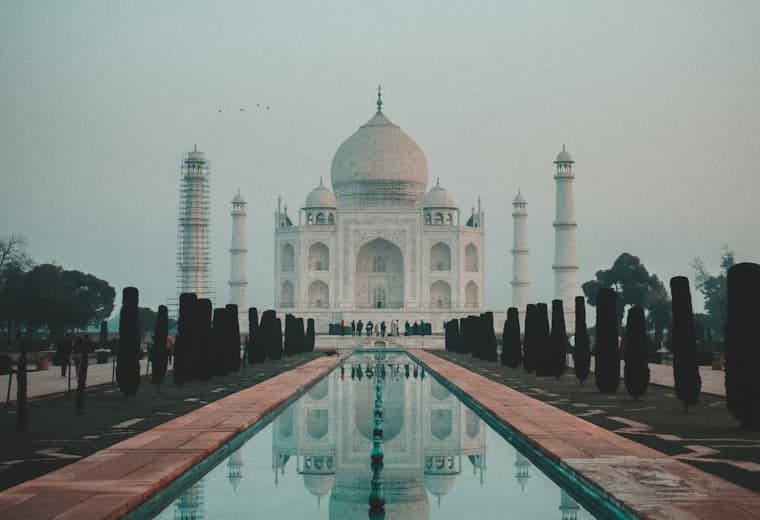
Migration Pathways at a Glance
#The table below summarizes the main visa options for this goal, including who qualifies, the key filing requirement, and reported processing times.
| Visa Option | Who It’s For | Key Filing | Processing Time |
|---|---|---|---|
| Overseas Citizen of India (OCI) | The Overseas Citizen of India (OCI) visa allows foreign nationals of Indian origin to live and work in India indefinitely. It is designed for individuals who have significant ties to India and wish to maintain their residency status. | Form OCI-APPLICATION | 4-8 weeks |
| Entry Visa (X Visa) | Persons of Indian Origin (PIO), OCI holders needing a specific endorsement, or those visiting for purposes not covered by other visa categories. | Indian origin documents or specific purpose letter | 1-3 weeks |
Use the linked visa pages for full eligibility details, required documents, and step-by-step instructions.
The Appeal of Moving Here
#India offers structured pathways for temporary residence across several common life situations. You can relocate for medical treatment, study, employment, family unity, or specific personal circumstances such as surrogacy arrangements or refugee claims.
If your spouse works in India on an Employment Visa, you and your children can apply to join them. This keeps families together while the principal visa holder works legally in the country.
You may also qualify under categories such as:
- Medical treatment
- Student enrollment
- Employment
- Entry Visa (X Visa) for eligible dependents
- Refugee registration
- Surrogacy-related relocation
Each pathway requires a valid passport and the correct visa for your purpose of stay. Ensure your biographical details are accurate and consistent across all documents, as discrepancies can delay processing.
Clear Documentation Framework
India’s process relies on documented proof. You are expected to gather and present specific records that support your reason for moving.
Commonly required documents include:
- Valid passport and appropriate visa
- Recent photograph
- Embassy or official letters, where applicable
- Birth certificates for dependents
- Proof of legal stay
- Surrender certificate if you previously held an Indian passport
If you once held Indian citizenship, you must formally surrender your Indian passport and provide proof, along with your foreign passport copy.
For surrogacy-related relocation, authorities may require:
- Surrogacy agreements
- No Objection Certificates (NOCs)
- Hospital discharge letters
Incomplete or unclear submissions create avoidable delays. You strengthen your application by preparing a clean, organized file before submission.
Registration and Oversight
After arrival, you may need to complete registration with the Foreigners Regional Registration Office (FRRO). The FRRO manages registration and visa extensions within India.
The system emphasizes documentation rather than interviews. If you qualify under the Overseas Citizen of India (OCI) framework or enter on an Entry Visa (X Visa) as a dependent, your compliance with document rules remains critical.
Eligibility is tied directly to documented purpose. When your paperwork aligns with your stated reason for staying, you move forward with fewer obstacles.
Costs and Fees
#Official government fees for the main visa options associated with this goal are listed below. Fees may change — verify the current schedule through the linked visa pages.
| Visa / Route | Fee | Amount |
|---|---|---|
| Overseas Citizen of India (OCI) | Application fee | US$275 |
| Overseas Citizen of India (OCI) | OCI card issuance fee | US$15 |
| Entry Visa (X Visa) | Application fee | US$100 |
The Permanent Residence Process
#India does not offer a single, automatic “permanent residence” visa. Your long‑term status depends on the immigration pathway you qualify for and how you maintain compliance inside the country.
You must follow the rules attached to your specific visa and complete all registration and documentation requirements.
Registration and Compliance with FRRO
If your stay requires registration, you will work directly with the Foreigners Regional Registration Office (FRRO). FRRO manages registration, visa extensions, and residential permit matters inside India.
You must keep your passport valid for at least six months at the time of application or extension. If you fail to meet this requirement, authorities may refuse your request.
Prepare to provide:
- Proof of residence in India
- Biographical details
- Copies of prior visas or permits
- A return or onward journey ticket if you previously held an e‑Visa or regular visa
- Category‑specific supporting documents
Meeting the listed requirements does not guarantee approval. Authorities assess each case individually.
Overseas Citizen of India (OCI)
If you have Indian origin or qualifying family ties, you may consider the Overseas Citizen of India (OCI) status. OCI is not full citizenship, but it grants long‑term privileges that reduce the need for repeated visa applications.
You must submit detailed identity documentation and proof of eligibility. Authorities review biographical details and current residence information carefully.
OCI status simplifies long‑term residence, but you must still comply with Indian immigration and registration rules where applicable.
Entry Visa (X Visa) and Long-Term Stays
The Entry Visa (X Visa) often applies to family members of Indian citizens or other qualifying individuals. If you pursue long‑term residence through this route, document accuracy becomes critical.
Depending on your circumstances, you may need to submit:
- Residence proof
- Embassy letters for specific family or surrogacy cases
- Notarized agreements where required
- Form C copy and residence proof if claiming refugee status
- Medical certificate and residence proof for Medical Visa holders
You must also provide any additional documents required for your specific visa category.
Step-by-Step Permanent Stay Compliance
-
Confirm Your Eligibility – Identify the correct long‑term pathway, such as OCI or Entry Visa (X Visa), based on your relationship, background, or purpose of stay.
-
Gather Required Documentation – Collect passport copies, residence proof, and all category‑specific evidence before applying or extending.
-
Register with FRRO (if required) – Complete registration and maintain updated records of your address and visa status.
-
Monitor Validity and Extensions – Track your visa expiry and apply for extensions in advance through the proper authority.
You remain responsible for maintaining lawful status at every stage of your stay in India.
The Path to Citizenship
#India does not grant citizenship automatically because you relocate. You must qualify through a recognized legal category and prove your eligibility with documents.
For many foreign nationals of Indian origin, the Overseas Citizen of India (OCI) status is the first formal step. Others may begin with an Entry Visa (X Visa) before pursuing long‑term status.
Overseas Citizen of India (OCI)
You may qualify for OCI if you were once an Indian citizen or were eligible to become one at the commencement of the Constitution. You must provide clear evidence of that status.
Prepare:
- Proof of former Indian citizenship or eligibility to become a citizen
- Evidence of Indian heritage
- A scanned copy of your passport bio page
- A recent photograph
- Any additional documents required under the current guidelines
Authorities may refuse your application if you fail to provide complete proof of eligibility. You must also carry a Yellow Fever Vaccination Card when required.
If you claim eligibility through a parent or spouse, include supporting civil documents such as a marriage certificate where applicable.
Entry (X) Visa as a Step Toward Long-Term Status
The Entry Visa (X Visa) allows certain dependents of Indian citizens or persons of Indian origin to reside in India. Spouses must submit a valid marriage certificate.
If you are involved in a surrogacy arrangement, you must provide:
- A notarized agreement between the commissioning parents and the surrogate mother
- Supporting identity documentation
Foreign nationals claiming refugee status must submit documentation issued by an agency authorized by the Government of India.
You must gather documents strictly according to your visa category. Missing or inconsistent paperwork can delay or prevent approval.
Registration and Compliance Inside India
Once you enter India on a long‑term visa, you must comply with registration rules. The Foreigners Regional Registration Office (FRRO) manages registration and visa-related matters inside India.
Follow this sequence carefully:
-
Collect required documents based on your visa type and personal circumstances, including identity, status, and relationship evidence.
-
Upload clear scanned copies of required passport pages and supporting records as instructed.
-
Complete registration with the FRRO if your visa conditions require it.
-
Maintain valid documentation at all times, including vaccination proof where applicable.
You must keep copies of everything you submit. Indian authorities expect complete, verifiable documentation at each stage of your immigration process.
Common Challenges
#You will face documentation issues early in the process. Indian visa applications require precise uploads, and officials reject files that do not meet technical standards.
A digital photograph that fails size or background rules can delay your case. The e‑Visa processing fee, paid in INR (₹), is non‑refundable regardless of outcome.
You must also match your activities to the correct visa category. An e‑Visa permits tourism, business visits, and short voluntary work, but it does not cover NGO assignments or journalism.
If you apply under the wrong purpose, authorities can refuse entry or cancel your visa.
Processing times create uncertainty. As of February 2026, e‑Visa and regular visa decisions typically take 3 to 5 days, but timing varies by category and location.
Registration and post‑arrival compliance can also cause problems. The Foreigners Regional Registration Office (FRRO) handles registration and in‑country extensions, and you must follow its deadlines and document rules.
Common documentation gaps include:
- Copy of your lease agreement for rented housing
- Bank statements or a loan sanction letter for a Student Visa
- A doctor’s letter for medical treatment cases
- Clinic certificates for surrogacy arrangements
- A surrender certificate and foreign passport copy for certain passport-related processes
Missing even one required document can delay approval.
Status misunderstandings also create friction. An Overseas Citizen of India (OCI) card is not the same as holding a visa, and an Entry Visa (X Visa) serves specific purposes. You must apply under the status that matches your personal circumstances.
Financial proof often causes refusals. You must show sufficient funds for your stay, and unsupported claims about income or savings will not meet the standard.
Complete the online form carefully, pay the correct fee in INR (₹), and verify each upload before submission. Small technical errors often cause the largest delays.
Investment and Business
#If you plan to invest or operate a business in India, you must first hold valid immigration status. Your passport must remain valid for at least six months at the time you apply, and it must contain at least two blank pages for visa stamps.
You must also keep copies of your passport bio page, visa pages, and any prior Indian visa approvals. Authorities will review these documents closely.
Choosing the Right Status
If you qualify as an Overseas Citizen of India (OCI), you may find it easier to manage long-term business activities because OCI status reduces the need for repeated visa applications. You still must comply with registration and reporting rules inside India.
If you do not qualify for OCI, you may enter on an appropriate visa, such as an Entry Visa (X Visa) when eligible. Entry through certain airports and seaports is permitted if you use an e-Visa, but you must follow the designated points of entry.
If you previously held refugee registration, any extension requires your original registration certificate and proof of residence.
Registration and Compliance
After arrival, you may need to complete registration with the Foreigners Regional Registration Office (FRRO). FRRO handles registration and visa extensions within India, and you must complete the process through the official Indian immigration portal.
Prepare the following documents:
- Scanned bio page of your passport
- Passport pages showing photo and validity
- Valid visa details
- Confirmation of booked travel tickets
- Details of accompanying family members, if any
Keep both digital and physical copies. FRRO may request additional documentation based on your category.
If Family Is Involved
If your move involves accompanying family members, you must disclose their details during the application process. Each family member must hold a valid passport with sufficient validity and blank pages.
If you are entering India as a commissioning parent in a surrogacy arrangement, you must provide the required agreements and medical certificates. Authorities review these documents before granting permission.
Application Process Overview
Follow these steps carefully:
-
Confirm Passport Validity – Ensure your passport has at least six months of validity and two blank pages.
-
Gather Required Documents – Prepare scanned passport pages, visa details, travel confirmation, and family information.
-
Submit Through the Official Portal – Complete your registration or visa process through the authorized Indian immigration system.
-
Register with FRRO if Required – Finalize in-country compliance after arrival and monitor any extension deadlines.
You remain responsible for maintaining valid status at all times while operating your business or investment activities in India.
Retirement Pathways
#India does not offer a dedicated retirement visa. You must qualify under an existing status, most commonly the Overseas Citizen of India (OCI) card or an Entry Visa (X Visa).
Your strategy depends on your prior connection to India and your current nationality. Start by confirming your eligibility before you make relocation plans.
Overseas Citizen of India (OCI)
If you previously held an Indian passport or have qualifying Indian origin, the Overseas Citizen of India (OCI) card provides the most stable long‑term pathway.
You must first surrender your Indian passport and obtain a surrender certificate. Keep a copy of your foreign passport, including the photo page and the page showing validity.
Prepare:
- Surrender certificate (if you were an Indian passport holder)
- Copy of your current foreign passport (photo and validity pages)
- Any other supporting identity documents requested by the authorities
After arrival, you must comply with registration rules administered by the Foreigners Regional Registration Office (FRRO) when required.
Entry Visa (X Visa)
If you don’t meet the criteria for OCI, an Entry Visa (X Visa) might be an option, depending on your circumstances.
You’ll need a valid passport and an appropriate visa before you arrive in India. Some nationalities face restrictions. For instance, if you have Pakistani origin or a Pakistani passport, you can’t use the e‑Visa route.
Nationals of Japan and South Korea may be eligible for Visa on Arrival, but only in limited cases. Always check your eligibility with the Government of India visa portal before booking travel.
Steer clear of third-party sites offering visa services. Use only the official government platforms, and double-check your Electronic Travel Authorization (ETA) details for accuracy.
Registration and Compliance
Once you arrive on a long‑term visa, follow these steps:
1. Arrive with a valid passport and visa.
Your documents must match your application exactly.
2. Register with the FRRO if required.
The FRRO handles foreign national registration and visa extensions within India.
3. Maintain valid status.
Keep copies of your passport, visa, and registration documents.
4. Update records when details change.
Report changes in address or passport details as needed.
If you once held Indian citizenship, keep your surrender certificate for future use.
Refer to FRRO and Government of India resources for the latest procedures and documentation requirements.
Cost and Financial Requirements
#You’ll need to show you can support yourself and meet documentation standards for your visa category. Plan for government fees, document prep, and post-arrival compliance.
If your application instructions don’t specify a fee, confirm the current charge with the Foreigners Regional Registration Office (FRRO) before making any payment. All payments are in INR (₹).
Government Fees and Registration
Expect to pay application and processing fees based on your visa type and validity period. The amount varies.
After you arrive, registration with the FRRO may be required. The FRRO also handles extensions and in-country updates. Entry and exit are managed by border authorities, but your legal stay is tracked by the FRRO.
A visa stamp alone doesn’t complete your obligations.
Proof of Financial Support
You must provide evidence that you can fund your stay. Required documents depend on your visa:
- Student Visa: Submit a bonafide certificate from your institution plus proof you can pay tuition and living costs.
- Employment Visa: Provide your employment contract and relevant income tax documents.
- Entry Visa (X Visa): Include documents supporting your relationship or purpose of stay, along with identity and background details.
- Overseas Citizen of India (OCI): Show full biographical details and proof of eligibility and prior connection to India.
For medical treatment, you’ll need to apply for a Medical Visa rather than using another category.
Identity and Background Documentation
You’ll be asked for a complete set of personal details, including:
- Full name
- Nationality and citizenship history
- Passport number and date of birth
- Current immigration status
- Purpose of visit
- Supporting documentation for your purpose
Photographs and identity documents must match your application exactly.
If you’re renting, include a copy of your lease or license agreement showing valid occupancy dates. This may be needed for registration.
Practical Budget Considerations
Here are typical expense categories to plan for:
| Expense Category | What to Budget For |
|---|---|
| Government Fees | Visa processing and FRRO-related services |
| Documentation | Copies, certifications, photographs |
| Housing Proof | Lease or license agreement documentation |
| Tax Records | Required for employment-based stays |
Keep organized copies of every document you submit. Officials may ask for more proof during review or registration.
Real Scenarios
#of India (OCI) Parent
You’re moving to India with your minor child and qualify for Overseas Citizen of India (OCI) status. Your child’s eligibility is tied to your own.
You gather your foreign passport, including the photo and validity pages. Application forms are filled out with accurate details and submitted to Indian immigration authorities.
If your child enters on a visa while OCI is pending, you might need to visit the Foreigners Regional Registration Office (FRRO) for registration or updates. The FRRO manages these in-country matters.
Matching every document—names, passport numbers—helps you avoid delays.
Scenario: Moving for Medical Treatment on an Entry Visa (X Visa)
If you need extended medical care in India, you apply under the Entry Visa (X Visa) category. Authorities expect documentation to support your purpose.
You’ll include:
- A hospital letter confirming treatment
- A copy of your foreign passport (photo and validity pages)
- Any other supporting medical documents
If you’re staying in temporary accommodation, get a letter from your hotel or lodge. After arrival, complete any necessary registration with the FRRO for compliance and possible extensions.
Traveling from a yellow fever country? Bring your Yellow Fever Vaccination Card, as immigration officers may request it.
Scenario: Surrogacy-Related Travel
For a surrogacy arrangement in India, authorities require formal documentation, not just informal agreements.
You prepare:
- A notarized surrogacy agreement
- Certificates from a registered ART clinic
- A copy of your valid passport
- Any visa-specific supporting letters
Submit your e-visa application online, ensuring every entry matches your passport exactly. Any inconsistency can cause delays.
After entering India, follow all FRRO registration rules if your visa requires it. Accurate documentation and filings help prevent complications during your stay.