
Current Processing Times
#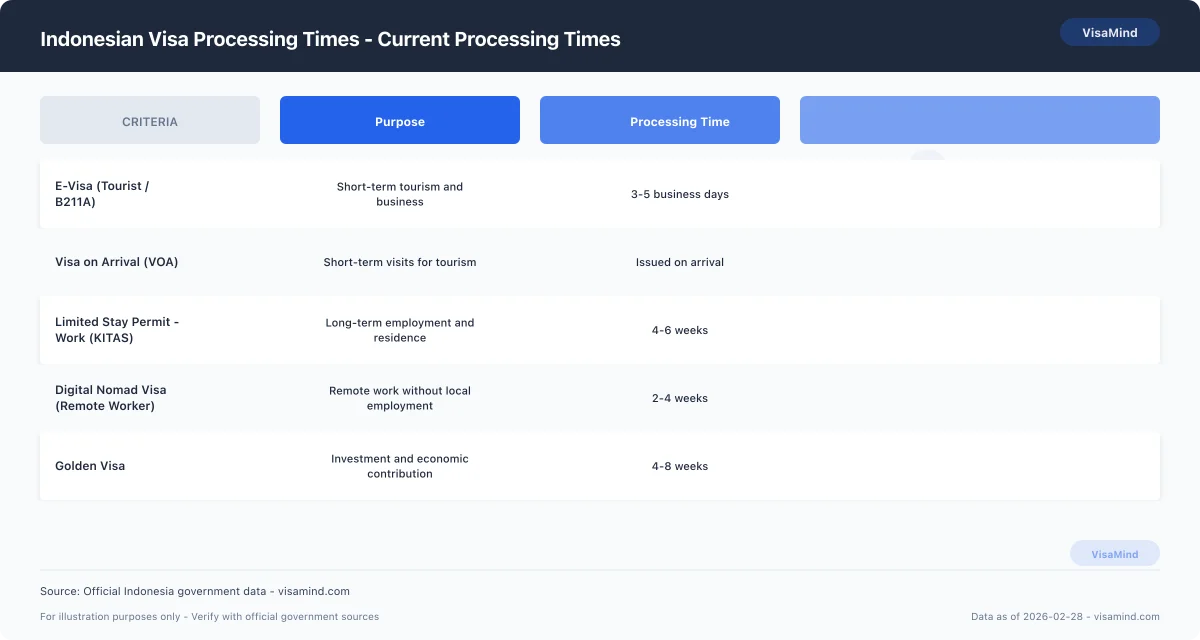
The processing times for Indonesian visas vary based on type. For instance, the Tourist Visa typically takes around 2 to 5 business days to process, providing a relatively quick turnaround for travelers. The Directorate General of Immigration (Ditjen Imigrasi) manages the processing of all visa applications, ensuring applicants are informed about the expected waiting periods. Accurate processing time information helps applicants plan their travel and stay in Indonesia effectively.
Tourist Visa Processing Durations The Tourist
Visa, often sought by travelers seeking to explore Indonesia's diverse attractions, generally takes 2 to 5 business days for processing. This applies to both the Visa on Arrival and the E-Visa Tourist.
| Visa Type | Processing Time | Link |
|---|---|---|
| Visa on Arrival | 2-5 days | Visa On Arrival |
| E-Visa Tourist | 2-5 days | E Visa Tourist |
Tip: Apply for your tourist visa well in advance, especially during peak travel seasons, to avoid any unforeseen delays.
Business Visa Approval Timeline
For those engaging in business activities, the Business Visa generally requires about 5 to 10 business days for processing. The E-Visa Business option is available for those preferring a digital application.
| Visa Type | Processing Time | Link |
|---|---|---|
| E-Visa Business | 5-10 days | E Visa Business |
Important: Ensure all required documents are accurately prepared and submitted to avoid delays in processing your business visa.
Student Visa Application Timeframe
Student visas take approximately 15 to 20 business days to process, reflecting the additional documentation and approval steps involved for educational purposes. Applicants are advised to begin the application process well ahead of their intended start dates.
| Visa Type | Processing Time | Link |
|---|---|---|
| Student Visa | 15-20 days | Kitas Student |
Important: Confirm the specific requirements for student visas with your educational institution to ensure all criteria are met.
Checking Your Application Status
#In 2026, the Directorate General of Immigration (Ditjen Imigrasi) enhanced its online services to provide real-time updates on visa applications. This service aims to streamline the visa process for applicants by offering timely information on their application status.
Using Indonesia Visa Status Portal The Indonesia Visa Status
Portal is an essential tool for monitoring your visa application. This online platform allows applicants to view the progress of their visa applications with ease.
-
Visit the official Directorate General of Immigration website.
-
Navigate to the 'Visa Status' section.
-
Enter your application number and date of birth.
-
Submit the information to retrieve your application status.
Important: Make sure to have your application number handy as it is required to access the status portal.
Understanding Online Tracking Updates
After logging into the portal, you will see various updates about your application. Each status update represents a stage in the processing cycle. - Received: Your application has been received and is under initial review. - Processing: The application is being processed by immigration officials. - Approved: Your visa application has been approved. - Denied: Your application was not successful. Further instructions will be provided.
Tip: Regularly check the portal for the most current updates on your visa application.
Contacting Indonesian Immigration for Status
If you encounter any issues or have questions about your application status, contacting Directorate General of Immigration is recommended. They provide assistance through their official communication channels.
-
Prepare your application number and personal identification details.
-
Reach out via the official contact form on the Ditjen Imigrasi website.
-
Alternatively, call the immigration helpline during business hours.
Warning: Avoid using unofficial third-party services to check your visa status, as they may provide inaccurate information.
Why Processing Times Vary
#Indonesia's visa processing times can vary significantly based on a range of factors. Understanding these factors can help you better anticipate potential delays in your application. The Directorate General of Immigration (Ditjen Imigrasi) in Indonesia handles the processing of various visa types, each with its own set of requirements and timelines. Being aware of the key influences on processing times can be beneficial.
Factors Influencing Indonesian Visa Delays
- Type of Visa: Different visas, such as the Visa On Arrival or E Visa Tourist have varying processing times due to distinct eligibility requirements and demand levels. - Volume of Applications: High influx periods can slow down the processing as Ditjen Imigrasi manages a higher volume of applications. - Biometric Submission: Delays in submitting biometric data, a requirement for many visas, can lead to longer processing times as noted in Fact F6.
Important: Ensure all biometric data is submitted at designated immigration offices to avoid delays. Failure to do so may result in processing setbacks.
Impact of Holiday Seasons on Processing
Indonesia's holiday seasons, particularly during Ramadan and Eid al-Fitr, can significantly impact visa processing times. These periods often see reduced working hours at immigration offices. - Reduced Office Hours: During major holidays, immigration offices may close early or operate with limited staff. - Increased Application Volume: Many applicants aim to secure visas ahead of holiday travel, increasing the number of submissions.
Warning: Plan your application timeline carefully around Indonesian holidays to avoid unexpected delays.
Role of Documentation in Processing Speed
Completeness of Documentation: Applications with missing or incorrect documents often face delays. Ensure thorough preparation of all required documents before submission. - Verification Processes: Certain documents, especially financial proofs, may require additional verification, which can extend processing times. - Document Language: Documents not in Bahasa Indonesia may need translation, adding to the processing duration.
Tip: Gather all necessary documentation well in advance, and consider professional help for translation if required. Reference Fact F8 for document preparation.
Staying Legal During Processing
#In Indonesia, bridging visas play a key role in maintaining legal status during the visa application process. The Directorate General of Immigration (Ditjen Imigrasi) oversees these processes, ensuring applicants can legally stay in the country while awaiting their visa decisions.
Maintaining Legal Status with Bridging Visas
When applying for a new visa in Indonesia, it is essential to maintain your legal status. A bridging visa can provide temporary legal status while your main visa application is being processed. This is especially important for those transitioning between different visa categories, such as from a Visa on Arrival to a Kitas Work. - Submit your bridging visa application before your current visa expires. - Ensure that all necessary documents are gathered and submitted accurately. - Monitor your application status through Ditjen Imigrasi's online portal.
Important: Failing to apply for a bridging visa before your current visa expires can result in overstaying, leading to fines or deportation. Always check the Directorate General of Immigration's website for the latest requirements.
Work Rights on Pending Visa Applications
Work rights in Indonesia during a pending visa application depend on the type of visa applied for. For example, those applying for a Digital Nomad Visa may continue remote work while their application is processed, provided they adhere to the specific conditions of their pending visa status.
-
Verify work rights associated with your specific pending visa type.
-
Consult with Ditjen Imigrasi for any updates on work regulations.
-
Ensure compliance with all local labor laws and immigration regulations.
Tip: Consult with an immigration expert if you're unsure about your work rights during the visa processing period to avoid potential legal issues.
Travel Restrictions While Awaiting Approval
Travel restrictions may apply while your visa application is under review. Leaving Indonesia during this time might affect your application status. It is critical to understand the implications of international travel on your pending application. - Check if your bridging visa allows for re-entry into Indonesia. - Plan travel around visa processing timelines to avoid complications. - Contact Ditjen Imigrasi for guidance on travel-specific concerns.
Warning: Traveling without ensuring re-entry rights under your visa status can result in invalidation of your application. Always verify travel permissions with Ditjen Imigrasi.
Escalating a Delayed Application
#Visa processing times in Indonesia can vary depending on the type of visa and the completeness of your application. If you experience delays beyond the typical timeframe, there are several avenues you can explore to escalate your concerns.
Contacting Indonesian Immigration for Delays
If your visa application is delayed, your first step should be to contact the Directorate General of Immigration (DGIM). They can provide updates on your application status and clarify any outstanding requirements.
-
Prepare your application reference number and personal details.
-
Contact the DGIM through their official phone line or email.
-
Request specific information regarding the cause of the delay and any actions needed from your side.
Tip: For faster responses, consider visiting the immigration office during non-peak hours.
Filing a Complaint with Indonesian Ombudsman
If contacting the DGIM does not resolve your issue, you can file a complaint with the Indonesian Ombudsman. This body handles administrative complaints against government agencies, including immigration. - Provide a detailed account of your communication with DGIM. - Include any evidence of undue delay or lack of responsiveness. - Submit your complaint online or in person at the Ombudsman office.
Important: Ensure that all documentation is complete and accurate to facilitate a swift investigation.
Seeking Assistance from Indonesian Consulate
For applicants outside Indonesia, contacting the nearest Indonesian consulate can also be a viable option. They may assist with inquiries or provide additional support in liaising with the DGIM.
-
Identify the consulate responsible for your region.
-
Prepare all relevant documents, including your visa application and any correspondence with DGIM.
-
Visit the consulate or contact them by phone or email to request assistance.
Tip: Check the E Visa Tourist and Kitas Work pages for specific visa types that may have different escalation procedures.