
Extension Eligibility Overview
#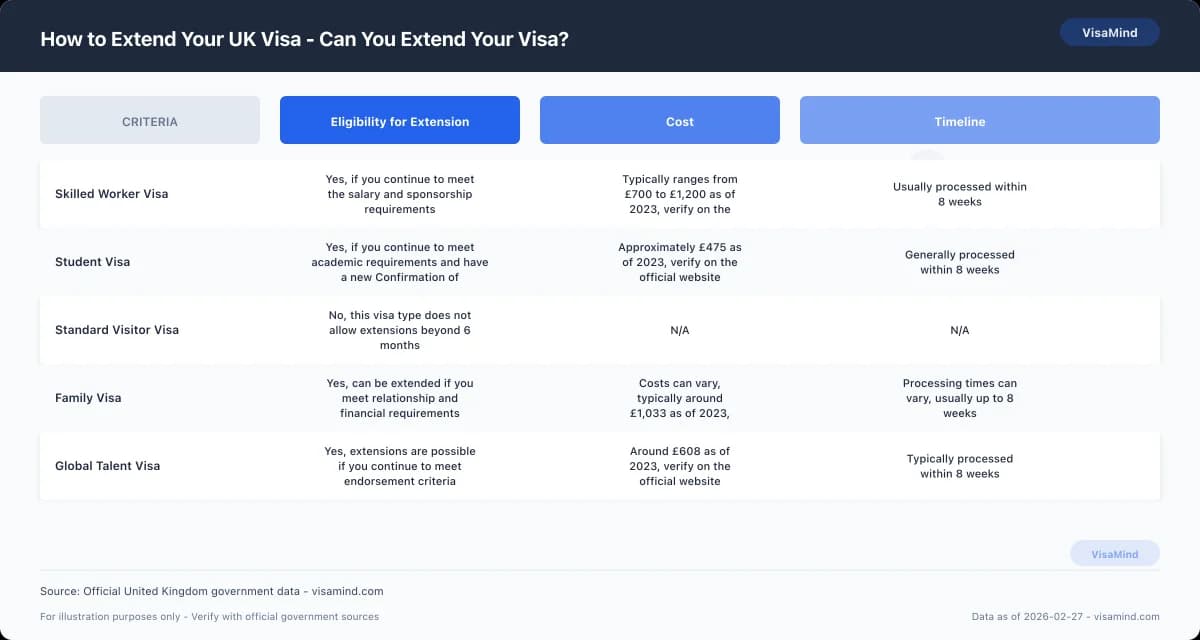
It's important to be aware that not all visas are eligible for extension. The type of visa you hold determines your eligibility to apply for an extension.
Types of Visas Eligible for Extension
Some common visa categories that can be extended include:
-
Skilled Worker Visa: This visa allows you to work in the UK for an approved employer. If you wish to continue working beyond your initial visa period, you can apply for an extension, provided you meet the ongoing employment and sponsorship requirements.
-
Student Visa: If you are pursuing a degree in the UK and need more time to complete your course, you may extend your student visa. This requires a confirmed place at a licensed college or university.
-
Family Visa: If you are a spouse, partner, or family member of someone with British citizenship or settlement, you can extend your stay to continue living with your family in the UK.
-
Health and Care Worker Visa: Like the Skilled Worker Visa, this category is extendable if you continue to meet the health sector employment criteria.
Types of Visas Not Eligible for Extension
There are certain visa categories that generally do not allow for extension:
-
Standard Visitor Visa: Typically issued for short-term visits, this visa does not offer an extension option. It is valid for up to 6 months, and you must leave the UK before it expires.
-
Marriage Visitor Visa: This visa is for individuals visiting the UK to get married or register a civil partnership. It cannot be extended, and you are expected to leave the UK after your marriage ceremony.
-
Short-term Study Visa: This visa is designed for courses lasting 6 months or less. Extensions are not permitted under this category.
Visa Extension at a Glance
| Visa Type | Extension Eligibility | Key Requirements |
|---|---|---|
| Skilled Worker Visa | Yes | Continued employment and sponsorship |
| Student Visa | Yes | Enrollment confirmation from a licensed institution |
| Family Visa | Yes | Proof of relationship with a British citizen or settled person |
| Health and Care Worker Visa | Yes | Ongoing employment in the healthcare sector |
| Standard Visitor Visa | No | Leave UK before visa expiry |
| Marriage Visitor Visa | No | Leave UK after marriage ceremony |
| Short-term Study Visa | No | Valid for course duration only |
Important: Always verify the latest requirements and eligibility criteria on the UKVI website to ensure compliance with current immigration rules.
Understanding which visas can be extended will help you plan your stay in the UK more effectively. If you are considering extending your visa, ensure you meet the specific requirements for your visa category to maintain your legal status in the UK. For more detailed information on visa types, you can check the Skilled Worker Visa, Student Visa, or Spouse or Partner Visa pages.
The Extension Application Process
#Determine Your Eligibility
Before initiating the extension process, it's vital to determine whether you're eligible to extend your current UK visa. Begin by checking if extending your visa is permitted for your specific type of visa. For instance, if you hold a Student Visa or a Skilled Worker Visa, you may be eligible for an extension. However, some visas, such as short-term visitor visas, typically do not allow extensions. It's essential to confirm your eligibility by reviewing the specific rules for your visa category.
Gather Required Documents
Once you have confirmed your eligibility, the next step is to gather the necessary documents for your application. These documents may vary depending on your visa type but generally include:
- Current passport or travel document
- Biometric Residence Permit (BRP), if applicable
- Proof of your continued eligibility, such as a confirmation of employment for a work visa or a new Confirmation of Acceptance for Studies (CAS) for a student visa
- Financial evidence showing that you can support yourself financially during your extended stay
- Additional specific documentation depending on your visa type, such as proof of relationship for a Spouse or Partner Visa
Apply Online
The most efficient way to apply for a visa extension is through the online application system provided by UK Visas and Immigration (UKVI). This platform allows you to enter your details, upload required documents, and pay any applicable fees. The online process is generally quicker and provides you with a reference number to track your application.
Tip: Applying online helps avoid mail delays and ensures you receive immediate confirmation of your application submission.
Attend a Biometric Appointment
After submitting your online application, you will likely need to schedule a biometric appointment. This involves providing your fingerprints and a photograph, which are essential parts of your application. The appointment can be booked at a UK Visa and Citizenship Application Services (UKVCAS) centre. Ensure you attend this appointment as missing it could delay your application process.
Await a Decision
Once you have completed the application and attended the biometric appointment, you must wait for a decision from UKVI. The processing times can vary based on the type of visa and the volume of applications being handled. It's advisable to check the Processing Times guide for the most current information on how long you might expect to wait.
Important: Ensure your current visa does not expire before you receive a decision on your extension application to avoid legal issues or complications with your stay in the UK.
What to Submit with Your Extension
#UK Visas and Immigration (UKVI) requires you to submit several key documents. Ensuring you have the correct paperwork can make a significant difference in the processing of your application. Here is a breakdown of what you need to include:
General Document Requirements
- Current Passport: Your valid passport or travel document.
- Previous Passports: Any expired passports that show your travel history.
- Biometric Residence Permit (BRP): If you have one, this must be included.
- Passport-sized Photographs: Recent photos meeting UKVI specifications.
Important: Failing to report a lost or stolen BRP can result in a fine up to £1,000 and potential enforcement action.
Financial Evidence
- Bank Statements: Recent statements proving you can support yourself financially.
- Pay Slips: If applicable, provide pay slips from your employer.
- Sponsorship Letter: If you have a sponsor, include a letter confirming financial support.
Student Visa
- Confirmation of Acceptance for Studies (CAS): A reference number from your educational institution.
- Academic Qualifications: Certificates or transcripts from previous education relevant to your current course.
Family Visa
- Proof of Relationship: Birth certificates, marriage certificates, or other documents proving your relationship to a UK citizen or permanent resident.
- Accommodation Details: Evidence of where you will live in the UK, such as a rental agreement.
Work Visa
- Certificate of Sponsorship (CoS): A reference number from your employer.
- Employment Contract: A copy of your job offer or employment contract in the UK.
Tip: Double-check the Skilled Worker Visa and Health Care Worker Visa requirements if applying for a work-related extension.
Additional Documentation
- National Insurance Number: If applicable, include your National Insurance details.
- Police Registration Certificate: If required by your visa conditions.
For more detailed information on what documents you need, consider checking the Documents Checklist for your specific visa type. Always ensure that your submitted documents are accurate and up-to-date to avoid delays in your application process.
What It Costs and How Long It Takes
#Extending your UK visa involves understanding the associated costs and timelines. This section provides a detailed comparison of extension fees, processing times, and available expedited options.
Visa Extension Costs and Timelines
| Visa Type | Extension Cost (as of early 2026 — always verify current amounts with the official authority) | Standard Processing Time | Expedited Option |
|---|---|---|---|
| Skilled Worker Visa | £719 | Up to 8 weeks | Priority service available |
| Student Visa | £490 | Up to 8 weeks | Priority service available |
| Spouse or Partner Visa | £1,048 | Up to 8 weeks | Priority service available |
| Family Visa | £1,048 | Up to 8 weeks | Priority service available |
| Health and Care Worker Visa | £479 | Up to 8 weeks | Priority service available |
Expedited Processing Options
For those in need of a quicker decision, the priority service can reduce the processing time significantly. This service typically aims to provide a decision within 5 working days. However, the fee for this expedited option varies and should be verified on the official UKVI website.
Important: Applying for an expedited service does not guarantee a faster decision if your application is complex or requires additional checks.
Factors Affecting Processing Times
Several factors can influence the processing time of your visa extension:
- Application Completeness: Ensure all required documents are submitted to avoid delays.
- Time of Year: Applications may take longer during peak times.
- Personal Circumstances: Additional verification might be needed for complex cases.
Always check the UKVI processing times guide for the most up-to-date information.
Additional Costs
Beyond the extension fee, there might be additional costs such as the Immigration Health Surcharge (IHS), which varies based on the length of your visa. It’s crucial to budget for these expenses when planning your extension.
Tip: To avoid unexpected delays, consider starting your application well before your current visa expires.
The Risks of Staying Past Your Visa
#Overstaying your visa in the UK can have significant consequences, affecting not only your current status but also your ability to apply for visas in the future. Understanding these risks is crucial to maintaining your legal status and avoiding unnecessary complications.
Consequences of Overstaying
Remaining in the UK beyond your visa's expiry date can lead to serious repercussions. Here's what you might face:
- Fines and Penalties: Overstaying can result in financial penalties. For instance, if you fail to report a lost or stolen Biometric Residence Permit (BRP), you could be fined up to £1,000.
- Deportation and Re-entry Bans: Overstaying may lead to deportation and bans from re-entering the UK for a specified period, typically one to ten years, depending on the duration of your overstay and individual circumstances.
- Impact on Future Applications: Your immigration history is taken into account in future visa applications. Overstaying can negatively impact your chances of being granted a visa, whether you're applying for a Skilled Worker Visa, Standard Visitor Visa, or any other type.
How Overstaying Affects Your Immigration Record
Your immigration record is a critical component of your future interactions with UK Visas and Immigration (UKVI). Overstaying can tarnish this record, leading to:
- Refusal of Future Applications: Applications for visas such as the Global Talent Visa or Innovator Founder Visa may be refused due to previous overstays.
- Difficulty in Seeking Permanent Residency: Achieving Indefinite Leave to Remain (ILR) or British Citizenship becomes significantly more challenging if you have overstayed in the past.
Avoiding the Risks
To prevent these consequences, it's vital to take proactive steps:
- Monitor Your Visa Expiry Date: Regularly check your visa's expiry date and plan ahead to apply for an extension if needed.
- Lodge an Application Before Expiry: Ensure you apply for an extension or a new visa before your current one expires. Familiarize yourself with the Visa Extension Process.
- Consult Legal Advice: If you're unsure about your status or need help with an application, consider seeking advice from an immigration lawyer or advisor.
Important: Applying for a visa extension while your current visa is still valid reduces the risk of overstaying and its associated penalties.
By understanding and mitigating the risks of overstaying, you can maintain your legal status in the UK and protect your future immigration opportunities.
Visa-by-Visa Extension Rules
#It's crucial to understand the specific extension rules applicable to each visa category. Here's a detailed breakdown of extension rules for some of the most common visa types:
| Visa Type | Eligibility | Cost (as of early 2026 — always verify current amounts with the official authority) | Timeline |
|---|---|---|---|
| Standard Visitor Visa | Must have a valid reason for the extended stay (e.g., medical treatment). Not typically extendable for tourism. | £1,000 for the healthcare surcharge if applicable, plus standard fees. | Typically processed within 8 weeks. |
| Student Visa | Must have a confirmation of acceptance for studies (CAS) from a licensed sponsor. | £490 for the extension application fee. | Decision usually within 8 weeks. |
| Skilled Worker Visa | Must continue to work for the same employer and job role. | £719 to £1,423, depending on length of stay. | Typically processed within 8 weeks. |
| Spouse or Partner Visa | Must prove the relationship is genuine and continuing. | £1,048 for the application fee, plus healthcare surcharge. | Decision usually within 8 weeks. |
Eligibility Criteria per Visa Category
Each visa type has unique eligibility criteria for extensions. For instance, the Student Visa requires that you're enrolled in a course that necessitates a longer stay. The Skilled Worker Visa mandates continued employment with the same employer under the same conditions as the initial visa grant.
Costs and Fees
The costs for extending a visa in the UK vary considerably based on the type of visa. The fees can be substantial, especially when including the healthcare surcharge. It's crucial to budget accordingly. For more detailed fee structures, consult the How To Apply guide.
Tip: Consider applying online for a faster processing time and to receive immediate confirmation of submission.
Processing Timelines
Most visa extension applications are processed within 8 weeks. However, this timeline can vary based on the complexity of your case and the completeness of your application. Ensuring all required documents are prepared and submitted can help avoid delays. Check the Processing Times for current estimates.
Important Considerations
- Proof of Relationship: For family visas like the Spouse or Partner Visa, it's essential to provide comprehensive proof of your relationship.
- Documentation: Ensure all personal and financial documents are up to date and organized. Refer to the Documents Checklist to verify your documentation.
Navigating the process of extending your visa in the UK requires careful attention to each visa category's specific requirements. Make sure to consult the official UKVI website for the most current information and guidance.
What Else Can You Do?
#You have several pathways depending on your circumstances and future plans.
Can You Change Your Visa Type?
If your circumstances change, you may be eligible to switch to a different visa type. For instance, if you are on a Student Visa and receive a job offer, you might be able to switch to a Skilled Worker Visa. Similarly, those on a Standard Visitor Visa may consider applying for a Family Visa if they have close family ties in the UK.
Tip: Confirm eligibility criteria for your desired visa type as requirements can be specific and vary between visas.
What If You Plan to Leave and Re-enter the UK?
If you plan to leave the UK and return, ensure that your visa permits re-entry. Many visas allow multiple entries, but some, like the Short Term Study Visa, might not. Always verify the conditions attached to your visa.
How to Voluntarily Depart the UK?
If you decide not to extend your stay, you can leave the UK voluntarily. It's important to do so before your visa expires to avoid any negative impact on future visa applications. Ensure you have all necessary documentation for exiting and re-entering the UK if needed.
Pathways to Long-term Settlement
Consider pathways for a more permanent status, such as Indefinite Leave to Remain (ILR), which allows you to live, work, and study in the UK without time restrictions. After holding ILR for a certain period, you may also be eligible to apply for British Citizenship.
Important: Applying for ILR usually requires you to have lived in the UK for a continuous period, typically five years, under certain visa categories. Check the specific residency requirements for your situation.
These options provide a pathway to continue your journey in the UK, whether it involves changing your visa type, leaving temporarily, or settling permanently. Always consult the latest guidelines from UK Visas and Immigration (UKVI) to ensure compliance and a smooth transition.