
Pre-Application Checklist
#Immigration, Refugees and Citizenship Canada (IRCC) manages various visa types, each with unique requirements and steps. Before you begin your application, ensure you meet the eligibility criteria and have gathered all necessary documents. This preparation will streamline the process and help avoid delays in your visa application.
Choosing the Right Visa Category
Canada offers numerous visa options catering to different needs, such as work, study, and family reunification. Selecting the right visa category is the first step in your application process.- Permanent Resident Visas - for those looking to settle permanently, including the Express Entry system. - Family Sponsorship Visas - such as the Spousal Sponsorship for reuniting with family in Canada.
Tip: Consider your long-term plans and choose a visa category that allows for future transitions, like moving from a Study Permit to permanent residency.
Gathering Necessary Documentation
Compiling the correct documents is a vital step to ensure a smooth application process. Requirements differ based on the visa type.
- Valid passport or travel document.
- Proof of financial support.
- Medical exam and police certificates, if required.
Important: Consult the specific document checklist for your visa type, such as the Express Entry Document Checklist, to avoid missing any required items.
Eligibility Requirements for Canada
Eligibility requirements vary across the different visa categories offered by Canada. It's essential to verify that you meet all criteria before proceeding with your application.
- Review the specific eligibility criteria for your chosen visa category on the IRCC website. Ensure you meet the language proficiency requirements, if applicable. Check for any additional criteria, such as job offers or educational assessments, especially for work and study visas.
Warning: Failure to meet eligibility requirements can lead to application refusal. Make sure to double-check all criteria specific to your visa type.
Application Costs
#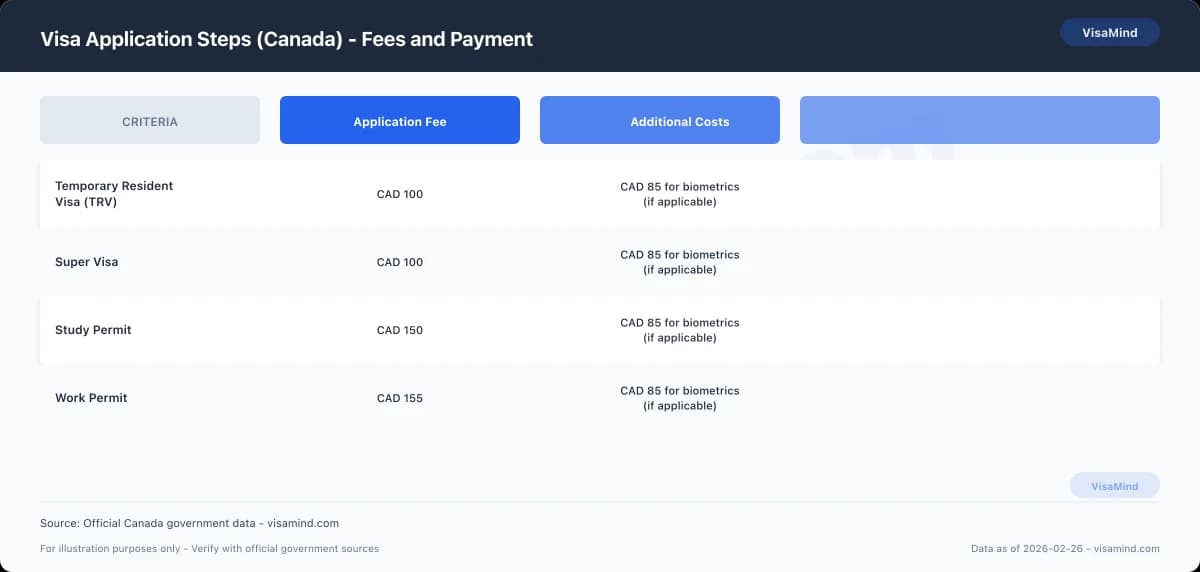
Knowing these costs upfront helps in planning your application process effectively. The Immigration, Refugees and Citizenship Canada (IRCC) manages the fee structure and payment methods for visa applications. Here's a brief guide to understand the application costs, how to pay them, and the refund policies that apply.
Understanding Application Fees
Important: Always check the latest fees on the IRCC website as they may change periodically.
Payment Methods
Accepted in Canada accepts various payment methods for visa fees. Online payments can be made via credit card or debit card. In some cases, you might be able to pay through a bank draft or certified cheque if you're applying from within Canada.
- Credit card
- Debit card
- Bank draft (in Canada)
- Certified cheque (in Canada)
Tip: Make sure your payment method is accepted by the IRCC and that your payment goes through before lodging your application.
Refund Policies for Visa Applications
Refunds for visa application fees are typically not provided once processing has begun. If you withdraw your application before processing, you may be eligible for a refund. However, if the application is refused or if you decide not to proceed after processing starts, the fees are non-refundable.
Warning: Double-check your application and ensure all documents are correct before submission, as errors can lead to denied applications and non-refundable fees.
Tracking Your Application
#After submitting your visa application, you can track its progress using the tools provided by Immigration, Refugees and Citizenship Canada (IRCC). Understanding how to monitor your application's status will help you stay informed and prepared for any required next steps.
Using IRCC's Tracking Tools
IRCC offers several online tools to help you track the status of your visa application. One of the primary methods is through your online account on the IRCC website. Here, you can view updates and receive notifications regarding your application.
- Sign in to your IRCC account to check application status.
- Enable email notifications for updates.
- Use the 'Check your application status' tool for paper applications.
Tip: Ensure your contact information, such as your email address, is up-to-date in your IRCC account to receive timely notifications.
Expected Processing
Times for visa applications can vary based on the type of visa and the applicant's specific circumstances. IRCC regularly updates estimated processing times on their website, providing a general idea of how long your application may take.
Important: Processing times are estimates and can change based on application volume and other factors. Always check the IRCC website for the most current information.
Activities During Processing Period
While waiting for your application to be processed, there are several proactive steps you can take. First, ensure all required documents are ready in case IRCC requests additional information.
- Double-check that your documents comply with IRCC requirements. Prepare for potential interviews or further documentation requests. Stay informed about any changes in processing times or requirements.
Your Biometrics Appointment
#Centers are a common option for scheduling your biometric appointment. These centers are available worldwide and provide a convenient location for many applicants.
- Visit the official IRCC website to find the VFS center nearest to you. Use the online appointment system to select a date and time for your biometric collection. Ensure to carry the necessary documents, such as your biometric instruction letter and valid passport, to your appointment.
Tip: Book your appointment as soon as possible to avoid potential delays, especially during peak application periods.
Booking Embassy Appointments
In some cases, you may need to schedule your biometric appointment at a Canadian embassy. This is often required if there is no VFS center available in your region.
- Contact the nearest Canadian embassy to inquire about biometric appointments. Follow the embassy's instructions to book your appointment, which may involve email or phone communication. Prepare all required documents, including your biometric instruction letter and identification, for your visit.
Important: Embassy appointments can have more limited availability, so plan ahead to secure your spot.
Biometric Information Collection Process
The biometric collection process involves capturing your fingerprints and photograph. This data helps in verifying your identity throughout the visa application process.
- Arrive at the VFS center or embassy on your scheduled date and time. Submit the required documents and follow the instructions provided by the staff. Your fingerprints and photograph will be taken, completing the biometric process.
Warning: Failure to provide biometrics when requested could result in delays or denial of your visa application. For more details on the biometrics process, visit the Biometrics Guide.
Expected Timeline
#Applying for a Canadian visa involves several steps, each with its own timeline. Processing times can vary based on the visa type and your specific circumstances.
-
Prepare your documents and ensure all information is accurate. Lodge your application with Immigration, Refugees and Citizenship Canada (IRCC). Pay the required visa application fee in Canadian dollars (CAD).
-
Attend a biometrics appointment if required.
-
Wait for processing, which can vary depending on the visa type.
Tip: You can track your application status online through IRCC's official tools. Always check the Processing Times Explained guide for the most current information.
Key Milestones in Application Process
Submission of complete application to IRCC
- Completion of biometrics, if applicable
- Review and decision by IRCC
- Receipt of visa decision notification
Important: Ensure that all your documents are complete and accurate to avoid unnecessary delays.
Which System to Use
#Canada's immigration system, overseen by Immigration, Refugees and Citizenship Canada (IRCC), offers various online systems to facilitate visa applications. Understanding which portal to use is key when applying for a visa to Canada.
Accessing the IRCC
Portal is a central hub for accessing Canadian immigration services. It is designed to provide applicants with up-to-date information and tools necessary for their visa applications.
- Visit the official IRCC website. Navigate to the 'Immigration and Citizenship' section. Follow the links to access the relevant application portal.
Tip: Ensure your browser and software are up to date for optimal functionality on the IRCC website.
GCKey System
GCKey is a secure way to access the online services of the Government of Canada. It provides a single sign-in solution for multiple government services, including IRCC applications.
- Go to the GCKey login page. Create a new GCKey or log in if you already have an account. Link your GCKey account to your IRCC profile to manage your applications.
Warning: Never share your GCKey login details with anyone to maintain the security of your application.
Using Canada's Online Application Portal Canada's Online Application
Portal is a user-friendly platform where you can lodge your visa application, submit documents, and track your application status.
-
Access the IRCC Online Application Portal. Sign in with your GCKey or Sign-In Partner, such as a bank account. Follow the instructions to start a new application or continue an existing one.
-
Upload all necessary documents as per the application guidelines.
Important: Ensure all documents are clear and legible before uploading to the portal to avoid delays in processing.
How to Submit Your Application
#Each year, thousands of individuals apply for Canadian visas through Immigration, Refugees and Citizenship Canada (IRCC). application process requires attention to detail and adherence to specific guidelines set by the IRCC. Understanding the steps involved in submitting your application can help improve your chances of success. This guide outlines the key stages from filling out necessary forms to finalizing your application submission.
Filling Out Application Forms
To begin, you'll need to complete the appropriate application forms for your visa type.1. Visit the official IRCC website to identify the correct application forms for your visa category.
- Carefully follow the instructions provided on each form to ensure all sections are filled out correctly.
Tip: Double-check the form for any errors or missing information before proceeding to the next step.
Uploading Required Documents
Uploading the required documents is a critical step in the application process. The IRCC specifies which documents are necessary based on the type of visa you are applying for.
- Collect all necessary documents before starting your application. Scan and save your documents in a format accepted by IRCC, such as PDF or JPEG. Upload each document to the IRCC application portal as instructed, ensuring that all files are clear and legible.
Important: Ensure all documents are uploaded in the correct format and order as specified by the IRCC to avoid delays in processing.
Finalizing and Submitting Application
Once you have completed and reviewed your forms and uploaded all required documents, you are ready to finalize and submit your application. This step involves paying the necessary fees and officially lodging your application with the IRCC.
- Review your application thoroughly to ensure all information is accurate and complete. Calculate and prepare to pay the application fees in Canadian dollars (CAD), as specified by the IRCC. Submit your application through the IRCC online portal and keep a copy of your confirmation receipt for your records.
Warning: Submitting incomplete or incorrect applications may result in delays or rejection. Double-check all details before final submission.
If Something Goes Wrong
#Each year, thousands of people apply for Canadian visas, and some face challenges during the process. If your application is refused or you encounter issues, there are procedures in place to address these situations. It's important to understand your options, whether pursuing an appeal or considering reapplication. Knowing the available steps can help you system effectively.
Understanding Appeal Procedures
If your visa application is denied, you may have the right to appeal in certain cases. This depends on the type of visa and the reason for the refusal.
- Appeals for family class sponsorships are available through the Immigration Appeal Division (IAD).
Reapplying After Rejection
Reapplying after a visa refusal is a common step for many applicants. Before you reapply, it's essential to address the reasons for the initial refusal.
- Review the refusal letter carefully to understand the reasons given by IRCC. Gather additional documents or information that address the concerns raised in the refusal. Consider seeking advice from an immigration consultant or lawyer.
Warning: Reapplying without addressing the reasons for refusal may lead to another denial.
Administrative Review Options
In some situations, an administrative review might be an option. This is not the same as an appeal but rather a request to reconsider the decision.
- Administrative reviews are generally limited to cases where there is a clear error in the decision-making process.
- They must be requested promptly after receiving the refusal notice.
Tip: Consult the Visa Refusal Reasons guide for detailed insights on common refusal causes and how to address them.
How the Points System Works
#Canada's Express Entry system uses a points-based assessment to evaluate candidates for permanent residency. Understanding how to calculate and maximize your score is key to improving your chances of receiving an invitation to apply. With various factors influencing your points score, it's important to focus on areas where you can make improvements. This section will guide you through calculating your score, boosting your points, and understanding the factors that affect your points assessment.
Calculating Your Points
Score is determined by the Comprehensive Ranking System (CRS)
Boosting Points for Express Entry
To improve your score, consider enhancing your language skills, gaining additional work experience, or completing further education. Each of these areas can significantly impact your overall points.
- Achieve higher language test scores in English or French.
- Pursue additional education or certifications.
- Gain more Canadian work experience, if possible.
Important: Ensure your professional credentials are recognized in Canada to maximize your education and work experience points.
Factors Affecting Points Assessment
Several factors can affect your points assessment, and understanding these can help you prepare your application more effectively. Key factors include adaptability, provincial nominations, and spousal points.
- Review your adaptability factors, which include your spouse's education and language skills. Consider applying for a Provincial Nominee Program (PNP) to gain additional points. Ensure all documents are accurate and reflect your qualifications.
Warning: Meeting the minimum points threshold does not guarantee an invitation to apply, as scores can vary depending on the draw.