
Is This Guide for You?
#Immigration, Refugees and Citizenship Canada (IRCC) is responsible for processing various immigration applications. Understanding the processing times for these applications is key for planning your move to Canada. This guide provides detailed insights into the different pathways and requirements as outlined by IRCC.
Identifying Your Immigration Needs
Determining your specific immigration needs is the first step in navigating Canada's immigration system. You might be interested in applying for a Study Permit if you're planning to pursue education in Canada, or a Work Permit if you're looking to work. It's important to know the distinct processes and timelines associated with each visa type.
- Visa (TRV)
- Express Entry
- Family Sponsorship
Tip: Be sure to explore specific visa types, such as the Express Entry for skilled workers or the Study Permit for students, to understand the associated requirements and processing times.
When to Consult This
Guide is particularly useful when you are unsure about the timelines involved in your immigration process. If you are preparing to apply for a Canadian visa, knowing the current processing times can help you plan accordingly. This information can also assist you in understanding any potential delays you might encounter.
Important: Processing times can vary based on the type of application and your country of residence. Always check the latest updates on the IRCC website to ensure you have the most current information.
Target Audience for Processing Times
Anyone considering moving to Canada or changing their residency status should consult this guide on processing times. Whether you're applying for permanent residence or looking to extend a current visa, understanding the expected timelines is vital.
- Prospective students
- Skilled workers
- Family members of Canadian residents
Tip: For more specific guidance, explore resources like the Study Permit Guide or the Express Entry Guide to align your application process with IRCC requirements.
Step-by-Step Process
#In Canada, processing times for immigration applications vary significantly depending on the type of application and the applicant's specific circumstances. IRCC provides estimated processing times to help applicants understand what to expect when applying through various immigration pathways. Understanding the step-by-step process for submitting an application to IRCC can help avoid delays and ensure that all necessary documents are included. This section will guide you through the key steps involved in the application process.
-
Check the official IRCC website for the most up-to-date requirements and processing times relevant to your application type. Gather all required documents, ensuring that each document meets the specific criteria set by IRCC.
-
Prepare your application package by carefully following the instructions provided on the IRCC website. Each step requires careful attention to detail to ensure that your application is complete and accurate. Missing or incorrect information can lead to delays or even refusals.
Tip: Keeping copies of all submitted documents can be helpful for future reference and in case any additional information is requested by IRCC.
IRCC Portal
IRCC's online portal is the primary method for submitting immigration applications. It offers a streamlined process for uploading documents and tracking your application's progress.
-
Create an account on the IRCC online portal if you haven't already. Log in to your account and select the appropriate application type.
-
Upload your completed application form and all required documents.
Important: Ensure your internet connection is stable when uploading documents to avoid incomplete submissions.
-
Review all uploaded documents and application details for accuracy before final submission. Pay the application fees using the portal's secure payment system. Fees must be paid in CAD (CA$).
-
Submit your application through the IRCC portal and receive a confirmation of submission. After submission, you can track the status of your application through your IRCC account. Keep an eye on any requests for additional information, as timely responses can affect processing times.
Warning: Failure to respond to IRCC's requests for additional information promptly can result in application delays or refusal.
Overview
#In Canada, the processing times for immigration applications are determined by Immigration, Refugees and Citizenship Canada (IRCC). These times can vary significantly depending on the type of application you submit, such as a Study Permit or an Express Entry application. Understanding the factors that influence these processing times can help you better prepare for your immigration journey. By familiarizing yourself with how the system works, you can set realistic expectations and plan accordingly.
Purpose of Processing
Times provide an estimate of how long it will take for IRCC to process different types of immigration applications. These estimates help applicants plan their move to Canada more effectively.
- Set expectations for application outcomes
- Plan travel and settlement in Canada
- Align with work or study start dates
Important: Processing times are estimates and can change based on several factors. Always check the most current information on the IRCC website. This method helps provide a reliable timeline for future applicants.
-
Submit an application to IRCC. IRCC reviews the application for completeness.
-
A detailed assessment of the application is conducted.
-
A decision is made and communicated to the applicant.
Tip: Check the specific requirements for your application type to ensure all necessary documents are included.
Factors Influencing Processing Speed
Several factors can influence the speed of processing times, making them shorter or longer than expected. These include the volume of applications received, the completeness of your application, and any additional information requests from IRCC.
- Application type and complexity
- Current application volume
- Completeness of submitted documents
Warning: Incomplete applications will delay processing times. Ensure all required information and documents are provided to avoid setbacks.
Fees, Timeline, and What to Expect
#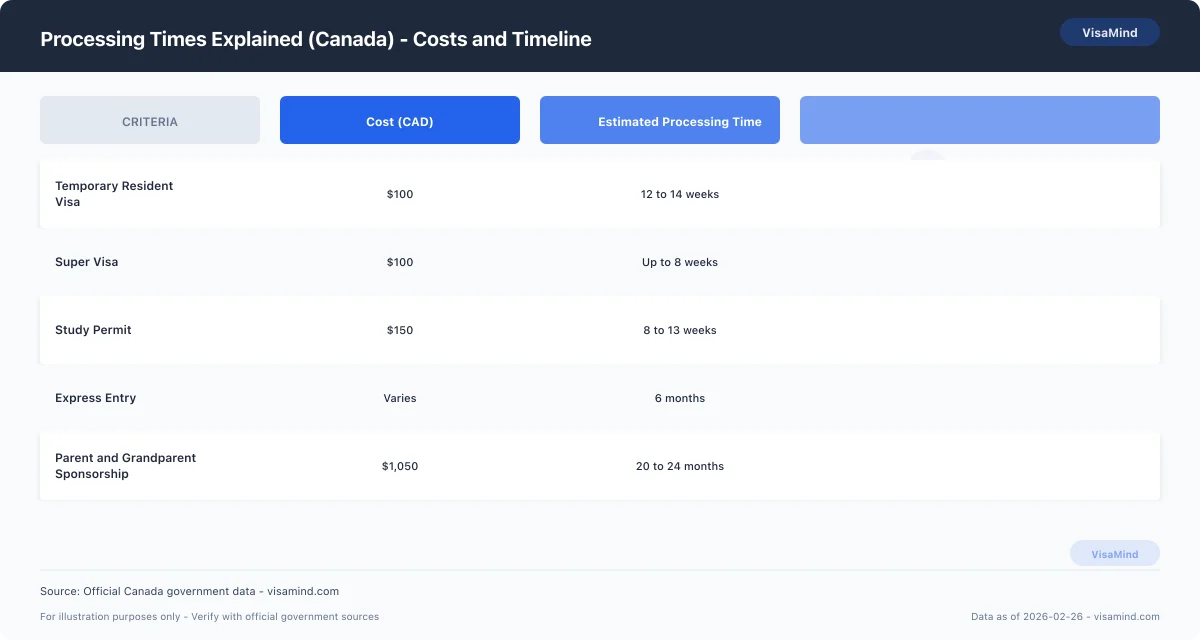
Processing fees and timelines for immigration applications in Canada can vary based on the type of visa or permit you are applying for. It's important to know what to expect during the processing period, so you can plan accordingly.
Breakdown of Processing
Fees for immigration applications in Canada are determined by the type of visa or permit. These fees are payable in Canadian dollars (CAD) and are subject to change.
Tip: Always check the official IRCC website for the most up-to-date fee information. Fee changes can occur without notice.
Average Processing Times by Visa Type
Processing times for Canadian visas and permits vary based on the application type and the applicant's circumstances. On average, processing times can range from a few weeks to several months.
Important: Meeting the listed processing times does not guarantee approval. Factors such as application completeness and background checks can impact the timeline.
What to Expect During Processing
During the processing period, you may be required to provide additional documents or attend an interview. The IRCC will contact you if further information is needed.
- Biometrics appointment
- Medical examination
- Police certificate submission Use a desktop or laptop for a smoother experience.
Tip: Refer to the Visa Application Steps for detailed guidance on what to expect after submitting your application.
Eligibility and Requirements
#Valid passport or travel document.
- Proof of financial support for yourself and family, if applicable.
- No criminal record or immigration-related convictions.
- Medical exam results, if required.
- Biometrics (fingerprints and photo) might be needed.
Important: Ensure all documents are up-to-date and complete to avoid delays.
Tip: Check the specific requirements for the visa category you are applying for, such as a Study Permit or Express Entry.
Who Qualifies for Fast Processing
Applicants using the Express Entry system for skilled workers.
- Eligible family members under family sponsorship programs.
- Temporary workers and students applying through specific pilot programs.
Tip: Ensure you are aware of any specific criteria that might expedite processing times, such as provincial nominations.
Prerequisites for Application Success
To increase the likelihood of success, applicants should ensure they meet all prerequisites and provide accurate information.
- Gather all necessary documents before starting the application.
- Double-check eligibility criteria for the specific visa category.
- Be prepared for possible interviews or additional documentation requests.
Warning: Attempting to open forms on tablets or mobile phones can cause issues. Use a desktop or laptop for best results. Learn more about potential pitfalls.
What Goes Wrong Most Often
#IRCC processes thousands of immigration applications each year, and many encounter common pitfalls. Understanding the frequent issues can help you avoid delays in your application process.
Frequent Application Errors
Incomplete Information: Failing to provide all requested details can lead to processing delays. - Incorrect Fees: Submitting the wrong amount can result in an application being returned. - Outdated Forms: Using an old version of a form can cause issues; always check for the most recent version on the official IRCC website.
Tip: Double-check your application for completeness and accuracy before submission.
Avoiding Document Submission Issues
Document submission is a key part of the application process. Many applicants face delays due to missing or incorrect documents. - Missing Documents: Ensure all required documents are included before submitting your application. - Incorrect Format: Documents should meet IRCC's specifications; for instance, digital copies should be clear and legible. - Unverified Translations: For documents not in English or French, certified translations are necessary.
Warning: Submitting documents in the wrong format or language can lead to your application being returned.
Common Misunderstandings in Processing
times often generate confusion among applicants. Misunderstandings can lead to unnecessary anxiety or errors in planning. - Processing Time Misconceptions: The times given are estimates and can vary; they do not guarantee a decision within that timeframe. - Assumptions About Approval: Meeting requirements listed by IRCC does not ensure approval. Each application is evaluated on its own merits.
Important: Keep in mind that processing times are affected by various factors, including application volume and complexity.
What Experienced Applicants Recommend
#Canada's immigration system processes thousands of applications each year, with varying timelines based on the type of visa or permit. Many successful applicants attribute their quick processing times to strategic planning and thorough preparation. By understanding common pitfalls and adopting recommended strategies, you can potentially expedite your own application process and avoid unnecessary delays.
Advice from Successful Applicants
Thoroughly read all instructions provided by IRCC to avoid missing essential requirements.
- Ensure that all documents are accurately completed and submitted. Double-check for consistency across all forms and supporting documents.
- Regularly check the status of your application online through your IRCC account to stay informed about any updates or additional requirements.
Tip: Consider joining online forums or communities where other applicants share their experiences and advice, as these can provide valuable insights.
Strategies for Faster Processing
Submit a complete application package with all required documents to minimize processing delays.
- Where possible, apply online as it often results in faster processing times compared to paper applications.
- Use a reliable courier service to send any physical documents, ensuring they are tracked and delivered promptly.
Important: Keep copies of all submitted documents and correspondence with IRCC for your records and future reference.
Preparing for Unexpected Delays
Even with careful planning, unexpected delays can occur due to processing backlogs or additional verification requirements. It's important to manage expectations and remain patient.
- Plan your application timeline with some buffer to accommodate potential delays.
- Be prepared to respond promptly to any requests for additional information or documents from IRCC.
- Regularly check the official IRCC website for updates on processing times and any changes to immigration policies.
Warning: Meeting all listed requirements does not guarantee approval, as each application is subject to review and verification by IRCC.
Real-World Examples
#Canada's immigration system is renowned for its complexity and thoroughness. Each pathway, from family sponsorship to skilled worker programs, has unique processing times that applicants must consider.
Case Study: Family Sponsorship
A Canadian citizen named Maria wanted to sponsor her husband, Jorge, under the Family Sponsorship program. They were anxious about the processing time as they recently got married and wanted to start their life together in Canada. Maria carefully gathered all necessary documents and submitted their application through the IRCC portal. She frequently checked the IRCC website to stay updated on processing timelines and requirements. Although the wait was longer than they hoped, they were eventually notified of Jorge's approved status.
Tip: Regularly checking the Family Sponsorship Guide can help you stay informed about any changes in processing times or requirements.
Success Story: Skilled Worker
Program David, a software engineer, applied for permanent residence through the Skilled Worker Program using the Express Entry system. He was eager to move to Canada for better career prospects but was concerned about the processing timeline, especially since he had a job offer waiting. He ensured his Express Entry profile was complete and up-to-date, including all required documentation. By following guidelines in the Express Entry Guide he optimized his profile to meet the Comprehensive Ranking System (CRS) criteria. After a few months, David received an Invitation to Apply (ITA) and successfully transitioned to a Canadian resident.
Learning from Student Visa Delays
A student named Priya applied for a Study Permit to attend a university in Canada. She was excited about the opportunity but faced delays in processing due to incomplete documentation submitted initially. After realizing the oversight, Priya promptly used the IRCC portal to upload missing documents. She consulted the Study Permit Checklist to ensure her application was complete. Despite the initial delay, Priya's permit was approved, allowing her to start her studies on time.
Warning: Ensure all required documents are complete and submitted to avoid delays in your Study Permit application.