
Current Processing Times
#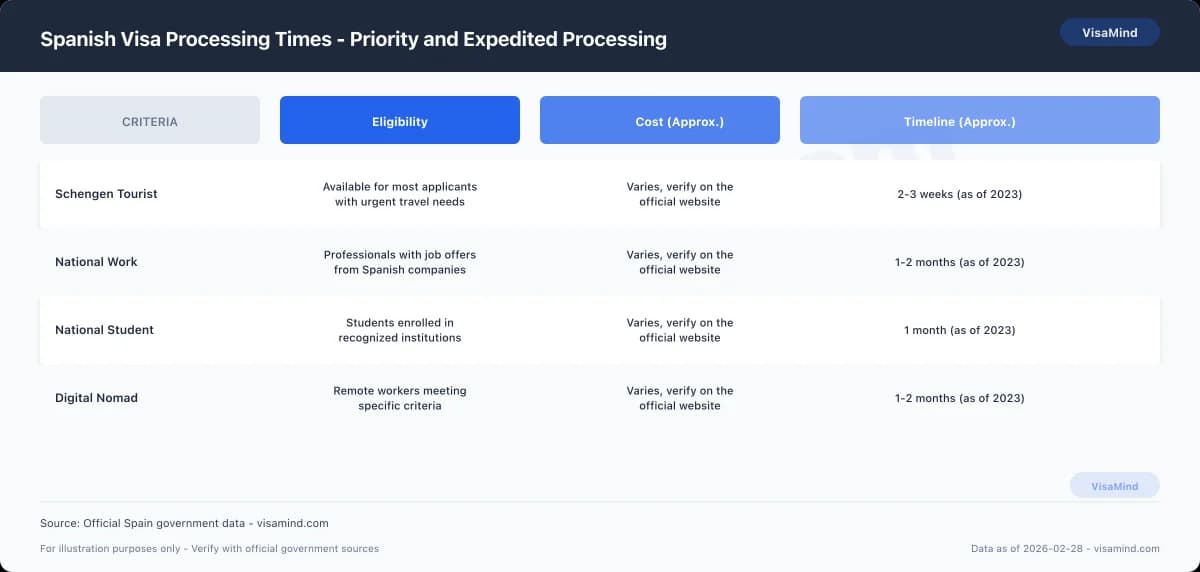
For those planning a trip or relocation to Spain, understanding the Spanish Visa Processing Times is crucial. The time it takes to process a visa can vary significantly depending on the type of visa you are applying for. Below is a detailed breakdown of current processing times for various visa types. This information is essential for planning your application timeline with the State Secretariat for Migration (SEM).
Processing Times Overview
| Visa Type | Processing Time (Approximate) |
|---|---|
| Schengen Tourist Visa | Up to 15 calendar days |
| National Work Visa | 1 to 3 months |
| National Student Visa | 1 to 2 months |
| Digital Nomad Visa | 20 to 60 days |
Key Considerations
-
Schengen Tourist Visa: This is one of the quickest visas to process, typically taking up to 15 calendar days. It's ideal for short stays and tourism purposes. For more information, visit the Schengen Tourist Visa page.
-
National Work Visa: This visa can take between 1 to 3 months, reflecting the complexity and requirements involved in securing employment in Spain. It's crucial to have all necessary documents ready to avoid delays. Check out the National Work Visa page for additional guidance.
-
National Student Visa: Processing for students ranges from 1 to 2 months. This timeline allows for thorough verification of educational documents and proof of enrollment in a Spanish educational institution. Learn more on the National Student Visa page.
-
Digital Nomad Visa: Tailored for remote workers, this visa takes between 20 to 60 days to process. As a relatively new option, ensure you meet all criteria before applying. For a detailed comparison with other visas, visit the Digital Nomad Guide.
Tip: Always apply well in advance of your planned travel or move to Spain, as processing times can vary based on the volume of applications and specific consular requirements.
Factors Influencing Processing Times
Several factors can influence the processing times of your visa application:
- Volume of Applications: Higher volumes can lead to longer processing times, especially during peak travel seasons.
- Completeness of Application: Ensure all documents are complete and accurate to avoid delays.
- Specific Consular Requirements: Different consulates may have varying requirements or additional documentation needed.
To ensure a smooth application process, it's advisable to review the documents checklist and ensure compliance with all requirements outlined by the SEM. Keep in mind that processing times are subject to change, and it's always best to verify the most current information on the official website before applying.
Why Processing Times Vary
#Visa processing times for Spain can vary significantly due to several factors. Understanding these can help you anticipate potential delays and better plan your application process with the State Secretariat for Migration (SEM).
Type of Visa
- Schengen Visa: Generally processed faster due to its short-term nature. Expect processing to take around 15 calendar days, though it can extend to 30 days during peak seasons or if additional documentation is needed. For tourism, see Schengen Tourist.
- National Visas: These include visas for work, study, or family reunification and often require more thorough review. Processing can take up to 2-3 months, depending on the complexity of your case. For specific examples, refer to National Work and National Student.
Application Volume
- Peak Periods: Visa application volumes tend to increase during certain times of the year, such as summer and holidays. During these periods, processing times can lengthen due to higher demand.
- Consular Workload: The workload of the specific consulate or embassy where you apply also influences processing speed. Larger consulates may handle more applications simultaneously, potentially leading to longer processing times.
Completeness and Accuracy of Documentation
- Document Submission: Incomplete or inaccurate documentation can significantly delay the processing of your application. It's crucial to ensure that all required documents are accurate and submitted in the correct format. Refer to the Documents Checklist for guidance.
- Additional Verification: If the SEM requires further verification or additional documents, this will extend the processing time. Always check the specific requirements for your visa type to avoid these delays.
Tip: To minimize delays, double-check all documents before submission. Ensure they meet the specific requirements outlined for your visa category.
External Factors
- Political or Economic Changes: Sudden shifts in Spain's political or economic environment can impact visa processing times. This includes changes in immigration policies or budget allocations for processing applications.
- Global Events: Events such as pandemics or international crises can also affect processing times due to changes in government operations or resource allocations.
By understanding these factors, you can better prepare for potential changes in processing times. For more detailed guidance on the application process, see the How To Apply guide.
Checking Your Application Status
#After submitting your visa application to the State Secretariat for Migration (SEM), it's natural to want to track its progress. Fortunately, Spain offers several tools to help you stay updated on the status of your application.
How to Check Your Visa Application Status
Once your application is lodged, you can track its status through the official Spain Visa Information and Application System. This online portal provides updates on various types of visas, including the Schengen Tourist and National Work Visa.
To access your application status:
-
Visit the official Spain Visa Information and Application System website.
-
Log in using your application reference number and passport details.
-
Navigate to the "Application Status" section to view the latest updates.
Tip: Check your email regularly for notifications from the system, as they might request additional information or documents.
Understanding the Status Updates
The online system offers a series of status updates to help you understand where your application stands. Here’s a quick guide to what each status means:
- Submitted: Your application has been successfully lodged and is awaiting initial review.
- Under Review: The SEM is currently evaluating your application and the accompanying documents.
- Additional Information Required: There are requests for more documentation or clarifications.
- Approved: Your visa has been granted, and you will receive further instructions on how to collect it.
- Denied: Your visa application has been rejected. Consider reviewing Visa Refusal Reasons if this occurs.
Dealing with Delays
While it's common for processing times to vary, significant delays can be frustrating. If your application seems to be taking longer than expected, consult the section on Escalating a Delayed Application for guidance on next steps.
Important: Always keep a copy of your application reference number and related documents. These are crucial for any follow-ups or inquiries regarding your application status.
For more detailed guidance on preparing your application, consider reviewing the Documents Checklist and How To Apply guides.
Staying Legal During Processing
#Understanding the legal landscape while your Spanish visa application is being processed is crucial to ensure you maintain your status and rights in Spain. Here, we provide insights into your options and rights during this period.
Maintaining Legal Status
Once you have lodged a visa application with the State Secretariat for Migration (SEM), it's essential to understand your legal standing. If you are applying for a Schengen Tourist Visa or a National Work Visa, your stay should be legally backed by your existing visa status, or you must have applied well before your current visa expires.
For those already in Spain seeking a National Student Visa or other long-term visas like the Digital Nomad Visa, ensure you have appropriate documentation or an appointment receipt to show your pending application status.
Important: Always keep a copy of your application receipt or appointment confirmation to prove you have lodged your application legally.
Bridging Visas and Implied Status
Spain doesn't officially offer "bridging visas"; however, the concept of "implied status" is relevant. This status allows you to remain legally in Spain while your application is under review, as long as you've submitted your visa application before your current visa expires.
- Implied Status: Applicable for those transitioning between visas within Spain. It ensures you can stay legally until a decision is made.
- Proof Required: Keep all application receipts and any correspondence from the SEM as proof of your ongoing application.
Work Rights During Processing
Your right to work while waiting for visa processing largely depends on your existing visa status. For example:
- Schengen Visas: Generally, do not permit work.
- National Work Visa Applicants: If transitioning from one work visa to another, you may continue your employment under implied status.
- Student Visa Holders: Can work part-time (up to 20 hours per week) during study periods, even while processing a visa extension or renewal.
For specific work rights queries or if you are applying for a unique visa type like the Self Employment Visa, consulting the Work Permit Vs Blue Card guide can provide more tailored information.
Tip: Always verify your work rights on the official SEM website, especially if your situation involves transitioning visas or changing employers.
Escalating a Delayed Application
#If you're facing delays in your Spanish visa application, there are formal avenues to escalate your situation. Here’s a step-by-step guide on how to proceed with escalating a delayed application through the State Secretariat for Migration (SEM).
1. Contacting Your Local Spanish Consulate
First, reach out to the Spanish consulate where you lodged your application. It's crucial to have all your application details ready, including your application number and the date of submission. Consulates can provide updates and sometimes expedite applications if there is a compelling reason, such as an urgent need to visit or start business activities in Spain.
2. Requesting Assistance from a Member of Parliament
If contacting the consulate yields no results, you can seek assistance from a Member of Parliament (MP) from your constituency. MPs can request information or intervention from SEM on your behalf. Prepare a concise letter detailing your situation and the reasons why an expedited process is necessary. This approach can be particularly helpful if you are dealing with a significant delay in a visa application, such as a Family Reunification or Golden Visa.
3. Filing a Complaint with the Ombudsman
If the issue persists, you may file a complaint with the Spanish Ombudsman (Defensor del Pueblo). The Ombudsman can investigate administrative delays and ensure that your application is processed fairly. When submitting your complaint, include all correspondence with the consulate and any communications from your MP. The Ombudsman acts independently and can mediate between you and SEM to resolve delays efficiently.
Important: Always maintain copies of all correspondence and keep a detailed log of your communications when escalating your case. This documentation will be invaluable if further action is needed.
For ongoing issues, you might also consider a Visa Refusal Reasons guide to understand possible grounds for delays or denials and prepare accordingly. Remember to verify the most current procedures on the official website, as processes can change.