
Who Should Read This
#The process of retiring in Spain is increasingly popular, with over 300,000 foreign retirees choosing to enjoy their golden years in this vibrant European country. For those considering a move to Spain for retirement, understanding the role of the State Secretariat for Migration (SEM) is crucial. This guide is intended for individuals who are planning to retire in Spain and need to navigate the specific immigration processes involved.
Who Can Benefit from This Guide?
This guide is especially useful for non-EU citizens who are planning to relocate to Spain to enjoy its rich culture, warm climate, and excellent healthcare system. It provides insights into the necessary steps and documentation required to establish residency, particularly through the Non-Lucrative Residence Visa. This visa is ideal for retirees as it allows you to live in Spain without engaging in any professional activity. If you are looking for options that involve investment, the former Golden Visa route (closed to new applications on 3 April 2025) might be of interest.
When to Use This Guide
Utilizing this guide is essential as you begin planning your retirement in Spain. It will help you understand the various eligibility criteria, timelines, and document requirements that need to be fulfilled. Starting early is key, as the application process can take several months, and being informed will help you avoid common pitfalls. You will also find useful comparisons, such as the distinctions between the Digital Nomad and Non-Lucrative Residence Visa, to determine the best fit for your lifestyle and financial situation.
Tip: Begin gathering your documentation at least six months before your planned move to ensure a smooth transition.
By familiarizing yourself with the requirements and procedures, you can confidently navigate the process of retiring in Spain, ensuring that you meet all legal obligations and enjoy a seamless relocation.
The Big Picture
#Retiring in Spain is an attractive option for many due to its pleasant climate, rich culture, and affordable cost of living. The State Secretariat for Migration (SEM) oversees the immigration processes for those wishing to retire in Spain, providing a range of pathways tailored to different needs and financial situations. Understanding the broader landscape of retirement in Spain can help you navigate your move effectively.
What Are the Main Visa Options for Retirees?
Spain offers several visa options that cater to retirees, each with distinct requirements and benefits. Here are the primary options:
- Non-Lucrative Residence Visa: Ideal for retirees, this visa allows you to live in Spain without engaging in any professional activities. You must demonstrate sufficient financial resources to support yourself.
- former Golden Visa route (closed to new applications on 3 April 2025) (Investor): For those who wish to make a significant investment in Spain, such as purchasing real estate worth at least €500,000. This visa offers residency benefits and travel flexibility within the Schengen Area.
- Long-Term Residence: After residing in Spain for five years, you may be eligible for this visa, which offers similar rights to Spanish citizens, including the ability to work.
How Does the Application Process Work?
Applying to retire in Spain involves several steps, primarily managed by the SEM, but also by Spanish consulates abroad. Here's a high-level overview:
- Determine Your Visa Type: Choose the visa that aligns with your situation and future plans. For retirees, the Non-Lucrative Residence Visa is commonly pursued.
- Gather Required Documents: This typically includes proof of financial means, health insurance, and a clean criminal record. Check the Documents Checklist for detailed requirements.
- Submit Your Application: Applications are generally submitted at Spanish consulates in your home country. It's crucial to follow the specific guidelines provided by the consulate to avoid delays.
Tip: Ensure all your documents are translated into Spanish and apostilled, where necessary, to streamline the review process.
What Should You Expect After Arrival?
Upon securing your visa and arriving in Spain, there are a few additional steps to complete your residency process:
- Register with Local Authorities: You must register at the town hall (Empadronamiento) and with the local police to obtain a Foreign Identification Number (NIE).
- Apply for Your Residency Card (TIE): This card serves as your official residency permit and should be obtained within 30 days of arrival.
The process of retiring in Spain is straightforward if you approach it with the right preparation and understanding. Long Term Residence and former Golden Visa route (closed to new applications on 3 April 2025) pathways provide flexibility and benefits that cater to diverse retiree profiles. Be sure to review official resources and consult with Spanish consulates to ensure compliance with all procedures and requirements.
Who Qualifies
#To retire in Spain, you'll need to meet several key requirements and prerequisites. Here's what you need to know about who qualifies for this opportunity:
Basic Eligibility
- Age Requirement: Typically, applicants should be of retirement age, which in many cases is considered to be 65 years or older. However, this can vary based on individual circumstances and the specific visa category.
- Financial Independence: You must demonstrate sufficient financial resources to support yourself without needing employment in Spain. This usually means proving a stable income such as a pension, savings, or investments.
Key Requirements
-
Non-Lucrative Residence Visa: This visa is often sought by retirees who wish to live in Spain without working. Key requirements include:
- Proof of Income: as of early 2026 — always verify current amounts with the official authority, applicants generally need to show a monthly income of at least €2,400, with an additional €600 for each family member. Always verify these figures with the Financial Requirements guide on the official website for the most current information.
- Health Insurance: You must have private health insurance that covers you in Spain, as public healthcare is not available to non-residents without a European Health Insurance Card.
-
former Golden Visa route (closed to new applications on 3 April 2025): For those who can invest in real estate or other qualifying investments, the former Golden Visa route (closed to new applications on 3 April 2025) provides a pathway to residency. Key requirements include:
- Investment Minimum: Typically, an investment of at least €500,000 in Spanish real estate is required. Other investment options may also be available.
Additional Prerequisites
- Criminal Record Check: A clean criminal record is essential. You must provide a certificate from your country of origin or any countries where you have lived for the past five years.
- Medical Examination: A medical certificate confirming that you do not have any diseases that could pose a public health risk is often required.
- NIE Number: Before you can engage in legal activities such as opening a bank account or buying property, you will need a Foreigner's Identification Number (NIE), obtained through local National Police stations in Spain.
Tip: Start gathering your documents early. Some documents, such as criminal record checks, can take time to obtain and may require apostille certification.
Considerations for Long-Term Residence
If you plan to stay in Spain long-term, consider applying for a Long-Term Residence permit after living in the country for five consecutive years. This status grants more stability and rights similar to those of Spanish citizens.
For more detailed guidance on the steps involved and required documentation, refer to the Documents Checklist and the How To Apply guide provided by the State Secretariat for Migration (SEM).
The Process from Start to Finish
#Determine Your Eligibility
Before beginning your retirement journey to Spain, it's crucial to identify the type of residence permit or visa that fits your circumstances. For retirees, the Non-Lucrative Residence Visa is often the most suitable choice, especially if you have sufficient financial means to support yourself without working. Review the Non-Lucrative Residence Visa details to confirm your eligibility. Another option could be the former Golden Visa route (closed to new applications on 3 April 2025) if you plan to invest in property or other assets in Spain.
Gather Necessary Documentation
To proceed with your application, collecting all required documents is paramount. This typically includes:
- A valid passport
- Proof of sufficient financial resources
- Private health insurance
- Criminal background check
- Medical certificate proving good health
For a comprehensive list, consider visiting the Documents Checklist.
Lodge Your Application
Once you've gathered your documents, you must lodge your application through a Spanish consulate in your home country. The consulate will handle the initial stages of your visa application process. Be prepared for an interview where you may need to discuss your plans for retiring in Spain and demonstrate your ties to your home country.
Tip: Schedule your consulate appointment well in advance, as slots can fill up quickly, especially during peak seasons.
Await Application Decision
After submitting your application, the processing time can vary but typically ranges from one to three months. It's advisable to monitor the status of your application and maintain communication with the consulate for any updates. For more information on processing times, refer to the Processing Times guide.
Arrive and Register in Spain
Upon receiving your visa, you can travel to Spain. Within 30 days of arrival, you must register at the local police station to obtain your Foreigner’s Identity Card (TIE). This card serves as your official identification document in Spain and is crucial for accessing services and proving your legal residency.
Settle Into Your New Home
With your TIE in hand, you can begin to enjoy your retirement in Spain. Explore local communities, engage in cultural activities, and familiarize yourself with the Spanish healthcare system and other essential services. For additional guidance on adapting to life in Spain, you might explore the Retire section.
Important: Failing to register for your TIE within the required time could result in penalties or impact your residency status.
By following these steps, you can effectively transition to a comfortable retirement in Spain. Always ensure to verify any specific requirements or changes via the official sources or consult with a legal expert familiar with Spanish immigration laws.
Costs and Timeline
#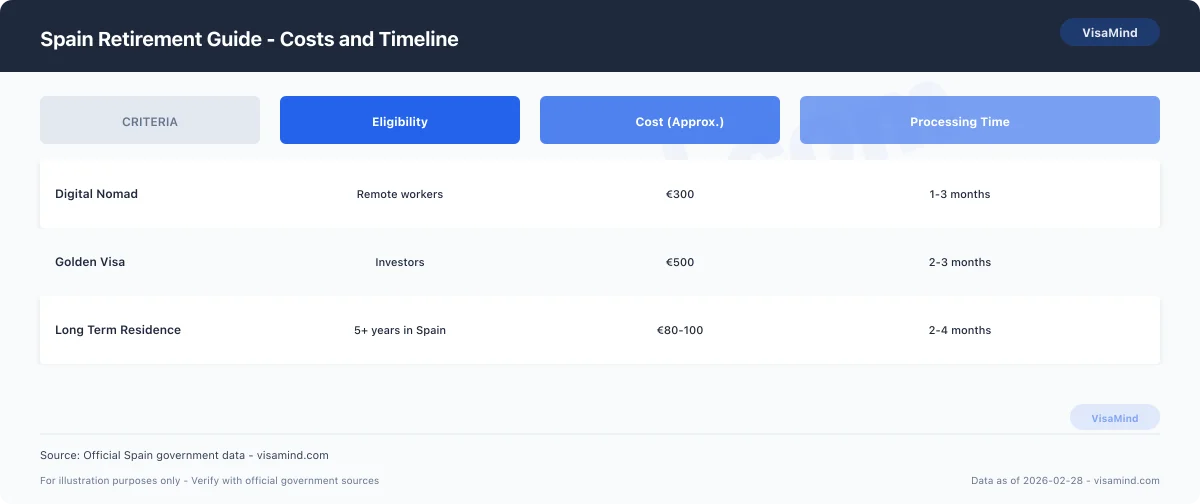
Understanding the costs and timeline associated with obtaining the appropriate visa is crucial. Below is a comparison of the main retirement-related visa options available, including the Non-Lucrative Residence Visa and the former Golden Visa route (closed to new applications on 3 April 2025), which are commonly sought by retirees.
Cost and Timeline Comparison
| Visa Type | Eligibility | Cost (EUR) | Processing Time |
|---|---|---|---|
| Non-Lucrative Residence Visa | Retirees with sufficient financial means | Approximately 80 EUR | 2-3 months |
| former Golden Visa route (closed to new applications on 3 April 2025) | Investment in Spanish real estate (minimum 500,000 EUR) | Approximately 70 EUR | 20 days |
| Long-Term Residence | Non-EU citizens residing legally in Spain for five years | Varies | 3-4 months |
Tip: It's advisable to apply well in advance of your planned move to Spain, as processing times can vary depending on the consulate and time of year.
What to Expect
- Non-Lucrative Residence Visa: This visa is ideal for retirees who plan to live in Spain without engaging in any work activities. Typically, you'll need to provide proof of income or substantial savings. The application process can take 2-3 months, so early preparation is advisable. - former Golden Visa route (closed to new applications on 3 April 2025): If you are considering investing in Spanish real estate, the former Golden Visa route (closed to new applications on 3 April 2025) offers a quicker pathway. This visa has a significantly shorter processing time of around 20 days. However, it requires a substantial investment in property, starting at 500,000 EUR.
Important: Missing any document in your application can lead to significant delays. Ensure you have all necessary paperwork before lodging your application.
1. Gather Required Documents:
Each visa type has specific documentation requirements. The Documents Checklist can be a helpful resource. 2.
Submit Your Application:
Applications must be lodged through the Spanish consulate relevant to your jurisdiction. 3.
Await Processing:
Track your application status through the consulate or the Processing Times guide. For more detailed guidance on the Retire process and financial requirements, consult the relevant sections tailored to your circumstances. Additionally, consider the Digital Nomad Vs Non Lucrative guide if you're exploring alternative residency options.
Tips and Best Practices
#- Research Thoroughly: Before starting your retirement application process in Spain, familiarize yourself with the specific requirements and processes associated with the visa category you are interested in. Whether you’re considering a Non-Lucrative Residence Visa or another type, understanding the eligibility criteria and necessary documentation is crucial.
- Gather Required Documents Early: Begin collecting all necessary documents well ahead of your planned application date. This includes financial proof, health insurance, and police clearance certificates. Refer to the Documents Checklist for comprehensive guidance on what you need.
- Consult Official Resources: Use resources like the How To Apply guide to ensure you understand the application process. It's important to consult the official website of the Secretaría de Estado de Migraciones for the most current information.
Timing and Deadlines
- Start Early: Begin your application process at least three to six months before your intended move. This provides ample time to address any unforeseen delays, such as obtaining specific documents or scheduling appointments.
- Mind the Deadlines: Pay close attention to any deadlines related to your visa application. Missing a deadline can result in significant delays or even denial. Always verify deadlines on the official website.
- Plan for Processing Times: Understand that processing times can vary. Reference the Processing Times for an idea of how long your application might take, and plan your travel and relocation accordingly.
Common Pitfalls to Avoid
- Incomplete Applications: Double-check that all sections of your application are complete and that you've included all required evidence. Incomplete applications are a common cause of delays or denials.
- Financial Miscalculations: Ensure your financial documents clearly demonstrate that you meet the minimum income requirements for your chosen visa. You can find more details in the Financial Requirements guide.
- Ignoring Language Requirements: While not always mandatory, having a basic understanding of Spanish can be beneficial, especially during in-person appointments or when dealing with local authorities.
Tip: Consider hiring a local immigration lawyer or consultant who can guide you through Spain's specific requirements and help avoid common mistakes.
After Arrival in Spain
- Register Locally: Once you arrive in Spain, remember to register with the local city hall (Ayuntamiento) and obtain your NIE (Número de Identificación de Extranjero) and TIE (Tarjeta de Identidad de Extranjero) from the National Police. This step is essential for long-term stay and integration.
- Health Insurance Updates: Ensure your health insurance is valid and meets the requirements of the Spanish authorities. You may need to update or change your policy upon arrival.
- Stay Informed: Keep up-to-date with any changes in immigration laws or requirements that may affect your residency status. Regularly check official channels and consider joining expatriate communities for firsthand experiences and advice.
Common Mistakes
#When preparing to retire in Spain, applicants often encounter several common pitfalls. Understanding these can help you avoid unnecessary delays and complications in your journey toward a peaceful retirement in this beautiful country.
Documentation Errors
-
Incomplete Documentation: A frequent mistake is failing to provide all necessary documentation. Ensure you gather and submit all required documents, such as proof of financial means and health insurance. Refer to the Documents Checklist for guidance.
-
Incorrect Document Translations: Any documents not originally in Spanish must be translated by a certified translator. Inaccurate translations can lead to rejection or delays.
Tip: Cross-check your documentation with the How To Apply guide to ensure you have everything needed.
Financial and Eligibility Missteps
-
Insufficient Financial Proof: Applicants often underestimate the financial requirements. You must demonstrate sufficient income or savings to support yourself without working. as of early 2026 — always verify current amounts with the official authority, you should verify the exact amount on the Financial Requirements page.
-
Misunderstanding Eligibility: Some applicants mistakenly pursue the wrong visa type. Familiarize yourself with the different options available, like the Non-Lucrative Residence Visa, which is typically suitable for retirees.
Application Timing and Submission Issues
-
Missed Deadlines: Timing is crucial. Starting your application too late can result in missing key deadlines. Plan ahead and monitor processing times through the Visa Refusal Reasons to avoid common pitfalls.
-
Failure to Verify Requirements: Ensure you routinely check for any updates or changes in requirements on the official SEM website. Requirements can change, and staying informed will help you avoid unnecessary issues.
Visa Type and Purpose Confusion
-
Selecting the Wrong Visa: Choosing the incorrect visa type can derail your plans. If you're unsure, consider what best suits your situation, such as a Digital Nomad Visa if you plan to continue working remotely, or a Self-Employment Visa if you intend to start a business.
-
Confusion Over Visa Purpose: Each visa type serves a specific purpose. Make sure the visa you apply for aligns with your intended activities in Spain to avoid refusal.
By paying attention to these common mistakes and preparing accordingly, you can streamline your application process and increase the likelihood of a successful retirement in Spain.
What Other Applicants Experienced
#A retired teacher from Canada, Mr. Thompson, decided to spend his retirement years in the warm climate of Spain. He was particularly interested in the Non-Lucrative Residence Visa, which is ideal for retirees as it allows extended stays without employment. Mr. Thompson's main concern was proving sufficient financial means to support himself, a key requirement for this visa. He gathered his financial documents, including pension statements and savings account details, and submitted them to the Secretaría de Estado de Migraciones. After reviewing the Documents Checklist thoroughly, he ensured everything was in order. Within three months, Mr. Thompson received approval for his visa and moved to a cozy village in Andalusia to enjoy his retirement.
Scenario: Former Business Owner Pursues Spanish Retirement
Mrs. Evans, a former small business owner from the UK, decided to retire in Spain, attracted by its vibrant culture and healthcare system. Her challenge was transitioning from self-employment to retirement while meeting the visa requirements. She opted for the Non-Lucrative Residence Visa and consulted the Financial Requirements to assess her eligibility. Mrs. Evans prepared her documents, including proof of her business sale and retirement savings. She applied through the Spanish consulate in London and, after a few months, was delighted to receive approval. Now, she enjoys the Mediterranean lifestyle, having successfully navigated the Spanish immigration process.
Scenario: Digital Nomad Retires in Spain
Mr. Lee, an American digital nomad, decided to retire in Spain after years of working remotely around the world. Transitioning from a Digital Nomad Visa to a retirement-focused visa, he applied for the Non-Lucrative Residence Visa through the Spanish consulate in New York. His concern was ensuring his past freelance income was sufficient to demonstrate financial independence. By consulting the Digital Nomad Vs Non Lucrative guide, Mr. Lee tailored his application to emphasize his stable income history and future financial plans. Within six months, he was approved and began enjoying the tranquility of the Spanish countryside.