Is This Guide for You?
#In 2026, approximately 43,000 individuals obtained permanent residence in Germany, reflecting a growing interest in long-term settlement. The Federal Office for Migration and Refugees (BAMF) oversees the process, ensuring applicants meet specific requirements and timelines. Understanding whether the German Permanent Residence Pathway Guide is suitable for your situation is key. This guide provides detailed information for those seeking to establish a permanent home in Germany, including families and skilled professionals. Individuals planning to reside in Germany for an extended period can benefit from a Settlement Permit or EU Long-term Residence Permit. Both options provide the stability and rights similar to those of German citizens, without granting citizenship itself. Applicants must typically have lived in Germany for several years, demonstrating integration and financial self-sufficiency. You must also show proficiency in the German language and adequate knowledge of Germany's legal and social systems. Ensure all documentation is gathered before starting your application process, as this will streamline your experience with the BAMF. Families considering relocating to Germany will find this guide useful for understanding the requirements for family members. The Family Reunion Visa allows spouses and children to join a family member who is already a resident in Germany. It's important to verify that all family members meet the necessary health insurance and financial support criteria. Each family member's application is processed individually, but they can be submitted together to the Ausländerbehörde. Germany offers several pathways for skilled workers and professionals, including the EU Blue Card and Skilled Worker Visa. These permits allow professionals to live and work in Germany, with a pathway to permanent residence after a specific period. Applicants should ensure their qualifications are recognized in Germany and may need to pass a language proficiency test. The BAMF website provides resources for understanding the qualification recognition process.
Eligibility and Requirements
#For obtaining a German permanent residence, applicants must meet specific income, language, and residency criteria. These requirements ensure candidates are well integrated and self-sufficient in Germany.
Minimum Income and Employment Criteria
You need to demonstrate financial stability to qualify for permanent residence in Germany. This often involves proving you have a steady source of income. - Stable income that meets the subsistence minimum as defined by German authorities. - Proof of employment or self-employment, such as employment contracts or business registration. - Evidence of contributions to the German social security system.
Tip: Check local Ausländerbehörde requirements for specific income thresholds as these can vary by region.
Language Proficiency Standards
Language proficiency is key for integration into German society. Applicants must demonstrate a certain level of German language skills. - A minimum B1 level in the German language under the Common European Framework of Reference for Languages (CEFR).
- Certificates from recognized language institutes, such as Goethe-Institut, are accepted.
Important: Language proficiency requirements may vary for applicants holding an EU Blue Card or those applying for a Settlement Permit.
Residency Duration and Documentation
Applicants must have resided in Germany for a continuous period to qualify for permanent residence. This duration ensures the applicant has sufficient ties to the country. - Typically, five years of continuous residency with a valid residence permit. - Evidence of residency, such as rental agreements and registration with local authorities (Anmeldung).
-
Gather all documents proving your residency and employment history.
-
Ensure your residence permit is valid and has not expired during the application process.
Tip: Some applicants, such as those holding an EU Blue Card, may qualify for permanent residence after a shorter period. Check eligibility specifics on the Federal Office for Migration and Refugees (BAMF) website.
Fees, Timeline, and What to Expect
#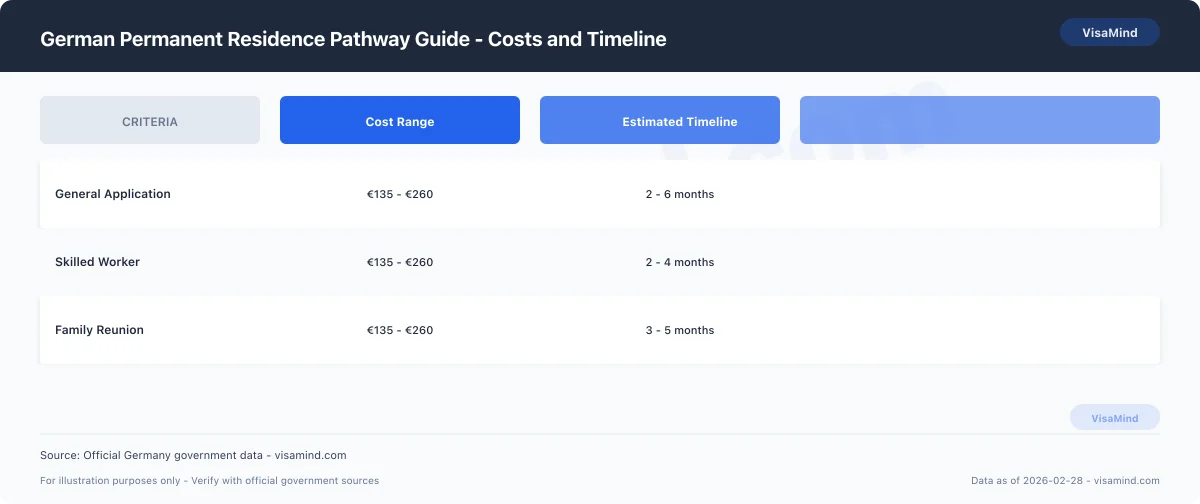
The cost of applying for a permanent residence permit in Germany varies depending on the type of permit and your specific situation. As of 2026, the general fee for a settlement permit is around €113. However, additional fees may apply based on specific circumstances. Understanding the timeline is essential for planning your transition to permanent residency. Processing times can vary significantly, often taking several months from the date of application submission to the final decision.
Application Fees Breakdown
| Permit Type | Standard Fee (€) | Additional Notes |
|---|---|---|
| Settlement Permit | 113 | May vary for self-employed individuals |
| EU Long-term Residence Permit | 109 | Additional costs for dependents |
| Reduced Fee for Minors | 55 | Applicable for applicants under 18 |
Important: Fees are subject to change; verify current fees on the Federal Office for Migration and Refugees (BAMF) website.
Typical Processing Durations
The processing time for a permanent residence permit in Germany can range from three to six months, depending on the complexity of your case and the workload of the local foreigners' authority (Ausländerbehörde).
Tip: Consider applying well in advance, especially if your current permit is close to expiration. This allows for any potential delays in processing.
Budgeting for Unexpected Delays
While the typical processing time is a few months, unforeseen delays can occur. It's prudent to budget for potential additional living expenses during this waiting period. - Temporary housing costs
- Legal assistance fees, if needed
- Additional documentation costs
Warning: Ensure that your current visa or permit remains valid throughout the processing period to avoid any legal issues.
What Goes Wrong Most Often
#Approximately 20% of applications for German permanent residence face delays or issues due to common errors. Understanding these pitfalls can help you avoid unnecessary setbacks and ensure a smoother application process.
Incomplete Documentation Submissions
One of the most frequent issues applicants encounter is submitting incomplete documentation. Each type of residence permit has specific documentation requirements that must be met. - Missing proof of financial stability or employment. - Incomplete proof of German language proficiency. - Lack of sufficient health insurance coverage.
Tip: Ensure you gather all necessary documents before starting your application. Refer to the Settlement Permit requirements for a detailed list.
Misunderstanding Language Requirements
Language proficiency is a critical requirement for obtaining permanent residence in Germany. Many applicants misunderstand the level of proficiency needed or fail to provide valid certification. - Submitting expired language certificates. - Providing certificates from unrecognized institutions. - Misjudging the required proficiency level (usually B1 or higher).
Important: Verify the language requirements on the official BAMF website and ensure your certification is from a recognized provider like Goethe-Institut.
Underestimating Processing Time
Applicants often underestimate the time it takes for their application to be processed. This can lead to stress and complications, especially if current permits are nearing expiration.
-
Check the BAMF's estimated processing times for your specific permit type.
-
Apply well in advance, ideally 3-4 months before your current permit's expiration.
-
Regularly check the status of your application through the local Ausländerbehörde.
Warning: Delays can occur, particularly during peak application periods. Plan accordingly to avoid gaps in your legal residency.
Overview
#Germany offers a pathway to permanent residence through the Federal Office for Migration and Refugees (BAMF), which oversees the process for obtaining a settlement permit. This guide summarizes the key options and steps involved for those looking to make Germany their permanent home.
Understanding Permanent
Residence in Germany, known as the Niederlassungserlaubnis, allows you to reside in the country indefinitely. Unlike temporary visas, this status provides greater stability and freedom, including the ability to work without restrictions and access to various social benefits. - Indefinite stay rights
- Unrestricted access to the labor market
- Eligibility for German citizenship after a period
Important: Ensure that you meet the specific requirements for the settlement permit by checking the latest criteria on the BAMF website.
Pathway Options for Different Applicants
Germany provides various pathways to permanent residence, catering to different types of applicants. The most common include the EU Blue Card, the Skilled Worker Visa, and the Settlement Permit for long-term residents.
| Visa Type | Eligibility | Benefits |
|---|---|---|
| EU Blue Card | Highly qualified professionals | Fast-track permanent residence after 33 months |
| Skilled Worker Visa | Qualified non-EU workers | Path to permanent residence after 4 years |
| Settlement Permit | Long-term residents | Immediate permanent residence status |
Tip: Consider applying for the EU Long-term Residence Permit if you have lived in the EU for more than five years, as it offers additional mobility within the EU.
Integration into German Society
Integrating into German society is a key component of the permanent residence pathway. Demonstrating a commitment to integration can strengthen your application. - Proficiency in the German language (B1 level or higher)
- Understanding of the German legal and social system
- Participation in community and cultural activities Integration courses are often available and can provide valuable support in adapting to life in Germany. These courses cover language skills, cultural norms, and legal knowledge.
What Experienced Applicants Recommend
#Germany requires a minimum residence period of five years before you can apply for a Settlement Permit (Niederlassungserlaubnis). The Federal Office for Migration and Refugees (BAMF) oversees this process, offering a pathway to permanent residence. Experienced applicants often highlight the importance of understanding the nuances of Germany's immigration system. The following recommendations are based on common experiences to help you process more effectively.
Navigating German Bureaucracy Efficiently -
Schedule appointments with the Ausländerbehörde well in advance, as slots can fill up quickly. - Familiarize yourself with the local Bürgeramt for document verification and registration processes. - Keep a translated and certified copy of your documents, especially if they are not in German.
Tip: Utilize the Settlement Permit application checklist on the BAMF website to ensure all requirements are met before your appointment.
Important: Document organization is key. Having a complete and well-organized file can significantly reduce processing times and prevent delays.
Maximizing Language Learning Opportunities
Proficiency in German can greatly improve your chances of a successful application. Many applicants recommend enrolling in a BAMF-sponsored integration course. - Join local language exchange groups to practice your German in real-life situations. - Utilize online platforms like Duolingo or Babbel to reinforce your language skills daily. - Attend local cultural events to immerse yourself in the language and culture.
Tip: Consider taking the Goethe-Institut proficiency exams, as they are widely recognized and respected in Germany.
Building a Support Network
Connecting with other expatriates and locals can ease your transition into German life. Support networks can provide emotional and practical assistance. - Participate in community events or join clubs related to your interests. - Use social media platforms to find local expat groups, such as Facebook or Meetup. - Consider volunteering with local organizations to build connections and improve language skills.
Important: Establishing strong relationships with locals can help you gain insights into German culture and everyday living, which is invaluable during the settlement process.
Step-by-Step Process
#In Germany, applying for a permanent residence permit involves several critical steps managed by the Federal Office for Migration and Refugees (BAMF). With a processing period of up to 180 days, preparation is key to ensuring a smooth application experience. This section outlines the step-by-step process for obtaining a permanent residence permit in Germany, from initial preparations to interviews and follow-ups. Each stage is vital for your successful transition to permanent residency.
Initial Application Preparation
-
Begin by reviewing the eligibility criteria for a permanent residence permit on the BAMF website.
-
Gather all required documents, such as proof of income, health insurance, and integration certificates.
-
Consider consulting with an immigration advisor to ensure that all requirements are clearly understood.
Tip: Ensure your passport is valid for at least six months beyond your planned application date.
Important: The BAMF website offers detailed information on the necessary documents and eligibility specifics. Always refer to the most recent guidelines.
Submitting Documents and Fees
-
Compile your completed application along with all required documents.
-
Submit your application to the local Ausländerbehörde (Foreigners' Office) in your area.
-
Pay the processing fee, which varies based on the type of residence permit you are applying for. As of 2026, fees typically range from €100 to €150.
Important: Retain copies of all documents and receipts submitted for your records.
Tip: Check for any additional forms that may be required for specific types of permits, such as the EU Blue Card or Skilled Worker Visa.
Attending the Interview and Follow-ups
-
Schedule and attend an interview at the local Ausländerbehörde.
-
Prepare for questions regarding your integration into German society, employment status, and future plans.
-
If requested, provide any additional documentation promptly to avoid delays. Interviews may vary depending on your application type, so it's beneficial to practice possible questions. Use available resources like the Interview Prep Guide for tips.
Warning: Failure to attend the interview or provide additional requested information may result in application denial.
Real-World Examples
#Germany offers a variety of pathways to permanent residence, including routes for skilled workers, families, and entrepreneurs. Each pathway involves navigating particular requirements managed by the Federal Office for Migration and Refugees (BAMF).
Successful Application from a Skilled Worker
A software engineer from India, working in Germany on an EU Blue Card, decided to apply for a permanent residence permit after two years. The engineer had maintained employment with a sufficient salary threshold and fulfilled integration requirements, including a German language proficiency test. By visiting their local Ausländerbehörde (foreigners' authority) they were able to lodge their application, backed by their employment contract, proof of health insurance, and a certificate of integration course completion.
Tip: Holding an EU Blue Card can expedite the process to permanent residence, often after just 21 months if you meet certain criteria.
Family Reunification Experience
A Brazilian citizen married to a German national sought to join their spouse in Germany permanently. After arriving on a Family Reunion Visa, they applied for a settlement permit. The process required them to demonstrate basic German language skills and stable financial support from their spouse. By coordinating closely with the BAMF and providing all necessary documents, including their marriage certificate and proof of income, they successfully transitioned to permanent residence within a year.
Important: Ensure all documents, especially those proving your relationship and financial stability, are translated into German and certified if coming from non-EU countries.
Challenges Faced by Entrepreneurs
A tech entrepreneur from Canada faced hurdles when applying for permanent residence due to fluctuating income from their startup. Initially on a Self Employed Visa, they needed to present a viable business plan and sufficient financial resources to support themselves. After consulting with a local business advisor and revising their financial projections, they successfully convinced the Ausländerbehörde of their business's sustainability, allowing them to secure permanent residency.
Warning: For entrepreneurs, demonstrating a consistent income and robust business model is necessary. Engaging with local business advisors can aid in meeting these requirements.