Visa-Free or Visa Required?
#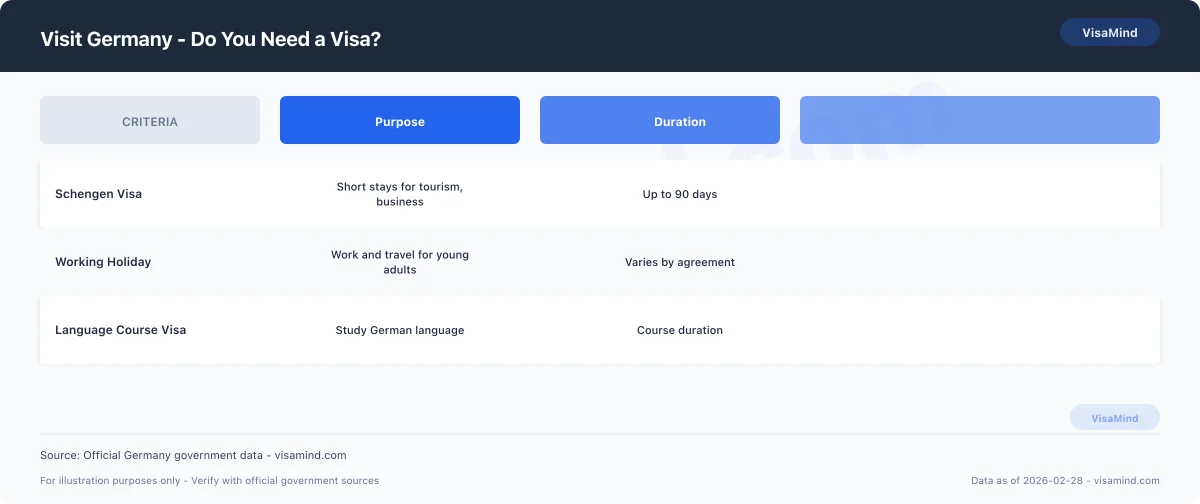
Citizens from more than 60 countries, including the United States, Canada, and Australia, can enter Germany without a visa for short stays of up to 90 days within a 180-day period for tourism, business, or family visits. This visa-free travel is made possible through the Schengen Agreement, facilitating movement across much of Europe.
When Is a Visa Required?
For those who do not qualify for visa-free entry, a Schengen Visa (Type C) is required for short stays in Germany. This visa applies to tourists, business travelers, and visitors planning to stay up to 90 days within a 180-day period. It's important to note that this visa grants access to all countries within the Schengen Area, not just Germany.
Citizens from countries like India, China, and South Africa must apply for a Schengen Visa before arrival. The application should be lodged at the German embassy or consulate in your home country. For detailed requirements and processes, visit the Schengen Visa page.
Applying for a Schengen Visa
To apply for a Schengen Visa, you will need to gather several documents, including:
- A completed Schengen Visa application form
- A valid passport with at least two blank pages
- Two recent passport-sized photos
- Proof of travel insurance covering medical emergencies up to €30,000
- Evidence of financial means, such as bank statements or a sponsorship letter
- Proof of accommodation and travel itinerary
The application process generally takes around 15 calendar days, but it can be longer during peak travel seasons or due to specific circumstances. It's advisable to apply well in advance of your planned travel dates.
Tip: Verify the most current processing times and document checklists by visiting the Visa Processing Times page.
Longer Stays and Other Visas
If you plan to stay in Germany for more than 90 days or for purposes like work, study, or family reunification, you'll need to apply for a National Visa or a residence permit. For example, the Skilled Worker Visa or the Student Visa may be appropriate, depending on your situation.
For those interested in working in Germany, options like the Working Holiday Visa or the Freelance Visa offer unique opportunities to explore employment while experiencing German culture firsthand.
Important: Always check the official website of the Federal Foreign Office and local German consulates for the most accurate and updated information regarding visa requirements and application procedures.
Your Visitor Visa Options
#Germany offers several options for visitor visas depending on the purpose and length of your stay. Below is a comparison of the most common visitor visa types available for those planning to visit Germany.
| Visa Type | Eligibility | Cost (as of 2023) | Processing Time |
|---|---|---|---|
| Schengen Visa (Type C) | For short stays up to 90 days for tourism, business, or family visits. Available to non-EU citizens who require a visa to enter Germany. | €80 for adults; €40 for children aged 6-12; free for children under 6. Verify on the official website for the latest fees. | Typically 15 calendar days, but can be extended to 30 or 60 days in exceptional cases. |
| Airport Transit Visa | Required for travelers transiting through a German airport to a non-Schengen country. Not required for citizens of certain countries. | €80 for adults. Confirm the latest fees on the official website. | Usually processed within 15 days. |
| National Visa (Type D) | For stays longer than 90 days for specific purposes like work or study. This visa type is often the first step towards obtaining a residence permit. | Varies depending on the purpose and duration. Verify fees on the official website. | Can take several weeks to months, depending on the complexity of the application and the applicant's situation. |
Key Differences Between Visitor Visas
The Schengen Visa is the most common visa for short visits, allowing you to travel within the Schengen Area for up to 90 days within a 180-day period. It is suitable for tourism, short business trips, or family visits. If you're planning to travel to other Schengen countries, this visa will suffice.
The Airport Transit Visa is needed if you're traveling through Germany to reach a non-Schengen destination. However, citizens of certain countries are exempt from this requirement. It is important to check if you fall into this exempt category before applying.
For longer stays, the National Visa is necessary. This visa is tailored for specific purposes such as employment, studies, or family reunification. If your intention is to relocate to Germany permanently, you may need to transition from a national visa to a residence permit once you arrive.
Tip: Always verify the latest visa fees and processing times on the official website of the Federal Foreign Office or contact the nearest German embassy or consulate for the most accurate information.
Visa Application Tips
- Documentation: Ensure you have all the necessary documents before applying. Refer to the Documents Checklist for more details.
- Application Process: You can learn more about the visa application process in the How To Apply guide.
- Processing Times: Keep in mind that processing times can vary, so plan your application accordingly. Consult the Processing Times guide for more information on what to expect.
By selecting the appropriate visa type and ensuring all requirements are met, you can facilitate a smooth entry into Germany for your visit.
What You Need to Apply
#Gathering the necessary documents is a key step in your application process. Depending on your nationality and the purpose of your stay, you may need to apply for a Schengen Visa or another type of visa. Below are the general documents you will need to collect to apply for a visit to Germany.
Personal Documents
- Valid Passport: Ensure your passport is valid for at least three months beyond your intended departure date from the Schengen Area. It should have been issued within the last ten years and contain at least two blank pages.
- Passport Photos: Two recent passport-sized photos meeting the German visa photo requirements.
Financial Proof
- Proof of Financial Means: You must demonstrate that you have sufficient funds to cover your stay in Germany. This can include recent bank statements, pay slips, or a letter from an employer. For more detailed guidelines, consult the Financial Requirements.
- Travel Insurance: A health insurance policy with minimum coverage of €30,000 is required, covering any medical emergencies during your stay in Germany and the Schengen Area.
Travel and Accommodation
- Travel Itinerary: Include details of your travel plans such as flight reservations or a complete travel schedule. It's not recommended to purchase tickets before your visa is approved.
- Accommodation Confirmation: Proof of accommodation, such as hotel bookings or an invitation from a host in Germany, outlining where you will be staying during your visit.
Additional Documents
- Invitation Letter: If visiting friends or family, an invitation letter from your host in Germany may be required. For business visits, a letter from the German company you will be visiting is necessary.
- Purpose of Visit: Depending on your visit's purpose, you may need additional documents. For instance, if attending a conference, you might need an invitation or ticket to the event.
Tip: Ensure all documents are in English or German to avoid processing delays.
Before applying, review the specific requirements for your nationality and situation by visiting the Documents Checklist. If you need a comprehensive step-by-step guide on applying, refer to the How To Apply.
Verification and Submission
After gathering your documents, verify their accuracy and completeness. Incomplete applications can lead to delays or denial. Once everything is in order, you can proceed to lodge your application with the appropriate German consulate or embassy.
Important: Double-check the validity of your documents and ensure they meet all the outlined requirements to avoid processing delays.
How to Apply Step by Step
#Determine Your Visa Requirement
Before beginning your application process, verify whether you need a visa to visit Germany. Citizens from certain countries can enter Germany for short stays without a visa. For those who require a visa, the Schengen Visa (Type C) is typically used for tourism or short business trips. Check the specific requirements and exemptions applicable to your nationality through the Schengen Visa link.
Choose the Application Method
Depending on your location, choose between applying online via the VIDEX system or through a German embassy or consulate. The Federal Foreign Office (Auswärtiges Amt) manages visa applications submitted through embassies. For online applications, ensure you have access to the necessary technology and internet connection.
Gather Required Documents
Collect all required documentation before starting your application. This typically includes a valid passport, recent photographs, proof of travel insurance, and financial means to support your stay. A complete Documents Checklist can guide you through this process.
Lodge Your Application
- Online Application: Use the VIDEX-SCHENGEN form to input your details.- Embassy Submission: If applying through an embassy, schedule an appointment at the nearest German consulate. You may need to provide biometrics (fingerprints) at the time of your appointment.
Schedule an Appointment
For those applying through an embassy, scheduling an appointment is essential. Appointments can often be made online via the embassy's website. Prepare for potential waiting times, as availability might vary depending on the location.
Attend Your Appointment
Attend your appointment with all your documents, including the signed application form and supporting evidence. Be prepared to answer questions about your travel plans and intentions. The consular officer will review your application and may ask for additional documentation if necessary.
Pay the Visa Fee
Pay the applicable fee for your visa type. The fee must be paid in the currency accepted by the consulate or through the payment method specified. Verify current fees on the official website of the German embassy or consulate.
Await Processing
Visa processing times can vary, so it's advisable to apply well in advance of your planned travel date. Check typical Processing Times to set realistic expectations and plan accordingly.
Tip: Applying online can expedite the process by reducing mail delays and providing an immediate confirmation receipt. Always double-check the receipt details for accuracy.
Receive Your Visa
Once approved, you will receive your visa, either by collecting it from the consulate or through mail if available. Verify all details on the visa for accuracy and ensure it matches your travel plans.
Prepare for Travel
With your visa in hand, finalize your travel arrangements. Make sure your documents are in order, including your passport, insurance, and any reservations for accommodation. Upon arrival in Germany, you may need to present these documents to the border authorities.
By following these steps, you can efficiently navigate the application process for visiting Germany. Remember to start early and double-check all requirements specific to your situation to ensure a smooth application experience.
Pitfalls That Get Applications Denied
#It's crucial to be aware of common pitfalls that can lead to application denials. Understanding these pitfalls can help ensure your application is successful.
Overstaying Your Visa
- Respect Visa Duration: Ensure you leave Germany before your visa or permit expires. Overstaying can lead to fines, deportation, and future entry bans.
- Schengen Rules: If you are on a Schengen Visa, remember the 90/180-day rule, which allows you to stay for up to 90 days within any 180-day period in the entire Schengen Area.
Important: Overstaying even by a day can have serious consequences, affecting future travel plans to not just Germany, but the entire Schengen Zone.
Working on a Tourist Visa
- No Employment Allowed: Tourist visas do not permit employment. Engaging in any form of work, even unpaid, can result in immediate expulsion.
- Correct Visa Types: If you're planning to work, consider applying for appropriate visas like the Skilled Worker Visa or the Freelance Visa.
Financial Requirements
- Proof of Sufficient Funds: Demonstrating the ability to finance your stay is mandatory. This includes accommodation, daily expenses, and return travel.
- Bank Statements: Include recent bank statements or a Verpflichtungserklärung (formal obligation letter) from a host in Germany.
Tip: Refer to the Financial Requirements Guide for detailed information on the financial thresholds and acceptable documentation.
Avoiding these common mistakes when applying to visit Germany will help ensure your application is processed smoothly and without delay. Always check the most current guidelines from the Federal Office for Migration and Refugees (BAMF) or the Federal Foreign Office for updated requirements and recommendations.
At the Border
#When you're planning to visit Germany, understanding the border control process is an important step. Whether you're entering with a visa, such as a Schengen Visa, or traveling visa-free, here's what to expect when you arrive at a German port of entry.
Arriving at the Border
Once you land in Germany, you'll proceed to the immigration checkpoint. Here, the border control officer will inspect your passport and any required visas. Ensure your passport is valid for at least three months beyond your intended stay, and that you have all necessary documentation readily available.
Fingerprinting and Biometric Data
Germany uses biometric data systems to enhance border security. If you are arriving with a visa, such as a Student Visa, expect to have your fingerprints and a photograph taken. These biometric checks are standard for many visa holders and help verify your identity against the visa application records.
Interviews and Questioning
The border control officer may ask you a few questions about the purpose of your visit. This could include inquiries about your travel plans, accommodation, and financial means. It's important to answer these questions clearly and truthfully. Having copies of hotel bookings, return flight tickets, and proof of funds can be helpful.
Tip: If you are traveling for work or study, having a letter of invitation or confirmation from your employer or educational institution can expedite the process.
Using E-Gates
For eligible travelers, e-gates provide a quick and automated entry process. Generally, these are available for EU citizens and travelers from select countries. E-gates use facial recognition technology to match your passport photo with your live image, making the process swift and contactless.
After Clearing Immigration
Once you've successfully passed through immigration, you can collect your luggage and proceed to customs. Be aware of Germany's customs regulations, especially regarding duty-free limits and prohibited items.
In summary, being prepared with the right documents and understanding the border control procedures will facilitate a smooth entry into Germany. For further guidance on preparing for interviews, consider consulting our Interview Prep Guide.
Can You Stay Longer?
#Understanding the options for extending your stay is crucial. If you hold a Schengen Visa (Type C), which typically allows stays of up to 90 days within a 180-day period, you may wonder if it's possible to extend your stay without leaving the Schengen Area. Unfortunately, extensions for the Schengen Visa are only granted in exceptional circumstances, such as unforeseen events or humanitarian reasons.
How to Apply for an Extension
If you find yourself in a situation that warrants an extension, you should approach the local Ausländerbehörde (Foreigners' Office) before your current visa expires. It's important to provide compelling documentation that justifies your request. This could include medical reports, a letter of support from a host, or other pertinent evidence. The application process at the Ausländerbehörde will require you to fill out specific forms and might involve a fee, so it's advisable to check the latest requirements on their official website.
What If You Need a Different Visa?
For those whose circumstances change or who wish to pursue opportunities like work or study during their visit, switching to a different visa type might be necessary. For example, if you decide to work in Germany, exploring options like the Skilled Worker Visa or the Blue Card EU could be beneficial. Each visa type has its own set of requirements and processes, so it's crucial to review these carefully and ensure you meet all criteria before applying.
Tip: If your plans change and you require a different visa, start the application process as early as possible to avoid overstaying your current visa's validity.
Consequences of Overstaying
Overstaying your visa can have serious repercussions, including fines, future entry bans, or difficulties securing visas for Germany and other Schengen countries in the future. Therefore, it's essential to either apply for an extension or transition to another visa type before your current visa expires. For guidance on this process, you might find the Visa Extension Guide helpful.
By planning ahead and understanding your options, you can ensure that your time in Germany is both enjoyable and compliant with immigration regulations.
Real Scenarios
#A business consultant from Canada needed to visit Germany for a series of meetings with a key client. Since Canadian citizens are eligible for visa-free entry into Germany for short stays, he did not need to apply for a visa in advance. However, he needed to ensure that he had the appropriate documentation to present at the border. This included a letter from his client detailing the purpose and duration of his visit, as well as proof of return travel and accommodation. Upon arrival, he was able to enter Germany smoothly by presenting these documents to the border officer, demonstrating his intention to stay for a business-related short visit.
Scenario: Brazilian Tourist Planning a Longer Stay
A tourist from Brazil planned to explore Germany for an extended period, visiting various historical sites and cultural landmarks. Although Brazilian citizens can enter Germany visa-free for short stays, she wanted to extend her visit beyond the typical 90-day limit within a 180-day period. To facilitate a longer stay, she decided to apply for a Schengen Visa (Type C), which allows for stays up to 90 days within any 180-day period. She completed the necessary application form, gathered her supporting documents such as proof of accommodation, travel insurance, and financial means, and submitted her application to the German Consulate in São Paulo. Her visa was approved within a few weeks, allowing her to enjoy her extended travel plans in Germany without any issues.
Scenario: Academic Conference Attendee with Prior Visa Denial
An academic researcher from India was invited to present at a prestigious conference in Berlin. However, she was concerned because her previous visa application was denied due to insufficient documentation. This time, she carefully reviewed the requirements for the Schengen Visa (Type C) and consulted the Documents Checklist to ensure she had all necessary paperwork, including a letter of invitation from the conference organizers and proof of her academic credentials. She submitted her application to the German Consulate and included a cover letter addressing the previous denial, explaining how she had rectified the documentation issues. Her application was successful, and she received her visa in time to attend the conference, demonstrating the importance of thorough preparation and attention to detail in overcoming past challenges.
FAQs
What are the common reasons for Schengen Visa denial when visiting Germany?
Can I switch from a Schengen Visa to a work visa while in Germany?
How long does BAMF take to process a Schengen Visa application for visiting Germany?
Can I extend my stay in Germany if I am on a Schengen Visa?
What is the process to apply for a family reunion visa after visiting Germany on a Schengen Visa?
Can I combine a business trip with tourism on a Schengen Visa to Visit Germany?
What are the eligibility criteria for visa-free entry to Visit Germany?
Sources
Last reviewed: March 1, 2026
VisaMind provides informational guidance only and is not a government agency. This is not legal advice. Requirements can change and eligibility depends on your specific facts. If your case is complex or high-stakes, consult a licensed immigration attorney.
Next steps
Requirements vary by nationality, purpose, timeline, and case details. Use Find My Visa to get a personalized checklist for Germany with official sources and deadlines.
Find my visa