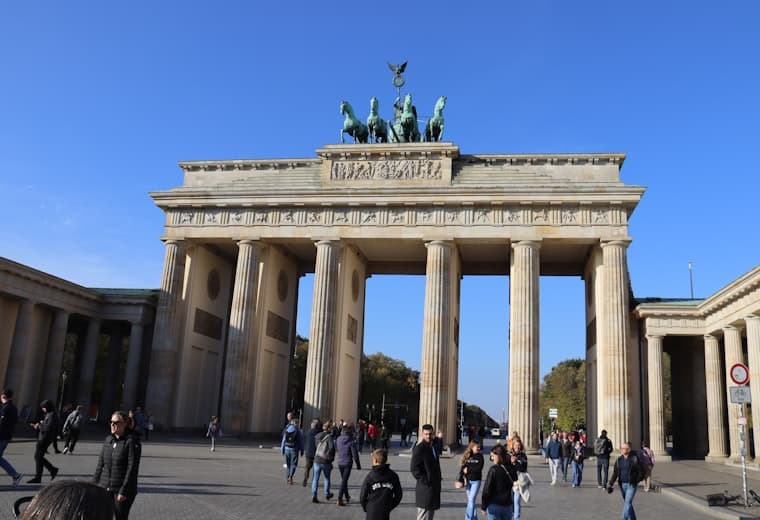
Germany Family Reunion Visa: Overview
#The Germany Family Reunion Visa allows you to live in Germany with close family members, such as your spouse or child. Apply if your immediate family member already resides in Germany and you want to join them.
This visa commonly covers:
- Spouse Visa applications
- Child Visa applications for minor children of residents in Germany
You submit your visa application through the Federal Foreign Office at the German mission abroad. If approved, you enter Germany with the issued visa.
After arrival, your local Ausländerbehörde handles your residence permit. The Federal Office for Migration and Refugees (BAMF) is the federal migration authority.
Filing a family reunification application does not guarantee approval. Each case is reviewed individually.
Processing Time
| Application Type | Standard Processing Time (as of March 2026) |
|---|---|
| Family Reunion Visa | 2 to 6 months |
Basic Eligibility Situations
You may apply if you are:
- The spouse of a lawful resident in Germany
- The child of a resident in Germany
After You Arrive
Many applicants later pursue:
- Settlement Permit (Niederlassungserlaubnis)
- EU Long-term Residence Permit
- German Citizenship (Naturalization), if eligible
The Family Reunion Visa often serves as a first step toward long-term residence in Germany.
Your Rights After Approval (Family Reunification Germany)
#Once your Spouse Visa or Child Visa is approved, you must continue to prove your identity and nationality without doubt. German authorities can request confirmation of your passport details and supporting documents at any stage.
All records submitted through Form VIDEX, your visa application, and later filings must remain consistent. Inconsistent or incomplete information can cause issues with your residence status.
The authority handling your residence permit inside Germany is the local Ausländerbehörde. The Federal Office for Migration and Refugees (Bundesamt für Migration und Flüchtlinge – BAMF) handles asylum matters, not standard family residence permits.
You may later apply for:
- Settlement Permit (Niederlassungserlaubnis)
- EU Long-term Residence Permit
- German Citizenship (Naturalization)
Each process requires clear and consistent identity documentation.
If your sponsor submitted a Form Verpflichtungserklärung (formal obligation letter), authorities may review it during later applications. Your personal data must match all prior filings, including any Form Residence Declaration.
| Requirement | What You Must Do |
|---|---|
| Proof of identity | Provide accurate passport and nationality details |
| Form completion | Fill out every section fully and correctly |
| Consistency | Match all information across applications |
| Review before submission | Check all entries for errors or omissions |
Errors often happen when applicants enter different spellings, dates, or document numbers. Use the exact details from your passport and official records every time.
What It Costs
#You must pay a visa application fee of €75 for a Germany family reunion visa, including a Spouse Visa or Child Visa application. Fees are paid when you submit your application through the Federal Foreign Office abroad.
| Item | Cost (EUR) | Notes |
|---|---|---|
| Family Reunion Visa Application | €75 | Pay at time of application (as of Feb 2026) |
Processing times vary by category and location. In some cases, visa decisions take around 15 days, but many family-reunion applications take 2–6 months.
If you apply from inside Germany for a residence permit after entry, your local Ausländerbehörde handles the process. The Federal Office for Migration and Refugees (BAMF) oversees migration matters at the federal level, including policies that affect residence pathways such as the Settlement Permit (Niederlassungserlaubnis) or the EU Long-term Residence Permit.
You must hold a valid and recognized passport. Arrange health insurance coverage before arriving in Germany; lacking this can delay your process.
Some applications require forms such as Form VIDEX or a Form Residence Declaration. If a sponsor provides financial support, authorities may request a Form Verpflichtungserklärung.
If you later pursue German Citizenship (Naturalization), separate fees apply. Check the responsible authority for current amounts.
Removing Conditions
#You remove conditions on your Germany family reunion residence when you continue to meet the legal purpose of your stay and no public interest supports your expulsion. Authorities review whether grounds for removal exist before granting a more secure status.
You must also ensure that your visa matched your actual reason for entering Germany. If you applied for a visa that didn’t reflect your true purpose, this can affect your ability to keep or extend your status.
Key Legal Requirements
| Requirement | What It Means for You |
|---|---|
| No grounds for expulsion | You must not trigger legal reasons that justify removal from Germany. |
| No public interest in expulsion | Authorities must find no overriding public reason to end your stay. |
| Correct visa purpose | Your original visa must correspond to your real reason for residence (e.g., Spouse Visa or Child Visa). |
| Apply inside Germany | You must apply for your residence permit with the local Ausländerbehörde. |
When you move from a temporary Spouse Visa or Child Visa to a longer status such as a Settlement Permit (Niederlassungserlaubnis), authorities reassess these conditions.
The local Ausländerbehörde handles residence permits. The Federal Foreign Office manages visa applications abroad.
The Federal Office for Migration and Refugees (BAMF) is responsible for asylum matters.
If you later seek an EU Long-term Residence Permit or German Citizenship (Naturalization), you must still show that no expulsion grounds apply and that your stay has always matched your declared purpose, including information submitted through forms such as Form VIDEX, a Form Residence Declaration, or a Form Verpflichtungserklärung where required.
Evidence Checklist
#You must submit clear proof that you can financially support yourself and your family member in Germany. If you fail to show sufficient funds, the Federal Foreign Office may refuse your visa application.
Prepare the following core documents:
- Proof of sufficient funds to cover living expenses
- Completed Form VIDEX application form
- Valid passport copies
- Any required Form Residence Declaration
- If applicable, a Form Verpflichtungserklärung (formal obligation letter)
Your document set must also match your residence status in Germany.
| Your Status in Germany | Evidence to Include |
|---|---|
| Spouse Visa holder | Proof of sufficient funds and residence status |
| Child Visa sponsor | Proof of sufficient funds and legal residence |
| Settlement Permit (Niederlassungserlaubnis) holder | Valid residence permit and financial proof |
| EU Long-term Residence Permit holder | Valid permit and financial proof |
| German Citizenship (Naturalization) | Proof of citizenship and financial capacity |
If your family member plans to work, study, or complete vocational training, include documents that confirm that purpose. The authorities assess these documents alongside your financial evidence.
Submit complete and consistent records. Incomplete financial documentation is a common reason for refusal.
The Federal Office for Migration and Refugees (BAMF) oversees migration matters. The Federal Foreign Office processes visa applications abroad.
Inside Germany, your local Ausländerbehörde reviews residence permits.
Application Process
#You must apply for a Germany family reunion visa in your country of residence. Don’t apply from a third country unless the German mission there accepts your residency status.
Before you submit your application, confirm that you meet all visa requirements. Review the criteria for the correct category, such as a Spouse Visa or Child Visa.
Step-by-Step Process
-
Check eligibility requirements for your specific visa type.
-
Prepare the required documents based on your situation.
-
Complete the application form using Form VIDEX, if instructed by the German mission.
-
Submit your application to the German embassy or consulate responsible for your place of residence.
If someone in Germany is supporting you financially, you may need a Form Verpflichtungserklärung (formal obligation letter). Some applicants may also need to submit a Form Residence Declaration.
Where Your Application Is Handled
| Stage | Responsible Authority |
|---|---|
| Visa application abroad | Federal Foreign Office (German embassy or consulate) |
| Residence permit inside Germany | Local Ausländerbehörde |
| Asylum matters | Federal Office for Migration and Refugees (BAMF) |
If your family member in Germany holds a Settlement Permit (Niederlassungserlaubnis), an EU Long-term Residence Permit, or has German Citizenship (Naturalization), this status affects your eligibility category.
A national visa allows stays exceeding 90 days within a 180-day period in the Schengen area.
Path to Permanent Residence
#After you enter Germany with a Spouse Visa or Child Visa, you receive a residence title from your local Ausländerbehörde. This temporary status can lead to a Settlement Permit (Niederlassungserlaubnis) or an EU Long-term Residence Permit if you continue to meet the legal requirements under the Residence Act (AufenthG).
You must maintain:
- A secure livelihood
- Valid residence status
- Compliance with your visa conditions
- Accurate records, including any required Form Residence Declaration
Your initial visa application abroad is handled by the Federal Foreign Office. You submit forms such as Form VIDEX during that stage.
Inside Germany, the local immigration office manages residence permits. The Federal Office for Migration and Refugees (BAMF) oversees asylum matters, not family residence permits.
If a sponsor provided a Form Verpflichtungserklärung (formal obligation letter), you must ensure that financial support remains consistent with the original declaration.
Permanent Status Options
| Status | Where You Apply | Purpose |
|---|---|---|
| Settlement Permit (Niederlassungserlaubnis) | Local Ausländerbehörde | Permanent residence in Germany |
| EU Long-term Residence Permit | Local Ausländerbehörde | Long-term residence with EU mobility rights |
| German Citizenship (Naturalization) | Competent naturalization authority | Full German nationality |
Before applying for permanent residence or German Citizenship (Naturalization), confirm that you still meet the general residence requirements under Section 5(1) of the Residence Act, including financial stability.
For current eligibility details and required documents, consult your local Ausländerbehörde or the Federal Foreign Office.
Sponsor and Applicant Requirements
#You can apply for a Germany family reunion visa if you are the spouse of an EU citizen. This applies to a Spouse Visa filed for family reunification.
You must prove your identity and nationality with a valid passport. If you cannot provide proof of identity or nationality, the authority may not process your application.
Core Eligibility Criteria
- You are married to an EU citizen.
- You hold a valid passport as proof of identity and nationality.
- You submit complete identity documentation without gaps.
Failure to provide identity documents can result in delays or refusal.
Sponsor and Applicant Documentation Overview
| Requirement | Who Must Provide It | Notes |
|---|---|---|
| Valid passport | Applicant | Must confirm identity and nationality |
| Proof of EU citizenship | Sponsor | Confirms eligibility for family reunification |
| Completed visa application (e.g., via Form VIDEX) | Applicant | Filed with the Federal Foreign Office abroad |
If you apply from outside Germany, the Federal Foreign Office processes your visa application. If you apply for a residence permit after entry, your local Ausländerbehörde handles it.
The Federal Office for Migration and Refugees (BAMF) oversees migration matters at the federal level. For current procedural details, consult the Federal Foreign Office or your local Ausländerbehörde.
If you later seek a Settlement Permit (Niederlassungserlaubnis), EU Long-term Residence Permit, or German Citizenship (Naturalization), you must meet separate legal requirements set by German authorities.
Relationship Scrutiny Red Flags
#German authorities check whether your relationship is genuine and if there’s any public interest in denying your stay.
If they suspect your presence could conflict with public interests, your Spouse Visa or Child Visa application might get a closer look.
You’ll need to show:
- A lawful and real family relationship
- Consistent details in your Form VIDEX application
- Accurate info in your Form Residence Declaration
- Reliable financial or support documents, like a Form Verpflichtungserklärung if they ask
- Proof that there’s no public interest in your expulsion
Inconsistent answers, missing declarations, or unclear background details can trigger extra scrutiny by the Federal Foreign Office during consular processing, or by your local Ausländerbehörde after you arrive.
| Area Reviewed | Why It Matters |
|---|---|
| Identity and civil records | Confirms the relationship is legally valid |
| Application consistency (VIDEX, declarations) | Detects conflicting information |
| Public interest considerations | Assesses whether removal concerns exist |
| Sponsor’s residence status (e.g., Settlement Permit (Niederlassungserlaubnis), EU Long-term Residence Permit, German Citizenship (Naturalization)) | Verifies eligibility to sponsor |
If you’ve dealt with the Federal Office for Migration and Refugees (Bundesamt für Migration und Flüchtlinge) (BAMF) before, your records should match your current application.
Any unresolved issue that points to possible expulsion can slow down or even block approval.
You need to address these concerns directly and provide clear documentation.
Fees
#| Component | Amount |
|---|---|
| Application feeExtracted from guide content — verify against official source | €75 (approx $81 USD) |
Fees change; always verify on AA.