Extension Eligibility Overview
#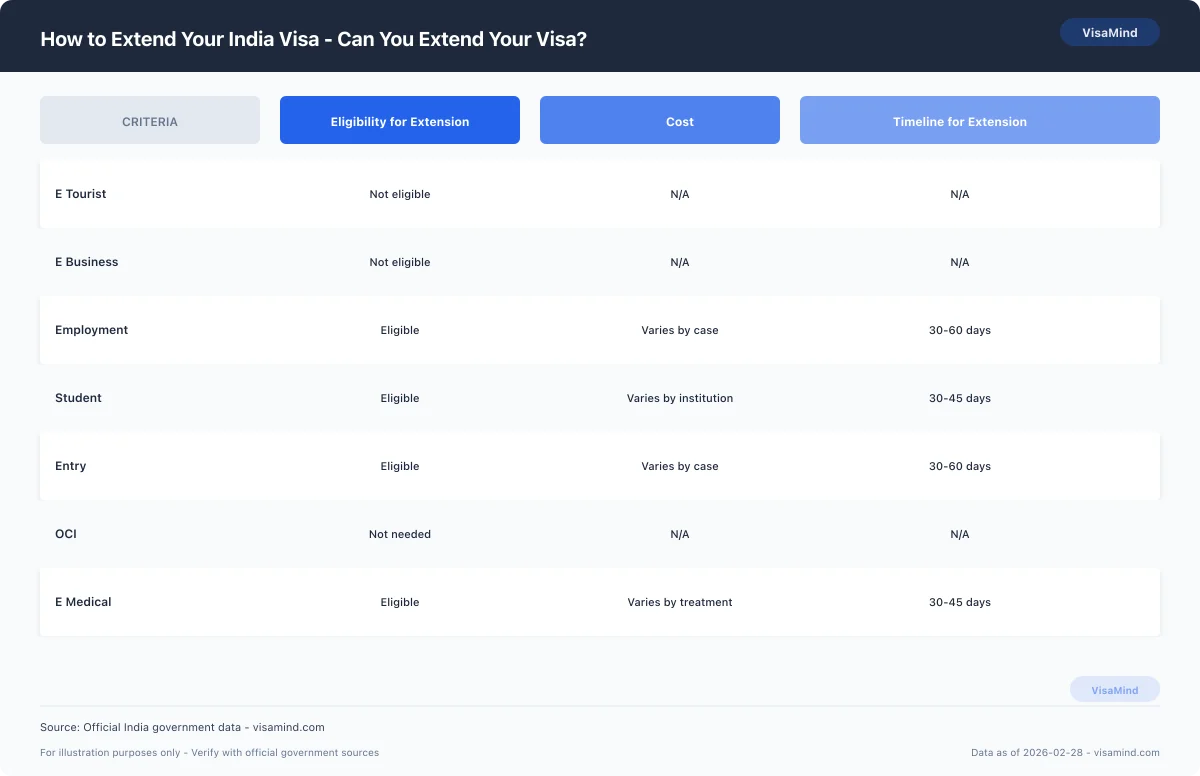
In India, the Foreigners Regional Registration Office (FRRO) oversees the extension of visas for foreign nationals. Understanding which visa categories are eligible for extension is vital for planning an extended stay in the country.
Eligible Visa Types for Extension
Several visa types issued by India are eligible for extension. These include the Tourist Visa, Business Visa, Employment Visa, Student Visa, and Entry Visa. Extensions are typically granted based on the applicant's compliance with visa conditions and the purpose of the extension.
| Visa Type | Extension Possibility | Common Extension Reasons |
|---|---|---|
| Tourist Visa | Yes | Extended sightseeing, family visits |
| Business Visa | Yes | Prolonged business meetings, conferences |
| Employment Visa | Yes | Extended work assignments |
| Student Visa | Yes | Continuation of studies |
| Entry Visa | Yes | Prolonged family residence |
Tip: For a smooth extension process, ensure that your passport is valid for at least six months beyond your intended stay.
Non-Extendable Visa Categories
Certain visa categories are not eligible for extension. For example, the e-Tourist Visa and e-Business Visa are typically non-extendable and non-convertible. These electronic visas are designed for short-term visits and have strict validity terms.
| Visa Type | Extension Possibility | Remarks |
|---|---|---|
| e-Tourist Visa | No | Strictly short-term |
| e-Business Visa | No | Short-term business activities |
| e-Conference Visa | No | Limited to conference duration |
Important: Verify the latest extension rules on the Bureau of Immigration website, as policies can change.
Understanding Visa
Validity in India is critical for determining eligibility for extensions. Most standard visas, like the Tourist Visa, are initially issued for six months but can be extended up to a year in some cases. However, electronic visas are valid for shorter periods, typically ranging from 30 to 60 days, and cannot be extended. Ensure that you apply for an extension well before your current visa expires. The FRRO generally requires applications to be lodged at least two weeks before the expiry date.
Tip: Check the exact validity and extension options for your specific visa type by visiting the official FRRO website.
Visa-by-Visa Extension Rules
#In India, the Foreigners Regional Registration Office (FRRO) manages visa extensions through an online system known as e-FRRO. Whether you're here for tourism, education, work, or family, understanding the specific requirements for your visa type is key to a successful extension.
Tourist Visa Extension Criteria
Tourist visa extensions are limited and typically not granted unless there are exceptional circumstances. These visas are initially valid for a short duration, and holders should be prepared for a strict scrutiny process. - Proof of sufficient funds for the duration of stay
- A confirmed return or onward journey ticket
- A valid passport with at least six months of remaining validity
Important: Extensions for tourist visas are rarely approved and should not be relied upon. Always plan your stay within the original visa period.
Student Visa Extension Procedures
Student visas are usually issued for the duration of the academic course or five years, whichever is less. Extensions are possible if you need more time to complete your studies.
-
Obtain a letter from your educational institution confirming your ongoing enrollment and the need for additional time.
-
Submit proof of financial support covering the proposed extension period.
-
Apply for the extension through the e-FRRO portal with all required documents.
Tip: Ensure your institution is recognized by the Indian government to avoid complications in the extension process.
Work Visa Extension Guidelines
Work visas can be extended for up to five years or the duration of the contract, whichever is shorter. Extensions require employer sponsorship and proof of ongoing employment. - A letter from your employer justifying the need for an extension
- A valid work contract
- Proof of tax payments in India
| Requirement | Details |
|---|---|
| Employer Letter | Must state the necessity of your continued stay |
| Work Contract | Should cover the extension period |
| Tax Receipts | Evidence of tax compliance in India |
Warning: Ensure that your employer is registered with the relevant Indian authorities to avoid delays.
Family Visa Extension Policies
Family visas, or entry visas, are granted to spouses and dependents of those on long-term visas. Extensions align with the primary visa holder's status. - Marriage certificate for spouses
- Birth certificates for children under 18
- Proof of relationship to the primary visa holder
Important: Ensure the primary visa holder's status is valid and extended before applying for a family visa extension.
The Risks of Staying Past Your Visa
#Overstaying your visa in India can lead to significant legal and financial consequences. As of 2026, India has implemented strict measures to penalize those who remain in the country beyond their visa's validity period.
Fines for Overstaying in India
Staying beyond the expiration of your visa in India incurs daily fines that can quickly accumulate. The fines vary depending on the duration of the overstay.
| Duration of Overstay | Fine Amount (INR) |
|---|---|
| Up to 15 days | ₹500 per day |
| 16 to 30 days | ₹1,000 per day |
| 31 days and above | ₹2,000 per day |
Important: Fines must be paid before you can exit the country, and failure to do so can result in further legal actions.
Ban from Future Entry Risks
Overstaying your visa does not only bring immediate penalties but can also lead to long-term consequences such as being banned from re-entering India. The length of the ban typically correlates with the duration of the overstay. - Short overstay can result in a one-year ban. - Longer overstays might lead to a five-year ban. - Severe cases could result in a permanent ban.
Warning: A ban could significantly impact your ability to engage in future travel or business activities in India.
Impact on Subsequent Visa Applications
An overstay in India can affect your eligibility for future visas, making the application process more difficult. Consulates may scrutinize your application more closely if you have a history of overstaying. - You may be required to provide additional documentation. - You might face increased processing times. - Your application could be denied based on previous violations.
Tip: Consider consulting resources like Visa Refusal Reasons to understand how overstaying could affect future applications.
What It Costs and How Long It Takes
#Applying for a visa extension in India involves paying specific fees, which vary depending on the type of visa you hold. The Foreigners Regional Registration Office (FRRO) facilitates these extensions, ensuring that travelers can legally extend their stay.
Visa Extension Fee Structure
Visa extension fees in India are determined by the specific type of visa and the duration of the extension requested. It's important to understand the fee requirements before lodging an extension application.
| Visa Type | Extension Fee (₹) |
|---|---|
| Tourist Visa | ₹7,500 |
| Business Visa | ₹13,500 |
| Student Visa | ₹5,000 |
Important: Ensure you have the correct fee amount ready before starting your application with the FRRO.
Average Processing Times for Extensions
The processing time for visa extensions through the FRRO typically ranges from two to four weeks. However, this can vary based on the volume of applications and specific circumstances of each case. - Tourist Visa: Approximately 2-3 weeks
- Business Visa: Approximately 3-4 weeks
- Student Visa: Approximately 2-3 weeks
Tip: To avoid delays, gather all required documents before lodging your application. Processing Times can provide additional insights on expected timelines.
Options for Expedited
Processing for visa extensions might be available in urgent situations, although it is not guaranteed. Applicants should contact their nearest FRRO office to inquire about possible options. If expedited processing is granted, it generally incurs an additional fee and requires substantial justification for urgency, such as medical emergencies or unforeseen travel requirements.
Warning: Expedited processing is not a standard service and should only be requested when absolutely necessary. Always verify current policies directly through the FRRO.
The Extension Application Process
#The Foreigners Regional Registration Office (FRRO) is responsible for processing visa extensions within India. To extend your stay, you must follow specific procedures, either online through the e-FRRO system or in-person at an FRRO office. Visa extensions are available for a variety of visa categories, including E Tourist and Tourist visas. It's important to understand the steps involved to ensure your application is processed smoothly.
Applying for Visa Extension Online 1. Visit the e-FRRO portal.
-
Create a user account if you are a first-time user.
-
Log in and select 'Visa Extension' as your service.
-
Fill in the required information and upload necessary documents.
-
Pay the applicable fee online using the payment gateway.
-
Submit your application and note the reference number for tracking.
Important: Ensure your passport has at least six months of validity when applying for an extension.
Tip: Use the e-FRRO system for faster processing times and to avoid unnecessary visits to the FRRO office.
In-Person Application Steps
-
Locate your nearest FRRO office. Each city has designated FRROs for handling visa matters.
-
Visit the FRRO with all required documents, including your passport and a recent photograph.
-
Fill out the visa extension request form provided at the office.
-
Pay the necessary fee at the designated counter.
-
Submit your documents and form to the FRRO officer for review.
Warning: Expect longer processing times for in-person applications compared to online submissions.
Forms Required for Visa Extension -
Completed visa extension request form. - Recent passport-sized photograph with a white background. - Photocopy of the photo page of your passport. - Proof of residence in India (e.g., utility bill, lease agreement).
Tip: Gather all required documents beforehand to avoid delays in processing your application.
What to Submit with Your Extension
#Visa extensions in India are managed by the Foreigners Regional Registration Office (FRRO). When extending your stay, it's required to ensure that all necessary documents are prepared in accordance with India's immigration requirements.
Mandatory Documents for Extension -
Valid passport with at least six months of remaining validity. - Recent front-facing photograph with a white background. - Copy of the visa you wish to extend. - Proof of residence in India, such as a rental agreement or hotel booking.
Tip: Make sure your passport is valid for at least six months at the time of application to avoid any issues with your extension request.
Proof of Financial Means
Demonstrating sufficient financial means is a requirement for extending your visa in India. This ensures that you can support yourself during your extended stay. - Bank statements showing recent financial transactions. - Credit card statements or traveler's cheques. - Sponsorship letter if someone else is financially supporting your stay.
Important: Ensure that all financial documents are up-to-date and clearly show your ability to cover expenses during your stay.
Additional Requirements for Specific Visas
Different visa types may have additional requirements for extensions. It's important to check the specific needs of your visa category.
| Visa Type | Additional Documents |
|---|---|
| Tourist Visa | Detailed itinerary and proof of accommodations. |
| Business Visa | Invitation letter from an Indian business partner. |
| Student Visa | Proof of continued enrollment in an academic institution. |
Warning: Failing to provide the necessary additional documents for your specific visa type may result in delays or refusal of your extension.
What Else Can You Do?
#In India, the process of extending your visa involves coordination with the Foreigners Regional Registration Office (FRRO). Depending on your needs, you may also consider changing your visa status or switching to a new visa type.
Changing Visa Status in India
If your circumstances change while you are in India, you might need to change your visa status. This is applicable if your purpose of stay has shifted from tourism to business or study, for example.
-
Contact the FRRO to discuss your situation and the possibility of a status change.
-
Prepare the necessary documents, such as a valid passport and a detailed explanation of your new purpose.
-
Submit your request and any required fees to the FRRO for processing.
Tip: Ensure your passport has at least six months of validity remaining when requesting a status change, as per Indian immigration requirements.
Re-entering India with New Visa
Should you need to leave India and return with a different visa, planning ahead is necessary. This ensures compliance with Indian immigration laws and avoids unnecessary delays. - Check the type of visa you need for re-entry, such as a Tourist Visa or Business Visa.
- Apply for the new visa at an Indian mission in your home country. - Ensure you have a confirmed return ticket and sufficient funds for your stay.
Warning: Re-entering India with a different visa type requires you to exit the country first. Plan your travel accordingly.
Switching to Different Visa Type
Switching your visa type may be necessary if your activities in India change. For instance, transitioning from a Student Visa to an Employment Visa requires specific documentation.
| Current Visa | New Visa | Key Requirement |
|---|---|---|
| Student | Employment | Offer letter from an Indian employer |
| Tourist | Business | Invitation from an Indian business |
| Business | Research | Approval from a recognized Indian institution |
Important: Consult the FRRO for guidance on documentation and fees related to switching your visa type.