How-To Guide

Japanese Visa Processing Times

Reviewed by Eric Provencio, Founder of VisaMind·Last verified February 23, 2026

11 min read

Expected timelines for Japanese visa applications and COE processing.

Key takeaways

  • Expect longer processing times during peak periods like the start of the academic year.
  • Priority processing options for Japanese visas are not always available, so plan ahead.
  • Track your visa application status online after submission to stay informed.
  • Understand bridging visas to maintain legal status while your new visa is processed.
  • Contact the Japanese Embassy or Consulate if your visa processing exceeds expected timelines.

Quick answers

How long does it take to process a Japanese Short-Term Stay Visa?
A Japanese Short-Term Stay Visa typically takes 5 to 10 business days to process from the date of application submission. Processing times can vary based on the applicant's nationality and the current workload of the Japanese consulate. It is advisable to apply well in advance of your intended travel dates to avoid any delays. Ensure all required documents are complete to avoid any processing setbacks.
What affects the timeline for a Japan Student Visa application?
The timeline for a Japan Student Visa application is influenced by the completeness of your documents, the specific consulate's workload, and the time of year. Generally, it takes between 2 to 3 months to process a Student Visa. Ensuring that you have all the necessary paperwork, including acceptance letters and financial proof, can help in expediting the process. Peak periods like the start of academic terms may experience longer processing times.
Can I expedite my Japanese visa processing?
Japan does not typically offer expedited processing for visas, including Short-Term Stay or Student Visas. However, certain urgent circumstances may be considered on a case-by-case basis, but this is not guaranteed. It is important to apply as early as possible and ensure that all documentation is complete to avoid any processing delays. Contacting the local Japanese embassy or consulate for specific guidance can be helpful.

Current Processing Times

#
What Are the Current Processing Times for Japanese Visas?

Navigating the visa application process can be a complex journey, but understanding the typical processing times for various Japanese visas can help you plan more effectively. Currently, processing times vary depending on the type of visa you are applying for.

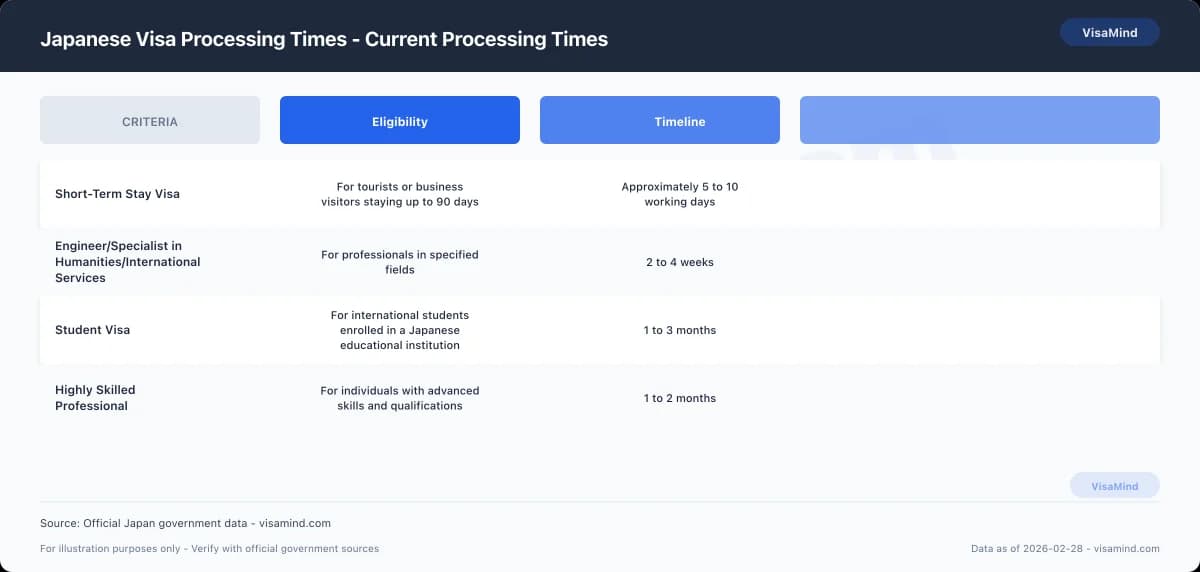
Visa TypeEligibilityCostTimeline
Short-Term Stay VisaTourist, Business¥3,000-¥6,000Approximately 5-10 business days
Engineer/Specialist in Humanities/International ServicesSkilled professionals¥4,000-¥7,0001-3 months
Student VisaEnrolled students¥3,000-¥6,0002-3 months
Highly Skilled ProfessionalHighly qualified individuals¥4,000-¥7,0001-2 months

These timelines are subject to change based on the volume of applications and specific circumstances related to each case. However, they offer a general idea of what you can expect when applying for different types of visas.

Key Considerations for Visa Processing
Why Does Processing Time Vary?

Processing times can be influenced by several factors, including the applicant's country of origin, the completeness of the application, and the current workload at the Japanese consulate or embassy where you apply. For those seeking a Highly Skilled Professional or Engineer/Specialist in Humanities/International Services visa, you may find that the complexity of your application requires more intensive review, potentially lengthening the timeline.

Preparing Your Application

To ensure your application is processed as quickly as possible, it's important to submit a complete and accurate application. This includes all required documents, which could vary depending on the type of visa. You can find a comprehensive list of necessary documents in our Documents Checklist.

Additional Resources

For those considering a Short Stay or Student Visa, understanding the differences between visa types can be crucial. Our Student Vs Working Holiday guide offers insight into which option might best suit your needs. Additionally, if you are planning to work in Japan, the Highly Skilled Vs Engineer Specialist comparison can help determine the most appropriate pathway for your career.

Understanding these processing times and requirements is an essential step in your journey to Japan. By preparing thoroughly, you can minimize delays and enhance your chances of a successful application.

What Affects Your Timeline

#
Application Volume and Seasonality
  • High Application Periods: The volume of applications can significantly affect processing times. During peak seasons, such as the start of the academic year for Student Visas or leading up to large international events, processing can be slower due to increased demand.
  • Off-Peak Efficiency: Conversely, applying during off-peak times might result in faster processing as the workload at embassies and consulates is reduced.
Type of Visa
  • Short-Term Stay Visa: Typically, these visas are processed quicker than long-term visas. For more details, see the Short Stay visa guidelines.
  • Highly Skilled Professional Visa: Processing times can be impacted by the need for thorough evaluations of qualifications and skills. Learn more about this visa in the Highly Skilled Professional section.
  • Engineer/Specialist in Humanities/International Services Visa: The processing time might vary based on the complexity of the applicant’s credentials and job offer. Compare it with other options in the Highly Skilled Vs Engineer Specialist guide.
Documentation and Application Completeness
  • Complete and Accurate Documentation: Ensuring all required documents are submitted correctly can prevent delays. Refer to the Documents Checklist for guidance.
  • Requests for Additional Information: If the consulate requires further documentation or clarification, this will extend processing times. Be prepared by having all necessary paperwork ready.
Location of Application
  • Country of Application: Processing times can vary depending on the country from which you apply. Some Japanese embassies or consulates may have shorter or longer processing times based on local staffing and resources.
  • Japanese Consulate or Embassy Workload: The specific workload at your chosen consulate or embassy can impact how quickly your visa is processed. High-demand locations may experience longer wait times.
Special Circumstances
  • Urgent Situations: In certain cases, such as medical emergencies or urgent business needs, expedited processing may be available. However, this is not guaranteed and typically requires substantial justification.
  • Previous Visa History: Your history with Japanese visas can affect processing times. A positive track record might expedite your application, while previous issues could cause delays.

Understanding these factors can help you anticipate potential delays in your visa processing for Japan. For more detailed information on how to apply, visit the How To Apply guide.

Priority and Expedited Processing

#
Is Priority Processing Available for Japanese Visas?

When applying for a visa to Japan, understanding the options for priority or expedited processing can significantly influence your planning. While Japan generally processes visas on a standard timeline, certain visas may offer premium or expedited options.

Priority Processing Options

Below is a comparison of priority processing options available for different types of Japanese visas:

VisaEligibilityCostTimeline
Short-Term Stay VisaGenerally not availableN/ATypically 5-10 business days
Highly Skilled ProfessionalEligible for expedited processingVaries by locationAs fast as 3 business days
Engineer/Specialist in Humanities/International ServicesPossible priority processing for urgent casesAdditional fees may applyAround 5-7 business days
Student VisaNo standard priority processingN/A2-4 weeks
Specified Skilled Worker 1Limited options for urgent applicationsVaries based on consulate1-2 weeks

For visas like the Highly Skilled Professional, applicants might benefit from faster processing times if they meet specific criteria. On the other hand, for the Short Stay visa, priority processing isn't typically offered, and standard processing times apply.

Costs and Considerations

The cost of priority processing can vary and is often dependent on the Japanese consulate or embassy handling your application. It is crucial to check with your local Japanese consulate for specific costs and eligibility criteria. Generally, priority processing incurs an additional fee on top of the standard visa application fee.

When applying, ensure you have reviewed the necessary documentation and requirements through resources like the Documents Checklist. This can help prevent delays and ensure that, if eligible, your request for expedited processing is considered.

When Should You Consider Expedited Processing?

Consider expedited processing if your travel plans are time-sensitive, such as for urgent business meetings or unexpected family emergencies. However, always verify the availability and requirements for such services with your local consulate, as they can vary significantly depending on your location and the type of visa you are applying for.

For more information on visa types and processing, explore our detailed guides on How To Apply and specific visa types like the Engineer Specialist.

How to Track Your Application

#
How to Track Your Application

Once you have submitted your Japanese visa application, staying informed about its status is crucial. Whether you are applying for a Student Visa, Highly Skilled Professional Visa, or any other type, Japan offers specific tools and portals to help you track your application. Follow these steps to ensure you're up to date with your visa processing.

  1. Receive a Receipt Number

    After submitting your application, you will receive a receipt number. This number is essential for tracking the status of your application. Make sure to keep it safe and accessible.

  2. Access Online Tracking Portals

    Use the online tracking system provided by the Japanese Embassy or Consulate where you submitted your application. Each embassy may have a slightly different process, so check their official website for the specific portal. You will generally need to enter your receipt number and other personal details to access your application status.

  3. Contact the Embassy or Consulate

    If you are unable to track your application online or have specific questions, you can contact the embassy or consulate directly. Have your receipt number ready and be prepared to provide any other information they may require.

What Information Can You Expect?

Once you access the tracking system, you can expect to see the following statuses:

  • Received: Your application has been received and is in the queue for processing.
  • Processing: Your application is being reviewed. This stage duration can vary depending on the visa type, such as a Short-Term Stay Visa or Engineer/Specialist in Humanities/International Services.
  • Decision Made: A decision has been made regarding your application. You will be notified about the next steps, which could include picking up your visa or submitting additional information.

Understanding how to track your application effectively can help ease the waiting period. For more information on visa processes, check out our How To Apply guide.

What to Do While You Wait

#
Understanding Bridging Visas and Implied Status

When you apply for a new visa or a visa extension in Japan, you might find yourself in a waiting period between your current visa's expiration and the approval of your new application. Japan does not have an official "bridging visa" like some other countries, but you can often remain in the country under an implied status. This means that as long as you submitted your application before your current visa expired, you are legally allowed to stay in Japan until a decision is made.

However, it is crucial to retain evidence of your application submission, such as a receipt or confirmation letter, as you may need to show this proof upon request.

What About Work Rights While Waiting?

Your ability to work while waiting for a new visa or extension largely depends on the type of visa you applied for and your current visa status. Generally, you must continue to adhere to the conditions of your existing visa. For example, if you are on a Student Visa and have applied for a change to a Working Visa, you should not begin full-time work until your new visa is granted.

  • Student Visa: You can continue part-time work, but not exceed the permitted hours.
  • Highly Skilled Professional Visa: You may continue working under the conditions of your current visa.
  • Short-Term Stay: You cannot work if your current visa prohibits it.
Can You Change Employers While Waiting?

In some cases, such as with the Engineer/Specialist in Humanities/International Services Visa, you may be able to change employers while your visa application is pending. However, it is essential to notify the immigration authorities of any change in employment, as failing to do so can affect your application status. You can use the Notification of Change of Employer Form for this purpose.

Tips for Staying Compliant
  • Check Visa Conditions: Always be sure of the restrictions and permissions under your current visa.
  • Document Everything: Keep records of all communications and submissions related to your visa application.
  • Stay Informed: Regularly check the status of your application and any updates in visa processing times.

For more detailed information on specific visa types and how they affect your work rights, consider reviewing the Engineer Specialist Visa or comparing options with the Highly Skilled Professional Visa.

If It Is Taking Longer Than Expected

#
What to Do If Your Japanese Visa Is Delayed
  1. Contact the Japanese Embassy or Consulate: Your first step should be reaching out directly to the Japanese embassy or consulate where you submitted your application. They can provide updates about your visa status and may be able to expedite the process if there are extenuating circumstances. Keep your application number handy when making inquiries.

  2. Request Assistance from Your Local Representative: If your visa application is significantly delayed and you have pressing reasons for travel, such as starting a job under a Specified Skilled Worker 1 or attending school on a Student Visa, consider contacting your local government representative. They can send a letter of inquiry on your behalf, which may help in prioritizing your application.

  3. File a Complaint with the Ombudsman: If you have exhausted other avenues, you can file a complaint with the ombudsman service in your country. This independent body can mediate and investigate the delay, helping to ensure your application is processed fairly and promptly.

When to Consider Escalation
  • Exceeding Expected Processing Times: If your application for a Long Term Resident Visa or other types has surpassed the standard processing time significantly, it might be time to escalate.

  • Urgent Travel Requirements: For those with immediate travel necessities due to work, study, or family commitments, quicker intervention might be necessary. For example, if your Working Holiday start date is approaching, seek assistance sooner rather than later.

Additional Considerations
  • Documentation: Ensure all necessary documents have been submitted correctly. Missing or incorrect documents can cause delays. Refer to the Visa Refusal Reasons guide for potential issues.

  • Alternative Solutions: While waiting, explore if a different visa type might suit your situation better, such as a Startup Visa if you plan to initiate a business in Japan.

Remember, while delays can be frustrating, staying informed and proactive can help you navigate the process more effectively.

FAQs

What happens if my Japanese visa is taking longer than expected?
If your Japanese visa is taking longer than expected, you should first contact the Japanese embassy or consulate where you applied. Delays can occur due to incomplete documentation, high application volumes, or specific security checks. It's important to regularly check for updates and ensure that your contact information is accurate. In some cases, providing additional information promptly can help resolve delays.
Can I switch from a Student Visa to a Work Visa in Japan?
You can switch from a Student Visa to a Work Visa in Japan if you secure a job offer that meets the requirements for a Work Visa category. This typically involves obtaining a Certificate of Eligibility from your prospective employer. The process should be initiated before your Student Visa expires, and you must meet specific criteria, such as having relevant qualifications or experience for the job.
What documents are needed to track my Japanese visa application?
To track your Japanese visa application, you generally need the application receipt number and any tracking number provided by the consulate or visa processing center. Some embassies provide online tracking services where you can enter these details for updates. It's important to keep a copy of your application and any correspondence from the consulate for reference.
How much does a Japan visa cost?
The cost of a Japan visa varies depending on the type and duration of the visa. For a Short-Term Stay Visa, the fee is approximately 3,000 yen for a single entry and 6,000 yen for a multiple entry. Fees can differ based on nationality and consulate location. It's advisable to confirm the exact fee with the local Japanese embassy or consulate at the time of application.
Can my family accompany me on a Highly Skilled Professional Visa in Japan?
Family members can accompany you on a Highly Skilled Professional Visa in Japan by applying for a dependent visa. Spouses and children are eligible, and they must meet specific criteria and provide documentation such as proof of relationship and financial support. The processing time for dependent visas can vary, so it's important to apply early and ensure all documentation is complete.
Do I need a Certificate of Eligibility for a Japanese Work Visa?
A Certificate of Eligibility is typically required for a Japanese Work Visa application. This document is issued by the Japanese immigration authorities and indicates that you meet the requirements for the visa category. It must be obtained by your employer in Japan and is a critical part of the visa application process. Having this certificate can significantly smooth the visa processing.
Can I switch from a Short-Term Stay Visa to a Student Visa in Japan?
Switching directly from a Short-Term Stay Visa to a Student Visa within Japan is generally not permitted. Applicants usually need to return to their home country to apply for a Student Visa. This process involves obtaining a Certificate of Eligibility from the educational institution in Japan, which serves as the basis for the Student Visa application at a Japanese consulate abroad.
Important

VisaMind provides informational guidance only and is not a government agency. This is not legal advice. Requirements can change and eligibility depends on your specific facts. If your case is complex or high-stakes, consult a licensed immigration attorney.

Next steps

Requirements vary by nationality, purpose, timeline, and case details. VisaMind turns uncertainty into a sequenced checklist with official source citations.

Find my visa