When to Read This
#Japan's Working Holiday visa is available for applicants aged 18 to 30 from partner countries, allowing them to experience Japan primarily for holidays while engaging in incidental employment. In contrast, a Student visa provides a more structured pathway for those aiming to pursue academic studies in Japan.
Ideal for Prospective Students
If your primary goal is to pursue academic studies in Japan, a Student visa is ideal. This visa allows you to enroll in educational institutions and focus on your studies, offering a long-term commitment to education in Japan.
Important: Ensure you have acceptance from a Japanese educational institution before applying for a Student visa.
Understanding Work and Travel Goals
The Working Holiday visa is designed for those who want to explore Japan while being able to work casually to supplement their travel funds. This visa supports cultural exchange and understanding between Japan and its partner countries. - Applicants must be between 18 and 30 years old. - Participants should have sufficient funds for their stay. - The visa allows incidental employment to support travel.
Tip: Verify specific eligibility criteria based on your nationality on the Working Holiday Guide.
Navigating Japan's Visa Options
When deciding between a Student visa and a Working Holiday visa, consider your long-term goals. A Student visa is more suitable for academic achievements, while a Working Holiday visa offers more flexibility for travel and short-term work.
| Visa Type | Purpose | Age Limit | Employment |
|---|---|---|---|
| Student Visa | Academic Studies | No age limit | Part-time (with restrictions) |
| Working Holiday Visa | Travel & Work | 18-30 | Incidental employment |
Important: Consult the Immigration Services Agency of Japan for the latest visa requirements and guidelines.
When to Pick the First Option
#Japan hosts over 200,000 international students each year, making it a popular destination for those seeking education abroad. Opting for a Student Visa can open doors to a myriad of academic opportunities in Japan. For individuals aiming to immerse themselves in Japan's academic culture, a Student Visa is often the ideal choice. It offers numerous advantages over a Working Holiday Visa for those primarily focused on education.
Studying in Japanese Universities
If your primary goal is to enroll in a Japanese university, the Student Visa is the clear choice. This visa is specifically designed for those committed to full-time education. - Access to a diverse range of programs and courses in Japanese universities. - Eligibility to apply for scholarships and financial aid available to international students. - Opportunity to improve Japanese language skills through immersive study.
Important: Ensure your chosen university is recognized by the Immigration Services Agency of Japan to qualify for a Student Visa.
Long-term Academic Focus
A Student Visa is often the preferred path for those intending to pursue long-term academic goals. This visa allows for extended stays aligned with the duration of your academic program.
-
Secure admission to a recognized educational institution in Japan.
-
Apply for the Student Visa through the institution's guidance.
-
Engage in full-time study, with the possibility of extending your stay upon completion of the program for further education.
Tip: Consider enrolling in language preparatory courses before your main program to enhance your Japanese proficiency.
Access to Student Discounts Holding a
Student Visa not only facilitates academic pursuits but also provides numerous practical benefits. Students in Japan enjoy various discounts and privileges. - Discounted public transportation fares for students. - Access to affordable student housing options. - Reduced prices on cultural and entertainment activities, enhancing the study-abroad experience.
Important: To fully benefit from student discounts, you must carry a valid student ID issued by your institution in Japan.
What People Get Wrong
#Japan's Working Holiday visa program allows young travelers from partner countries to explore Japan while working part-time to fund their travels. However, there are common misconceptions about the work limitations and eligibility criteria associated with both Student and Working Holiday visas.
Work Limitations on Student Visas
Many students believe they can work freely with a Student Visa in Japan. However, this visa primarily focuses on education, and work is restricted. - Students must obtain permission from the Immigration Services Agency of Japan to work part-time. - The maximum allowed work hours are 28 hours per week during school terms. - Working in certain industries, such as nightclubs or adult entertainment, is strictly prohibited.
Tip: Ensure you have the correct permission from the ISA before starting any part-time job in Japan.
Misunderstanding Holiday Work Flexibility The Working
Holiday visa is often misunderstood as a free pass to unlimited employment opportunities in Japan. This is not the case. - The primary purpose of the Working Holiday visa is travel and cultural exchange, not full-time employment.
- While incidental employment is allowed to supplement travel funds, it should not become the main focus of your stay.
Important: Remember that the Working Holiday visa is designed to promote cultural exchange; engaging in full-time work might go against the spirit of the program.
Eligibility Confusions
Eligibility for both the Student and Working Holiday visas can be confusing, with many applicants misunderstanding the basic criteria. - For the Working Holiday visa, applicants must be between 18 and 30 years old and cannot be accompanied by dependents. (F2, F3)
- Applicants must have sufficient funds for their initial stay and a return ticket or enough funds to purchase one. (F5, F11)
- A Student Visa requires acceptance from a recognized educational institution in Japan.
Warning: Ensure you meet all eligibility criteria specific to your nationality, as requirements may vary.
Can You Switch Later?
#In Japan, transitioning between visa types is a common consideration for many residents. While each visa type has its specific requirements, Japan's policies facilitate such transitions under certain conditions. Switching from a Student Visa to a Working Holiday Visa involves several unique steps. It's important to understand the requirements and timelines associated with these processes. If you're on a Student Visa in Japan and wish to work, you may need to change your status to a work-related visa. This typically involves securing a job offer first. Consider the Engineer Specialist Visa if your job aligns with technical fields, as it may be more applicable. Switching from a Working Holiday Visa to a Student Visa is possible under certain circumstances. You need to demonstrate the intent to enroll in a recognized educational institution. Ensure you have a valid passport and sufficient funds, as outlined under the Working Holiday Visa requirements. When converting between visas, it's key to understand the specific requirements and timelines. The process can vary based on your nationality and the type of visa you wish to obtain.
Side-by-Side Comparison
#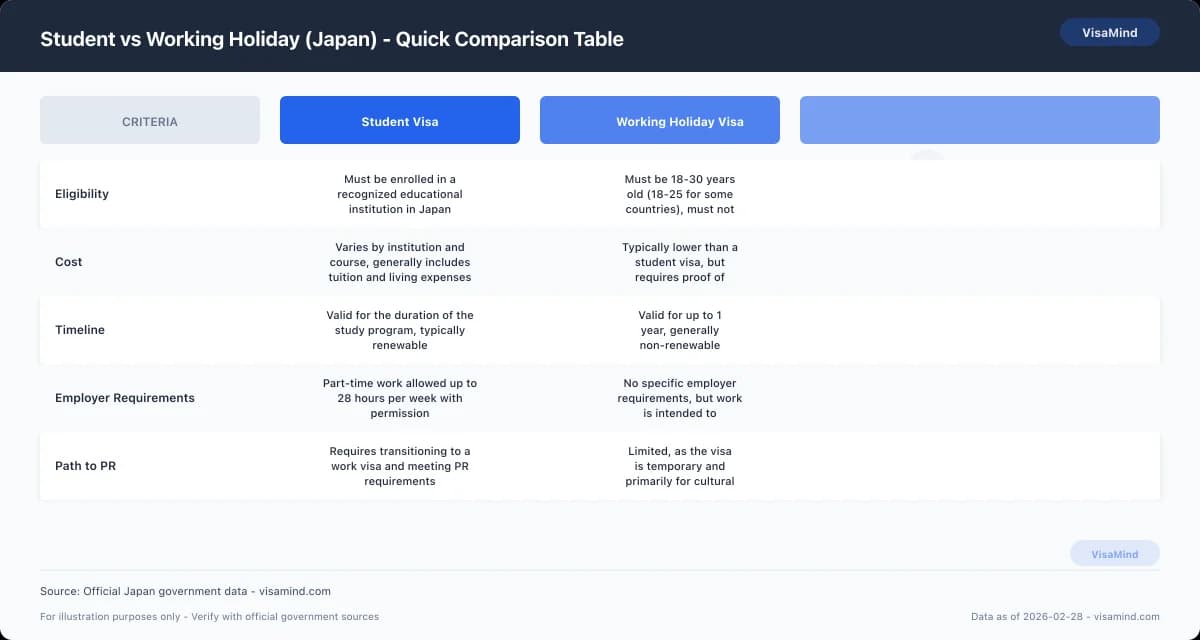
Japan offers two distinct visa options for those interested in experiencing cultural exchange while staying in the country: the Student Visa and the Working Holiday Visa. These visas cater to different types of applicants, each with unique eligibility requirements and benefits. Understanding the differences between these visa types can help you choose the one that best suits your needs. Whether you want to study or work while exploring Japan, knowing the specifics of each visa will ensure you meet the necessary criteria.
Eligibility Criteria Differences
| Criteria | Student Visa | Working Holiday Visa |
|---|---|---|
| Age | No specific age limit | 18 to 30 years [F2] |
| Dependents | Allowed | Not allowed [F3] |
| Previous Visa Issuance | No restrictions | Must not have previously held a working holiday visa [F7] |
| Health Requirements | General health check may be required | Must be in good health [F6] |
| Nationality | Open to all nationalities with a Japanese educational institution acceptance | Limited to partner countries [F8] |
Tip: Verify specific eligibility requirements based on nationality for the Working Holiday Visa on the official website [F9].
Cost Implications
The costs associated with each visa type can vary, primarily depending on tuition fees for students and travel expenses for working holiday participants. While the application fee for a Student Visa is typically around ¥3,000, Working Holiday Visas often incur additional costs related to travel and initial living expenses. - Student Visa: Application fee of approximately ¥3,000.
- Working Holiday Visa: No application fee, but requires proof of sufficient funds for initial stay [F5].
Important: Ensure you have adequate financial resources to support your stay in Japan, especially for the Working Holiday Visa, where employment is incidental to travel [F1].
Timeline for Application
Application timelines for these visas can differ significantly. Student Visa applications are tied to academic schedules and should be started several months before the intended start date of studies. In contrast, Working Holiday Visas can be applied for at any time, but processing times may vary.
| Visa Type | Recommended Application Timeframe | Processing Duration |
|---|---|---|
| Student Visa | 3-6 months before study commencement | 1-3 months |
| Working Holiday Visa | Anytime, country-specific limits may apply | 2-4 weeks [verify on official website] |
Employer Sponsorship Needs Neither the Student
Visa nor the Working Holiday Visa requires formal employer sponsorship. However, having a letter of intent from a Japanese educational institution is necessary for the Student Visa. For Working Holiday Visa holders, employment is casual and meant to supplement travel funds [F1]. - Student Visa: Requires acceptance from a Japanese school or university. - Working Holiday Visa: No employer sponsorship needed; work is incidental.
Tip: If you intend to work outside study hours on a Student Visa, you may need a Permission to Engage in Activity Other than that Permitted.
Key Differences Explained
#Japan has specific visa categories tailored to different purposes such as studying or engaging in cultural exchange. The Student Visa and Working Holiday Visa are two popular options, each with distinct purposes and requirements. Understanding the differences between these visas can help you choose the best fit for your plans in Japan. The key variations lie in work restrictions, the primary focus of each visa, and the duration you can stay.
Work Restrictions Explained
The Working Holiday Visa allows you to engage in incidental employment to supplement your travel funds. However, you are prohibited from working in certain establishments like bars, cabarets, and nightclubs. This restriction ensures that the primary focus remains on cultural exchange and not full-time employment. In contrast, the Student Visa primarily focuses on education. While part-time work is permitted, it requires obtaining permission from the Immigration Services Agency of Japan. This work must not interfere with your studies, and is typically limited to a maximum of 28 hours per week.
Tip: Ensure you have the proper permissions before starting any work. Violating work restrictions can result in visa penalties.
Education vs. Travel Focus
The Student Visa is designed for those who intend to pursue educational programs in Japan. This visa requires enrollment in a recognized institution, and the primary purpose is to study. The time spent in Japan on a Student Visa is largely centered around academic commitments. Conversely, the Working Holiday Visa is aimed at allowing young people to travel and explore Japan while having the opportunity to work incidentally. It is not designed for those seeking a formal education, but rather for cultural exchange and travel. - Student Visa: Education-focused, requires enrollment in a recognized institution. - Working Holiday Visa: Travel and cultural exchange-focused, allows incidental work.
Duration of Stay
The duration of stay under each visa varies significantly. The Working Holiday Visa typically allows for a stay of up to 12 months, depending on agreements between Japan and your home country. This time frame encourages extensive travel and exploration. On the other hand, the duration for a Student Visa aligns with the academic program you enroll in, which can range from a few months to several years. Extensions are possible, allowing students to complete their studies without interruption.
Important: Always verify the specific duration and conditions of your visa on the Immigration Services Agency of Japan's website, as policies may vary based on your nationality and academic institution.
Choose Option B If...
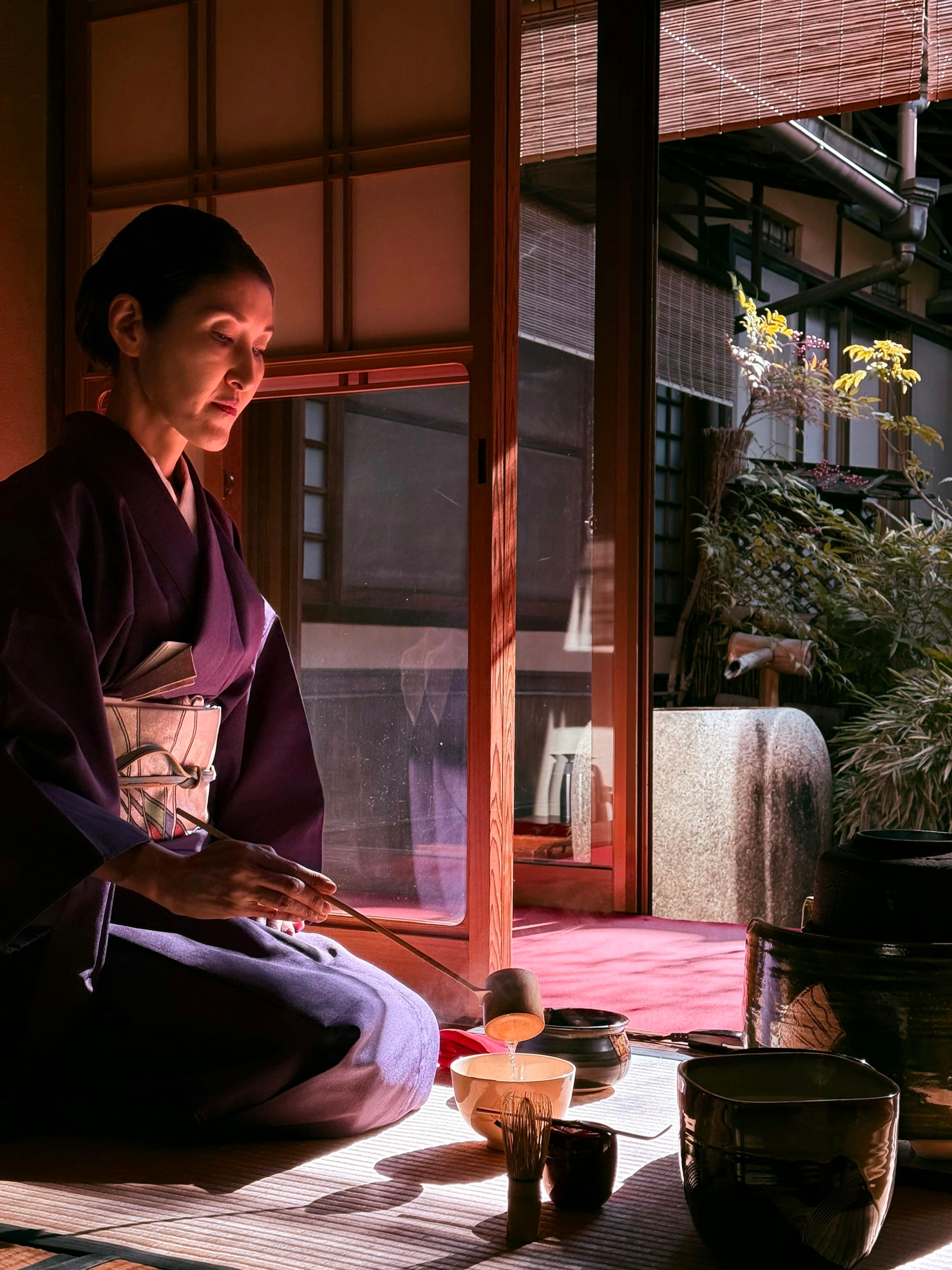
#In Japan, the Working Holiday Visa offers young travelers the opportunity to explore the country while engaging in short-term work to supplement their travel funds. This visa is ideal for those who wish to experience Japan's culture firsthand without committing to long-term study or employment. Choosing the right visa can significantly impact your experience in Japan. For those more inclined toward travel and cultural exploration, the Working Holiday Visa presents unique advantages over the Student Visa.
Exploring
Japan on a Budget The Working Holiday Visa allows you to travel across Japan while working casually to support your journey. Unlike a Student Visa, which requires enrollment in an educational institution, this visa provides the flexibility to allocate your resources toward travel and exploration. - Engage in part-time jobs to fund your travels. - Experience diverse regions of Japan without being tied to a single location. - Minimal financial commitment compared to tuition fees for students.
Tip: Keep track of your expenses and work opportunities to maximize your travel experience on a limited budget.
Short-term Work Opportunities The Working Holiday
Visa is ideal for those looking to gain short-term work experiences in Japan. It allows you to work in various sectors such as hospitality, retail, and agriculture, offering a more varied experience compared to the usually limited work permissions under a Student Visa. - Work in different fields to gain diverse skills. - No need for a full-time commitment or long-term employment contract. - Flexibility to change jobs and explore different career paths.
Important: Ensure that your work does not involve prohibited establishments like bars or nightclubs to comply with visa regulations.
Travel and Cultural Immersion
If immersing yourself in Japanese culture and traveling extensively is your primary goal, the Working Holiday Visa offers unparalleled flexibility. You can live in different parts of Japan, participate in cultural events, and truly experience the local way of life. - Participate in local festivals and cultural events. - Live with host families or in shared accommodations to deepen cultural understanding. - Learn Japanese through real-life interactions rather than classroom settings.
Tip: Consider joining community groups or language exchange programs to enhance your cultural immersion.
Who Chose What and Why
#Japan offers a unique opportunity for young people to experience its culture and lifestyle through the Working Holiday Programmes, which are designed to promote cultural exchange. Meanwhile, the Student Visa offers a different path, focusing on education and language learning. Selecting between a Student Visa and a Working Holiday Visa in Japan depends greatly on your primary goals—whether they're educational or cultural exploration. Understanding the motivations and outcomes for each can help guide your decision.
Student Visa for Language School A Student
Visa is often chosen by those who are keen on immersing themselves in the Japanese language and culture through formal education. For example, a young professional from Australia decided to apply for a Student Visa to enroll in a language school in Tokyo, aiming to improve her Japanese proficiency for her future career in international business. She gathered the necessary documents, including proof of financial stability and a letter of acceptance from a Japanese language school. After submitting her application through the Immigration Services Agency of Japan, she received her Student Visa within a few months.
Tip: Ensure you have a clear educational plan and the required financial documentation when applying for a Student Visa.
Working Holiday for Cultural Experience The Working Holiday
Visa offers a chance for young travelers to experience life in Japan while supporting themselves through incidental work. A recent university graduate from Canada opted for a Working Holiday Visa to explore Japan and gain some work experience in the hospitality sector. He applied through the Japanese consulate in his region, ensuring he met the age and financial requirements outlined by the Immigration Services Agency of Japan. With his visa approved, he spent a year working in various part-time jobs, gaining valuable cultural experiences.
Important: Remember to notify the Ministry of Justice within 14 days of finding a place to settle down in Japan.
Balancing
Work and Study in Japan Balancing work and study can be challenging, but some manage to do so effectively. Consider the case of a graduate student from New Zealand who obtained a Student Visa and later received permission to work part-time. She wanted to offset her living expenses while attending a university in Kyoto. She applied for and was granted a Permission to Engage in Activity Other Than That Permitted by the Status of Residence Previously Granted from the local immigration office. This allowed her to work part-time in a local café, supporting her studies financially.
Tip: Obtaining permission to work while on a Student Visa can help manage living costs, but ensure it does not interfere with your studies.