
Extension Eligibility Overview
#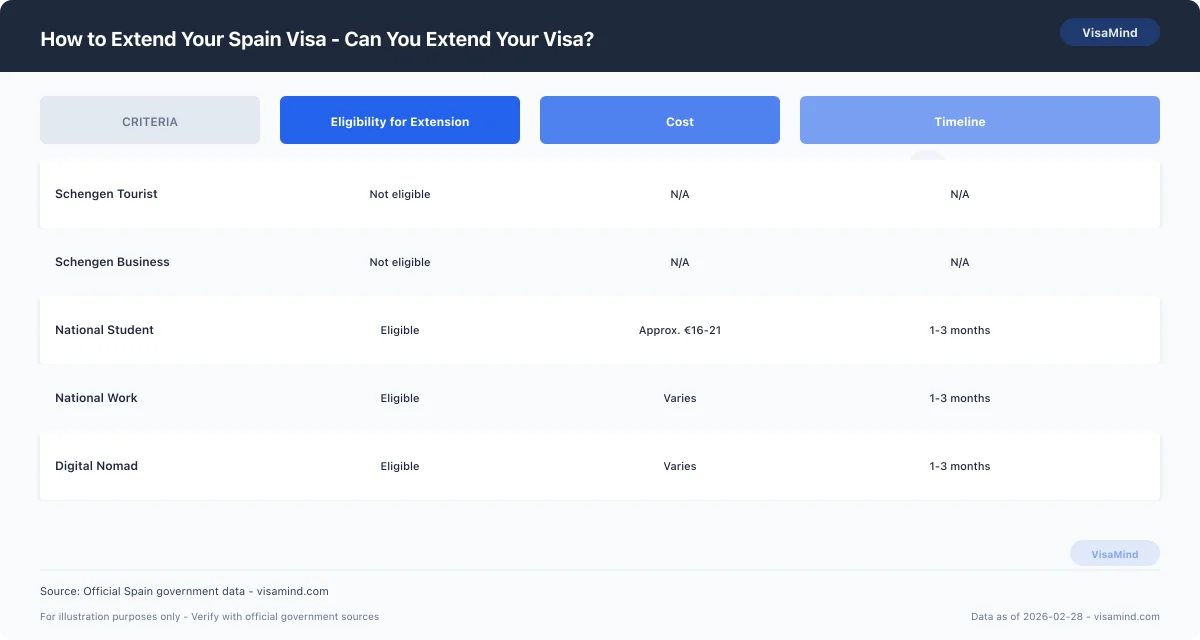
In Spain, extending your visa is possible in certain circumstances, depending on the type of visa you hold. Understanding which visas allow for extensions can save you time and ensure compliance with Spanish immigration laws. Here’s a concise overview to help you determine your eligibility.
| Visa Type | Eligibility for Extension | Cost | Timeline |
|---|---|---|---|
| Schengen Tourist | Not eligible | N/A | N/A |
| Schengen Business | Not eligible | N/A | N/A |
| National Work | Eligible under specific conditions | Varies | Up to 3 months before expiration |
| National Student | Eligible for the duration of studies | Varies | 60 days before expiration |
| Non-Lucrative Residence | Eligible if financial criteria met | Varies | 60 days before expiration |
| Family Reunification | Eligible if family conditions remain | Varies | 2-3 months before expiration |
| Long-Term Residence | Eligible for 5-year renewals | Varies | 60 days before expiration |
Which Visas Can Be Extended?
The National Work Visa and National Student Visa are commonly extendable, provided you continue to meet the original conditions of your visa. For instance, the National Work Visa requires ongoing employment, while the National Student Visa extension depends on continued enrollment in a recognized educational institution. The National Work Visa is particularly flexible, allowing professionals to continue their employment in Spain without interruption.
Non-Extendable Visas
Schengen Visas, whether for tourism or business, are not extendable under normal circumstances. These visas are designed for short stays of up to 90 days within a 180-day period, and their stringent regulations mean you must depart Spain before the visa expires. If you plan to stay longer, consider applying for a visa that supports longer or permanent residency.
Important: Always verify your eligibility well in advance of your visa's expiration date. This ensures you have ample time to prepare necessary documentation and submit your application to the Secretaría de Estado de Migraciones.
Steps to Prepare for an Extension
- Verify Eligibility: Confirm that your visa type is eligible for extension.
- Gather Documentation: Collect all necessary documents, such as proof of ongoing work or study, financial means, and health insurance.
- Submit Your Application: Lodge your application with the Secretaría de Estado de Migraciones well before your current visa expires to avoid any legal complications.
For additional details on specific visa processes, refer to the Documents Checklist and Processing Times guides. These resources can provide a deeper understanding of what to expect and how to prepare effectively.
Tip: Begin the extension process early. Delays can occur, and starting at least 60 days before your visa expires is recommended to ensure smooth processing.
The Extension Application Process
#1. Determine Your Eligibility and Timing
Before initiating the extension process, verify your eligibility based on your current visa type. Different visas such as the National Work Visa or National Student Visa have specific requirements for extension. It's crucial to start the process at least 60 days before your current visa expires to avoid any legal issues.
2. Choose Your Application Method: Online vs. In-Person
You can apply for a visa extension either online or in person. Online applications are often more convenient, allowing you to submit your documents digitally. You can access the necessary extension guide and instructions on the official Secretaría de Estado de Migraciones website. For those preferring an in-person approach, you may visit the local SEM office in Spain.
Tip: Applying online can help you avoid mail delays and provides an immediate receipt number for tracking your application.
3. Gather and Arrange Required Documents
Accumulate all necessary documents based on your visa type. These typically include a valid passport, proof of financial means, and health insurance. A comprehensive Documents Checklist can assist you in ensuring you have everything required. Double-check that all documents are current and meet the specified criteria.
4. Complete the Application Process
Once you've gathered your documents, proceed with completing the application. It's essential to ensure all information is accurate and thoroughly reviewed before submission. You will need to provide evidence supporting your reason for the extension, such as employment contracts for work visas or enrollment verification for student visas.
Important: Any misinformation or missing documentation can delay the processing of your extension request.
5. Submit Your Application and Pay Fees
Submit your completed application along with the necessary documentation to the appropriate SEM office or online portal. Be prepared to pay the required fee for processing your extension. The fee varies depending on the visa type and can change, so check the latest information on the SEM website.
6. Attend an Interview or Provide Additional Information if Required
In some cases, you might be asked to attend an interview or provide additional information. This step is often required for more complex cases or when further clarification is needed. Make sure to comply promptly with any requests from the SEM to prevent delays in your application process.
7. Await Decision and Prepare for Next Steps
After submission, the processing time for your application can vary. You can check estimated Processing Times to gauge how long it might take. Once you receive a decision, follow any further instructions provided to finalize your visa status. If approved, ensure your new visa documentation is in order and ready for future travel or residence activities in Spain.
By following these steps carefully and preparing your application thoroughly, you can increase your chances of a successful visa extension in Spain.
What to Submit with Your Extension
#When applying to extend your visa in Spain with the State Secretariat for Migration (SEM), preparing the right documentation is crucial. Each visa extension type has its specific requirements, but the following list outlines the most common documents you will need to gather and submit along with your application.
Personal Identification
- Valid Passport: Ensure that your passport is valid for the duration of the extended stay. It should also have at least two blank pages.
- NIE or TIE: Your Foreigner Identification Number (NIE) or Tarjeta de Identidad de Extranjero (TIE), which is a mandatory identification for foreigners in Spain.
Financial Evidence
- Proof of Financial Means: Demonstrate that you have sufficient funds to support yourself during your extended stay. This might include bank statements or proof of income.
- Employment Contract (if applicable): If you are on a work visa, provide your current employment contract or a letter from your employer confirming your continued employment.
Accommodation Details
- Proof of Accommodation: Submit evidence of where you will be staying, such as a rental contract, hotel reservation, or a letter of invitation from a host.
Health Insurance
- Health Insurance Coverage: Provide proof of health insurance valid in Spain for the period of your extended stay. This is particularly important for visas like the Non-Lucrative Residence Visa.
Visa-Specific Requirements
Different visas may have additional requirements. Here are a few examples:
- For the National Student Visa: Include a letter of enrollment or continued study from your educational institution.
- For the Family Reunification Visa: Provide documents proving your family relationship and residency status of the family member in Spain.
- For the Schengen Tourist Visa: While typically not extendable, in exceptional cases, you may need to provide a detailed itinerary and reasons for your extended stay.
Important: Ensure that all documents are translated into Spanish by an official translator if they are not originally in Spanish.
Application Fee
- Payment Receipt: Include proof of payment for the visa extension application fee. The fee amount can vary, so verify the current fee on the official SEM website.
By organizing these documents in advance, you can facilitate a smoother extension process. Always check the latest guidelines on the SEM website for any updates or changes to the requirements.
For further guidance on document preparation, you can refer to the Documents Checklist.
What It Costs and How Long It Takes
#When you apply for a visa extension in Spain, be prepared for various fees depending on your visa type. Below is a table outlining the costs for some common visa extensions:
| Visa Type | Cost (EUR) as of early 2026 — always verify current amounts with the official authority | Additional Notes |
|---|---|---|
| Schengen Tourist | 60 EUR | Payable at the time of application |
| National Student | 15-20 EUR | Fees vary slightly by region |
| National Work | 60-80 EUR | Based on employment status |
| Non-Lucrative Residence | 80-100 EUR | Verify on the official website for updates |
| Family Reunification | 60-80 EUR | Additional documents may incur extra costs |
Important: Fees are subject to change. Always verify on the official website of the State Secretariat for Migration (SEM) before proceeding.
Processing Timeframes
The processing times for visa extensions can vary based on the visa type and current workload at the SEM. Here's an overview:
| Visa Type | Standard Processing Time |
|---|---|
| Schengen Tourist | 2-4 weeks |
| National Student | 1-3 months |
| National Work | 2-4 months |
| Non-Lucrative Residence | 2-3 months |
| Family Reunification | 2-5 months |
Tip: Applying well before your current visa expires is advisable to prevent any legal issues. Refer to the Processing Times guide for more details.
Expedited Options
For certain visas, expedited processing may be available, though it's not guaranteed. Consider the following:
- Expedited Services: Generally, expedited options are limited and subject to SEM discretion. It's crucial to provide a compelling reason for any expedited request.
- Consult Local Authorities: Check with your local immigration office in Spain to explore possibilities for faster processing.
For more detailed information on visa extensions and related topics, explore How To Apply and Family Reunification guides to ensure you meet all requirements effectively.
The Risks of Staying Past Your Visa
#Overstaying your visa in Spain can result in significant penalties and long-term consequences. It is important to understand these risks to avoid jeopardizing future opportunities for staying in Spain or the broader Schengen Area.
Penalties for Overstaying
The Spanish authorities take visa overstays seriously. If you exceed your authorized stay, you could face several penalties:
- Fines: Overstaying can result in fines ranging from €501 to €10,000, depending on the length of the overstay and circumstances.
- Deportation: In severe cases, authorities may initiate deportation proceedings, which can be both disruptive and costly.
- Ban on Re-entry: Overstaying can lead to a ban from re-entering Spain or any Schengen Area country for a period of up to five years.
Important: The severity of penalties often depends on factors such as intent, length of overstay, and any previous infractions. Always try to address an overstay promptly to minimize repercussions.
Impact on Future Applications
An overstay can significantly impact your ability to obtain future visas or residence permits. Here's how it might affect different scenarios:
-
Visa Refusals: Your record of overstaying can lead to immediate refusal of any future visa applications, including for Schengen Tourist or Schengen Business visas.
-
Residency Applications: Overstaying may complicate applications for long-term residency options such as the Long-Term Residence or Non-Lucrative Residence Visa.
-
Employment Visas: If you plan to apply for a National Work Visa, any overstay on your record could hinder your chances, as employers may view it negatively.
Steps to Take If You Overstay
If you realize you have overstayed, consider taking the following steps:
-
Contact Authorities: Reach out to the immigration authorities or your nearest Spanish consulate to explain your situation. Being proactive can sometimes mitigate penalties.
-
Seek Legal Advice: Consult with an immigration lawyer who specializes in Spanish law to explore options for regularizing your status or handling any fines.
Tip: If you are unaware of your visa expiration, set reminders or use apps to track your stay. This can help prevent accidental overstays and the associated consequences.
Understanding these risks is crucial for maintaining good standing with Spanish immigration authorities and ensuring seamless future travels to Spain and the Schengen Area.
Visa-by-Visa Extension Rules
#When extending your visa in Spain, it's crucial to understand the specific rules for your visa category. Here is a detailed comparison of the extension rules for different types of visas:
Visa-by-Visa Extension Rules
| Visa Type | Eligibility | Cost | Timeline |
|---|---|---|---|
| Schengen Tourist | Must demonstrate a compelling reason (e.g., medical, family emergency) | No official fee, but additional costs may apply | Up to 90 days extension possible, must apply before the current visa expires |
| National Student | Enrolled in an accredited program and maintaining academic progress | Approx. €16 for the extension fee as of early 2026 — always verify current amounts with the official authority | Apply at least 60 days before your TIE expires; processing takes 1-3 months |
| National Work | Continued employment with a valid work contract | Varies by region, typically around €73 as of early 2026 — always verify current amounts with the official authority | Initiate renewal 60 days before expiration; expect 1-3 month processing time |
| Family Reunification | Continued family ties and financial support from the sponsor | Up to €21 as of early 2026 — always verify current amounts with the official authority | Submit application 60 days prior to expiry; processing can take several months |
Key Considerations for Tourist Visa Extensions
Tourist visa extensions, such as for the Schengen Tourist Visa, are limited to emergency situations. It's important to provide substantial evidence for your request. Extensions are only granted under exceptional circumstances.
Important: Ensure you apply for a tourist visa extension before your current visa expires to avoid legal issues.
Steps for Extending a Student Visa
-
Confirm your enrollment and academic standing with the institution.
-
Ensure your National Student Visa remains valid by applying for an extension at least 60 days before expiration.
-
Gather necessary documentation, including proof of continued enrollment and financial means.
-
Lodge your extension request with the State Secretariat for Migration (SEM).
Work and Family Visa Extensions
For those under a National Work Visa or Family Reunification Visa, maintaining your eligibility is crucial. Ensure your employment or family situation remains unchanged and continue to meet financial requirements.
Tip: Regularly check the Financial Requirements to ensure compliance when applying for extensions.
By understanding the specific requirements for your visa type, you can effectively manage your stay in Spain. Always verify current details on the official SEM website to ensure compliance with the latest regulations.
What Else Can You Do?
#Other options might be available depending on your current situation and future plans. Here's a look at a few possibilities:
Can You Change Your Visa Status?
If your circumstances have changed, you might be eligible to apply for a different type of visa. For instance, if you originally entered Spain on a Schengen Tourist Visa and wish to pursue studies, you might qualify for a National Student Visa. Similarly, those who initially came on a Non-Lucrative Residence Visa may consider switching to a National Work Visa if they have secured employment.
Important: Transitioning to a different visa type generally requires leaving Spain and applying from your home country or a country where you have legal residence.
Can You Leave and Re-enter Spain?
If you need to leave Spain temporarily but plan to return, ensure your visa permits re-entry. Some visas have multiple entries, while others are single-entry. If your visa is set to expire and you need to travel, applying for an extension before leaving is crucial. Alternatively, consider applying for a Schengen Business Visa if you need to travel to Spain frequently for work.
Voluntary Departure
Sometimes, extending your stay may not be feasible. If that's the case, consider voluntarily departing from Spain before your visa expires. This approach can help avoid penalties and maintain a clean immigration record, which is beneficial for future applications.
Tip: Departing voluntarily and in compliance with immigration rules can simplify future visa applications and entry into Spain.
Comparing Visa Options
Here's a quick comparison of some common visa types and their primary purposes:
| Visa Type | Primary Purpose |
|---|---|
| Schengen Tourist Visa | Leisure travel and tourism |
| National Student Visa | Academic studies |
| Non-Lucrative Residence Visa | Long-term stay without employment |
| National Work Visa | Employment in Spain |
Each visa type has specific requirements and processes, so it's advisable to review detailed guides for each, such as the How To Apply guide, to ensure you meet all the criteria before proceeding.