Do You Need a Visa?
#Do You Need a Visa to Visit Thailand?
Thailand welcomes millions of visitors each year, but whether you need a visa to enter depends on your nationality and the purpose of your visit. Some travelers can enjoy visa-free entry, while others may need to apply for a visa in advance.
Visa-Free Entry
Citizens from several countries can enter Thailand without a visa for short stays. Typically, this visa exemption allows for a stay of up to 30 days when arriving by air and 15 or 30 days if entering by land from a neighboring country. It's crucial to check if your nationality is eligible for this visa-free entry and the specific duration permitted.
Common requirements for visa-free entry:
- A passport valid for at least six months beyond your intended stay
- Proof of onward travel (such as a return air ticket)
- Sufficient funds for your stay
Visa on Arrival
Certain nationalities can obtain a Visa on Arrival (VoA) at designated entry points in Thailand. This visa typically allows a stay of up to 15 days. However, the eligibility for a Visa on Arrival and the list of nationalities that qualify can change, so it's important to verify the latest information before traveling.
Requirements for Visa on Arrival:
- Passport valid for at least 30 days
- Proof of accommodation in Thailand
- Proof of onward travel
- Two passport-sized photos
- Visa fee (to be verified on the official website)
Tourist Visa
If your nationality does not qualify for visa-free entry or a Visa on Arrival, or if you plan to stay longer, you may need to apply for a Tourist Visa (TR) in advance. This visa generally allows a stay of up to 60 days, with the possibility of extension. Applying for a Tourist Visa requires submitting an application to a Thai embassy or consulate.
For more details on the application process, visit our How To Apply guide.
When is a Visa Required?
You will need to apply for a visa before your trip if:
- Your nationality does not qualify for visa-free entry or Visa on Arrival
- You plan to stay longer than the visa-free or Visa on Arrival period
- Your visit has a specific purpose, such as Work or Study
For those considering a longer stay or specific activities, exploring visas like the Non Immigrant B for business or Non Immigrant Ed for education might be necessary.
Always verify current visa requirements and options on the official website of the Immigration Bureau of Thailand to ensure a smooth entry into the country.
Types of Visitor Visas
#
Types of Visitor Visas in Thailand
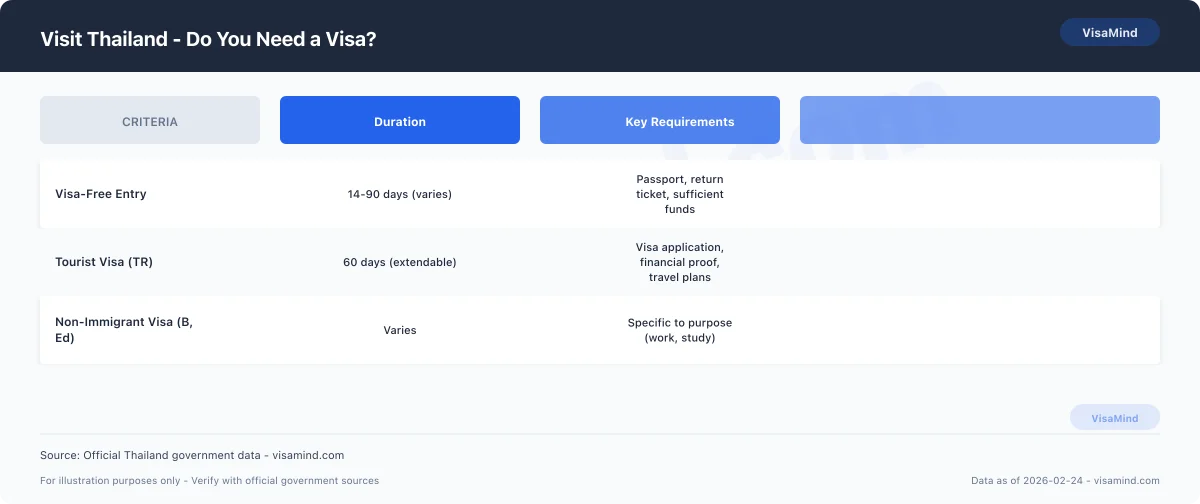
When planning a visit to Thailand, understanding the available visitor visa types is crucial to ensure you select the one that best suits your travel needs. The Immigration Bureau of Thailand offers several types of visitor visas, each tailored for different purposes and durations of stay. Below is a comparison of the primary visitor visas available for travelers to Thailand.
| Visa Type | Eligibility | Cost | Duration of Stay | Key Features |
|---|---|---|---|---|
| Tourist Visa (TR) | For tourism purposes, citizens of eligible countries | Varies by country (check official website) | Up to 60 days, extendable for additional 30 days | Single-entry or multiple-entry options available |
| Special Tourist Visa (STV) | Long-term tourists, available from select countries | Varies, typically higher than TR | 90 days, extendable twice for 90 days each | Designed for long-stay tourists, subject to specific health insurance requirements |
| Visa Exemption | Short-term tourists from specific countries | No fee | Up to 30 days (15 days if entering overland) | Eligible for extension at local immigration office |
| Transit Visa | Travelers transiting through Thailand | Nominal fee, varies by country | Up to 30 days | Suitable for those passing through Thailand en route to another destination |
What Are the Key Differences?
Each visa type serves different travel needs and durations. The Tourist Visa (TR) is ideal for standard tourism activities and offers both single and multiple entry options, allowing flexibility for travelers planning to visit neighboring countries. In contrast, the Special Tourist Visa (STV) caters to long-term visitors and includes additional health and insurance requirements, making it a favored option for extended stays.
For those eligible, the Visa Exemption allows visitors to enter Thailand without prior visa arrangements, making it a convenient choice for short-term visits. However, travelers must ensure their stay does not exceed the specified period, though extensions are possible.
The Transit Visa is specifically for travelers who are passing through Thailand to reach another destination. It offers a brief stay, suitable for layovers or short stops.
How to Choose the Right Visa?
Selecting the right visa depends on your travel duration, purpose, and whether you plan to re-enter Thailand during your visit. For detailed guidance on how to apply, you can refer to the How To Apply guide. Additionally, if you're considering a longer stay or multiple entries, exploring Tourist Vs Special Tourist can provide further insights into which option is more suitable for your travel plans.
Always check the latest requirements and fees on the official website as these can vary by nationality and are subject to change.
What You Need to Apply
#What Documents Do You Need to Apply?
When planning your visit to Thailand, ensuring you have the correct documentation is a key step. Here’s a breakdown of what you typically need to gather to apply for a Tourist Visa:
Personal Identification
- Passport: Must be valid for at least six months beyond your planned entry date into Thailand.
- Photographs: Two recent passport-sized photos (4x6 cm) with a plain background, taken within the last six months.
Financial Proof
- Bank Statement: A recent bank statement showing a balance that meets the financial requirements (amount may vary, verify on the official website).
- Proof of Income: Additional documents such as pay slips or a letter from your employer may be requested to demonstrate financial stability.
For more detailed information on financial requirements, you may refer to our Financial Requirements guide.
Travel Plans
- Flight Itinerary: A copy of your flight booking or travel itinerary showing your entry and exit dates.
- Accommodation Details: Proof of accommodation, such as hotel bookings or an invitation letter from a host in Thailand.
Country-Specific Items
Depending on your nationality, additional documents may be required:
- Visa Invitation Letter: Some nationalities might need a letter of invitation from a resident or organization in Thailand.
- Health Insurance: Certain countries may require proof of health insurance covering COVID-19 and other potential medical expenses.
Where to Find More Information?
For a comprehensive checklist of documents, you can visit our Documents Checklist and get all the necessary details to ensure your application is complete.
Are There Any Special Requirements?
It’s important to note that requirements can vary based on the type of visa you are applying for. For instance, if your visit is related to Work or Study, you might need to provide additional documentation such as work permits or enrollment letters.
For more information on how to apply for a visa, you can check our How To Apply guide, which provides step-by-step instructions tailored to your needs.
By gathering all the necessary documents and understanding the specific requirements for your situation, you'll be well-prepared to apply for your visa and enjoy your time in Thailand.
The Application Process
#How to Apply for a Tourist Visa to Visit Thailand
If you're planning to visit Thailand, understanding the application process for a Tourist Visa is essential. Here, we'll guide you through the available options, whether applying online or at an embassy or VFS center.
Online Application Process
-
Visit the Official Immigration Bureau Website: Start by accessing the Immigration Bureau of Thailand's official website to check the latest updates and requirements for the Tourist Visa.
-
Create an Account: Register for an account if the online application system requires it. This will help you track your application status.
-
Complete the Application Form: Fill in your personal details, travel information, and any other required data. Ensure all information is accurate to avoid delays.
-
Upload Required Documents: Gather and upload necessary documents such as your passport, recent photographs, and proof of travel plans. For a comprehensive list, refer to the Documents Checklist.
-
Pay the Visa Fee: Pay the applicable visa fee through the online payment system. The fee may vary, so verify the current amount on the official website.
-
Track Your Application: Use the online system to monitor the status of your application. Processing times can vary, so check the Processing Times for more details.
Applying Through an Embassy or VFS Center
-
Find Your Nearest Embassy or VFS Center: Locate the Thai embassy or VFS center closest to you for submitting your application in person.
-
Schedule an Appointment: Some embassies or VFS centers may require you to schedule an appointment. Check their specific requirements beforehand.
-
Prepare Your Documents: Assemble all necessary documents, including your passport, application form, photos, and proof of travel. Use the Documents Checklist for guidance.
-
Submit Your Application: Visit the embassy or VFS center at your appointed time to lodge your application.
-
Pay the Visa Fee: Pay the required fee at the embassy or VFS center. The amount can differ depending on your location, so confirm the latest fee on their website.
-
Collect Your Visa: Once processing is complete, you will be notified to collect your visa. Ensure you bring the necessary identification when picking up your visa.
What Happens Next?
After receiving your visa, you can plan your travel to Thailand. If you need to extend your stay, consider reviewing the Visa Extension Guide for further instructions.
By following these steps, you can effectively navigate the application process for visiting Thailand. Always verify the latest information on the official Immigration Bureau website to ensure compliance with current requirements.
At the Border
#Arrival at the Border
Upon arriving in Thailand, you will pass through the immigration checkpoint, managed by the Immigration Bureau of Thailand. Be prepared for various security and verification procedures. One of the standard practices is fingerprinting, which helps verify your identity and maintain security.
What to Expect During Immigration Processing
Once you reach the immigration desk, have your passport and relevant visa documents ready. The immigration officer may ask you a few questions to confirm the purpose of your visit, such as whether you are here for tourism, work, or study. Ensure your responses align with your visa type, such as a Tourist Visa (TR) if you're visiting for leisure.
Here's a brief list of what to expect:
- Fingerprinting: Generally required for all visitors.
- Interview: Short and straightforward; be prepared to discuss your travel intentions.
- Document Verification: Present your passport and visa documents as required.
Using E-Gates
For a quicker process, certain travelers may be able to use the automated e-gates. These gates are typically available for citizens of specific countries and frequent visitors. If you qualify, you can skip the manual inspection and proceed through the e-gates, which use biometric verification.
Tips for a Smooth Experience
To ensure a seamless experience at the border, consider the following:
- Documents: Keep your passport and visa documents easily accessible.
- Clarity: Be clear and concise when answering the officer's questions.
- Patience: Lines can be long; remain patient and courteous.
Remember, adherence to the guidelines set by the Immigration Bureau is crucial for a smooth entry into Thailand. For further details on specific visa requirements or related processes, you might find it helpful to explore resources like the Interview Prep guide or the Visa Refusal Reasons to ensure you're fully prepared.
Extending Your Stay
#Can You Extend Your Stay in Thailand?
If you're enjoying your visit to Thailand and wish to extend your stay, you may be able to do so by applying for a visa extension. The Immigration Bureau of Thailand offers options for tourists and other visitors to extend their permitted stay, depending on the type of visa you hold. For example, if you entered Thailand on a Tourist Visa (TR), you might be eligible to extend your stay for an additional period, typically up to 30 days. It's important to start the extension process before your current permission to stay expires to avoid any overstay penalties.
How to Apply for a Visa Extension
To apply for a visa extension, you will need to visit an Immigration Office in Thailand. It's advisable to gather all necessary documents beforehand to ensure a smooth experience. Typically, you will need:
- Your passport with the current visa stamp
- A completed application form
- A passport-sized photo
- The extension fee, which can vary by visa type
For detailed steps on applying for an extension, refer to the Visa Extension Guide.
Required Documents for Extension
Having the right documents is crucial when applying for an extension. While the specific requirements can vary depending on your visa type, generally, you should prepare:
- A valid passport with sufficient validity beyond your planned extended stay
- Proof of onward travel, such as a flight ticket
- Evidence of sufficient funds to support your stay
It's recommended to consult the Documents Checklist for a comprehensive list tailored to your specific visa type.
Considerations for Different Visa Types
Different visas have different rules regarding extensions. For instance, those holding a Non Immigrant B Visa or Non Immigrant Ed Visa may have different extension possibilities compared to a tourist visa holder. It's essential to understand the specific rules that apply to your visa category. For more information on visa comparisons, you might find the guide on Tourist Vs Special Tourist useful.
Before proceeding, always verify the latest requirements and fees directly from the official Immigration Bureau of Thailand website to ensure you have the most accurate and current information.
Common Mistakes Visitors Make
#Overstaying Your Visa
- Understanding Visa Duration: It's crucial to be aware of the duration of your visa. Overstaying, even by a single day, can lead to fines and affect future entries into Thailand. Always check your entry stamp for the permitted length of stay.
- Consequences of Overstaying: Overstaying can result in fines of approximately 500 THB per day (as of 2023). In extreme cases, it might lead to deportation or a ban on future travel to Thailand. Always verify the latest fees and penalties on the official Immigration Bureau website.
Working on a Tourist Visa
- Tourist Visa Limitations: The Tourist Visa (TR) is strictly for leisure and tourism activities. Engaging in any form of work, including volunteering, without the appropriate visa, is illegal and can lead to severe repercussions.
- Appropriate Visas for Work: If you intend to work in Thailand, consider applying for a Non Immigrant B Visa or a Smart Visa, depending on your employment situation. These visas are designed for professional purposes and must be obtained prior to commencing work.
Insufficient Funds
- Financial Requirements: Visitors are often required to demonstrate they have sufficient funds to support themselves during their stay. This can vary, but it's generally advised to have a visible balance of at least 20,000 THB per person.
- Proof of Funds: Immigration officers might ask for proof of funds upon arrival. This could be in the form of bank statements or cash. Refer to the Financial Requirements Guide for more details on acceptable proof.
Familiarize yourself with these common mistakes to ensure a smooth and trouble-free visit to Thailand. For more detailed guidance, consult the Visa Extension Guide or Visa Refusal Reasons to understand the intricacies of Thai immigration policies.
Real Scenarios
#What Are Common Scenarios for Visiting Thailand?
When planning a trip to Thailand, understanding the dynamics of your visit can help streamline your experience. Whether you're traveling for leisure, business, or to explore educational opportunities, each scenario involves different considerations.
Visiting for Tourism
For many, Thailand is a dream destination with its stunning beaches, vibrant culture, and rich history. If you're looking to explore as a tourist, you might consider applying for a Tourist Visa (TR). This visa typically allows you to stay for up to 60 days, with the possibility of extending your stay through a Visa Extension Guide. It's essential to confirm the latest requirements and guidelines from the Immigration Bureau of Thailand to ensure a smooth application process.
Business or Work Visits
If your visit to Thailand includes business meetings or potential employment discussions, different visa options might be more appropriate. The Non Immigrant B Visa is designed for business purposes and is necessary if you plan to work during your stay. For professionals considering longer stays, the Smart Visa offers a flexible option, particularly for those in targeted industries such as technology and innovation.
Educational Pursuits
Thailand is home to several reputable educational institutions, attracting students worldwide. If you're planning to study, the Non Immigrant Ed Visa might be the right choice. This visa caters to those enrolled in recognized educational programs. Be sure to review the Documents Checklist to prepare all necessary paperwork for your educational journey.
Long Stays and Retirement
For those considering a longer stay or retirement in the Land of Smiles, the Non Immigrant Oa Visa is a viable option. This visa is tailored for retirees or those who wish to stay in Thailand for extended periods without working. Additionally, the Retirement Guide offers insights into necessary financial requirements and other considerations.
Conclusion
Each purpose of visit to Thailand comes with distinct visa requirements and opportunities. Whether you're here for a short holiday, a business venture, or an educational pursuit, understanding these scenarios will help you make informed decisions about your journey. Always verify the most current visa requirements and procedures on the official website of the Immigration Bureau of Thailand.
FAQs
How long does it take to get a Thailand visa?
Can I switch from a Tourist Visa to a Work Visa in Thailand?
Can I extend my stay in Thailand with a Tourist Visa?
What happens if I overstay my visa in Thailand?
Can I travel to Thailand with my family on a Tourist Visa?
What are common mistakes visitors make when applying for a Thailand visa?
How can I combine tourism and work goals in Thailand?
VisaMind provides informational guidance only and is not a government agency. This is not legal advice. Requirements can change and eligibility depends on your specific facts. If your case is complex or high-stakes, consult a licensed immigration attorney.
Next steps
Requirements vary by nationality, purpose, timeline, and case details. VisaMind turns uncertainty into a sequenced checklist with official source citations.
Find my visa