Current Processing Times
#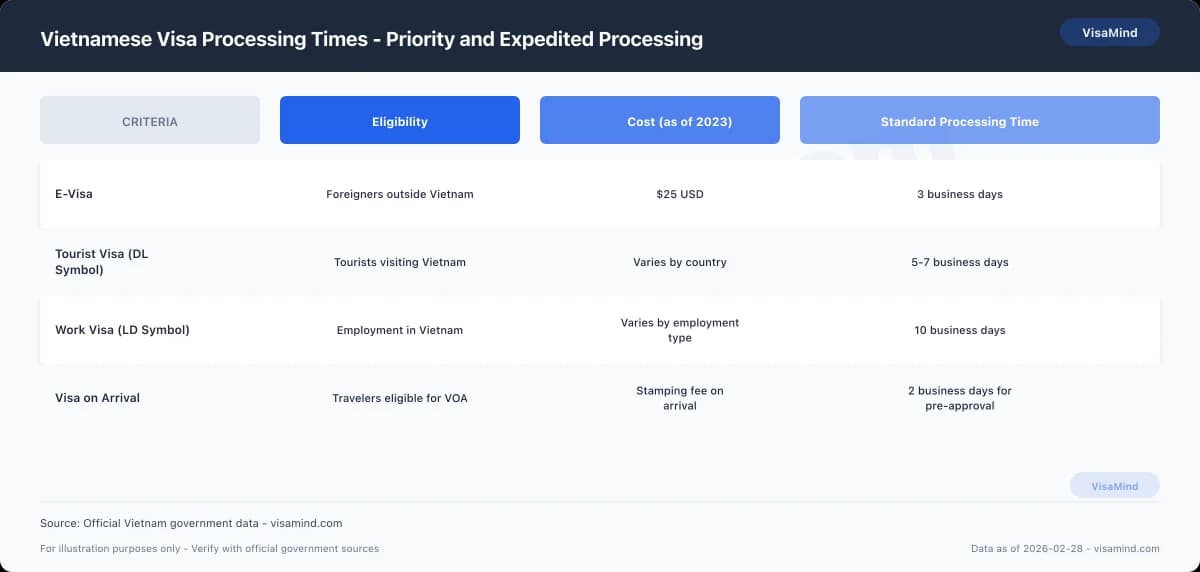
| Visa Type | Processing Time | Eligibility | Cost |
|---|---|---|---|
| E-Visa | 3 working days | Foreigners outside Vietnam | 25 USD |
| Tourist Visa (DL Symbol) | 5-7 working days | Tourists | Varies by nationality |
| Work Visa (LD Symbol) | 10-15 working days | Foreign employees | Varies by contract |
| Student Visa (DH Symbol) | 10-15 working days | Students enrolled in Vietnam | Varies by institution |
| Visa on Arrival | Upon arrival | Travelers arriving by air | 25-50 USD depending on single or multiple entry |
Understanding Current Processing Times
When planning your visit to Vietnam, understanding the processing times for different visa types is crucial. For most travelers and residents, the E-Visa is the most straightforward option and can be processed in just 3 working days. It’s designed for foreigners applying from outside Vietnam who meet the eligibility criteria.
The Tourist Visa (DL Symbol) typically takes 5-7 working days to process. This visa is suitable for those planning short-term stays for leisure or tourism. Processing times can vary slightly based on nationality, so it's advisable to verify the exact timeframe.
Longer Processing Times for Work and Study Visas
If you are coming to Vietnam for work or study, expect longer processing times. The Work Visa (LD Symbol) and Student Visa (DH Symbol) both require 10-15 working days for processing. These visas involve more detailed eligibility checks and documentation related to employment contracts or educational enrollment.
Important: Ensure all documentation is correct and complete before submitting your application. Missing or incorrect information can lead to delays or rejection.
Visa on Arrival: Quick but Conditional
For those arriving by air, the Visa on Arrival offers a convenient option, though it does require prior online approval. The visa is issued immediately upon arrival at the airport, but the approval process before departure is essential. Fees range from 25-50 USD, depending on whether you opt for a single or multiple-entry visa.
For further details on each visa type, you can explore our guides on E Visa, Tourist DL, and Work LD. If you are considering studying in Vietnam, the Student DH guide may provide additional insights.
Tip: Consider applying for your visa well in advance to account for any potential delays, especially during peak tourist seasons.
Why Processing Times Vary
#Vietnamese visa processing times can vary significantly based on a range of factors. Understanding these can help you anticipate potential delays and plan your application timeline accordingly.
Type of Visa
- E-visa: Generally processed within 3 working days, this digital option is often quicker as it involves an online application and fewer document requirements.
- Tourist Visa (DL Symbol): Processing times can extend to 7 working days, depending on the volume of applications and the applicant's nationality.
- Work Visa (LD Symbol): Requires additional documentation and approval from relevant Vietnamese authorities, often leading to longer processing times, sometimes up to 10 working days.
- Student Visa (DH Symbol): Similar to work visas, these can take longer due to the need for educational institution verification and additional paperwork.
Document Completeness and Accuracy
- Document Submission: Incomplete or incorrect documentation is a common reason for delays. Ensure all required documents, such as the passport data page and a properly formatted photograph, are submitted correctly.
- File Sizes: Pay attention to file size restrictions. The passport image must be smaller than 200KB and the portrait photo smaller than 50KB. Exceeding these limits can result in processing delays or rejections.
- Information Accuracy: Any discrepancies in personal details or passport information can lead to rejection or prolonged processing times.
Tip: Double-check all documents and details before submission to avoid unnecessary delays.
Nationality and Security Checks
- Nationality: Applicants from certain countries may experience longer processing times due to heightened security checks by the Immigration Department of Vietnam.
- Security Protocols: Background checks are part of the process, which can vary in time depending on the applicant's nationality and the type of visa being applied for.
Seasonal Variations and Application Volume
- Peak Seasons: Processing times can extend during peak tourism seasons or around major Vietnamese holidays due to increased application volumes.
- Application Volume: The Immigration Department may experience backlogs during high-demand periods, affecting processing times for visas such as the Visa on Arrival.
Important: Plan your application around known peak periods and holidays to avoid delays.
External Factors
- Governmental Changes: Changes in immigration policies or procedures by the Immigration Department can impact processing times, requiring applicants to adapt to new requirements.
- Technical Issues: Online application systems might face downtime or technical glitches, leading to delays in processing E-visas or checking application status.
By understanding these factors, you can better anticipate potential delays and ensure a more seamless visa application experience. For detailed guidance on preparing your application documents, visit our Documents Checklist.
Checking Your Application Status
#When applying for a Vietnamese E-visa, staying informed about your application status is crucial. The Immigration Department of Vietnam provides a straightforward way to track your application progress online.
How Can You Check Your E-visa Application Status?
Once you have submitted your application for a Vietnamese E-visa, you can easily check its status through the official online portal. Here’s how:
- Access the E-visa Search Menu: Visit the official website of the Immigration Department of Vietnam.
- Enter Required Information: You will need to input your registration code, registration email, and date of birth.
- Review Your Application Status: Once you have entered the necessary information, you can see the current status of your E-visa application.
Tip: Keep your registration code and the email you used during the application process handy. These details are essential for checking your application status.
What Information Do You Need to Track Your Application?
To check the status of your E-visa application, ensure you have the following information ready:
- Registration Code: Provided upon successful submission of your application.
- Registration Email: The email address you used during your application.
- Date of Birth: Used to verify your identity in the system.
Common Issues and Solutions
While the status-checking process is generally straightforward, there are a few common issues that applicants might encounter:
- Incorrect Information: Double-check your registration code, email, and date of birth for accuracy. Any typos can prevent access to your application status.
- Website Downtime: Occasionally, the portal may be temporarily unavailable due to maintenance. In such cases, try again after a short period.
Important: Missing or incorrect information during the application process can lead to rejection. Ensure all details are accurate before submission.
For more details on E-Visa or Visa On Arrival, refer to the specific visa guides available. These resources can provide additional insights into the application process and requirements specific to Vietnam.
Staying Legal During Processing
#Navigating the visa processing period can be a tense time for applicants, but understanding your rights and responsibilities during this period is crucial for maintaining legal status in Vietnam. Here’s what you need to know about staying legal while your visa application is processed.
Bridging Visas and Implied Status
Vietnam does not formally offer a "bridging visa" system like some other countries. However, if you apply for a visa extension or a new visa while in Vietnam, you may remain in the country while your application is processed, provided you applied before your current visa’s expiration. This implied status is essential for avoiding overstaying penalties.
Important: Always apply for a new visa or extension before your current visa expires to maintain your legal status in Vietnam.
Work Rights While Pending
If you are in Vietnam on a Work Visa (LD Symbol) and have applied for an extension or a change to another visa type, you can typically continue working until a decision is made. However, it's essential to ensure that your employment activities comply with the conditions of your existing visa.
For those awaiting the outcome of a Work Visa (LD Symbol) application, continuing employment is generally permissible under your implied status, as long as you fulfill the conditions of your existing visa.
Key Considerations for Different Visa Types
Here’s a quick comparison of how processing times might affect different visa types and your legal standing:
| Visa Type | Can Stay During Processing? | Can Work While Pending? |
|---|---|---|
| E-Visa | Yes | No |
| Tourist Visa (DL) | Yes | No |
| Work Visa (LD) | Yes | Yes |
| Student Visa (DH) | Yes | No |
Tip: For detailed guidance on maintaining status, refer to the Visa Extension Guide.
Maintaining Legal Status
To ensure you remain compliant during visa processing:
- Apply early: Begin your visa application or extension process well before your current visa expires.
- Stay informed: Regularly check the status of your application using the registration code, email, and date of birth.
- Contact authorities if needed: If your application is significantly delayed, consult the Immigration Department of Vietnam for guidance.
By following these steps, you can maintain your legal status in Vietnam while awaiting visa processing decisions.
Escalating a Delayed Application
#If your Vietnamese visa application is delayed beyond the expected processing time, it's important to know your options for escalating the issue. Here are the steps you can take to seek resolution through official channels.
1. Contact the Immigration Department of Vietnam
Before pursuing formal escalation, reach out directly to the Immigration Department of Vietnam. You can inquire about the status of your application and express your concerns regarding the delay. Provide your application details, such as your registration code and email, for precise tracking.
2. Initiate a Congressional Inquiry
If initial contacts do not resolve the issue, consider initiating a congressional inquiry. This involves reaching out to a member of the National Assembly of Vietnam who can formally inquire into your case with the Immigration Department. It's advisable to prepare all relevant documentation and details about your situation to assist in this process.
3. Seek Assistance from the Ombudsman
The Ombudsman in Vietnam is another resource to consider if your visa application remains delayed. The Ombudsman can review the handling of your application and ensure that appropriate procedures are being followed. This step might require you to prepare a detailed account of your application process and any communication with the Immigration Department.
Tip: Keep detailed records of all your communications with the Immigration Department and any other inquiries. This documentation will be crucial if you need to escalate your case to higher authorities.
For more guidance on visa processes and troubleshooting issues, you can explore our guides on How To Apply and the Documents Checklist. These resources can be invaluable in ensuring your application is complete and accurately submitted.
Remember, while delays can be frustrating, following the proper channels and maintaining thorough documentation can significantly aid in resolving issues with your Vietnamese visa application.