Is Extension Possible?
#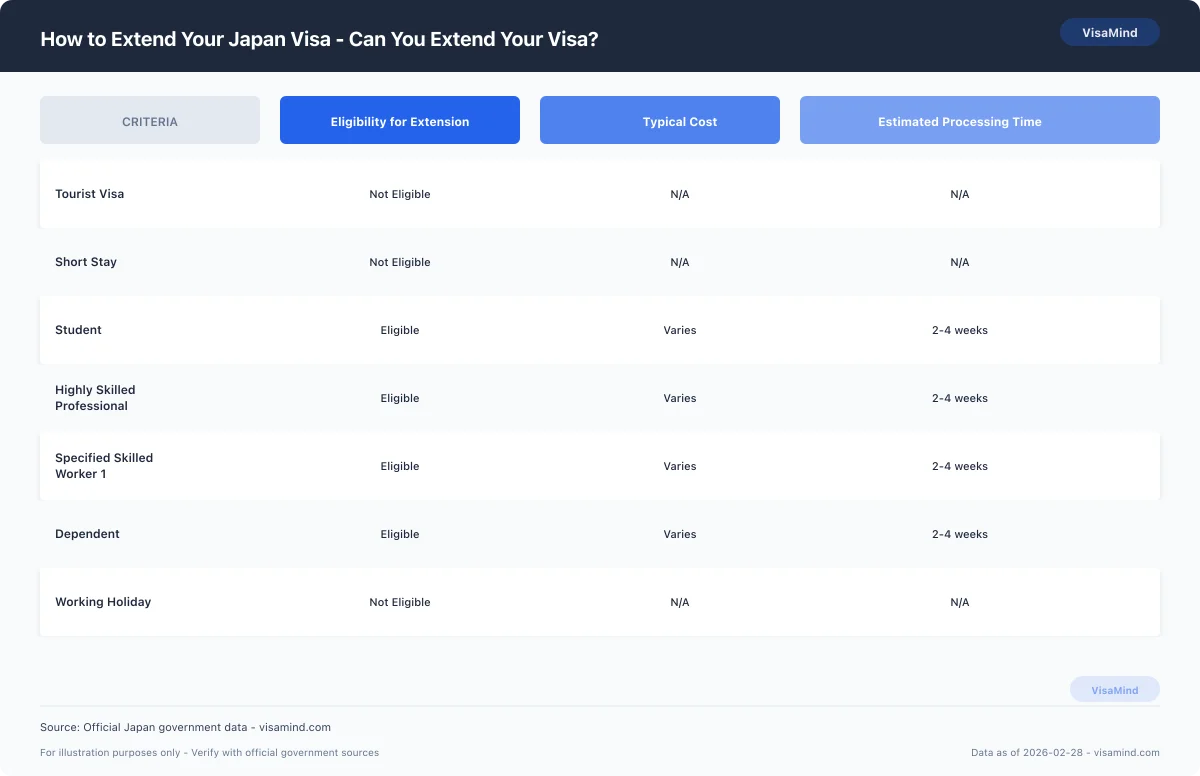
In Japan, many visa types can be extended, allowing foreign residents to continue their stay. The Immigration Services Agency of Japan manages these extensions, ensuring compliance with the Immigration Control and Refugee Recognition Act.
Visa Types Eligible for Extension
Several visa categories in Japan are eligible for extension. These include visas for long-term residents, skilled workers, and students, among others. Extensions are typically granted based on the purpose of stay and compliance with visa conditions.
| Visa Type | Eligible for Extension |
|---|---|
| Specified Skilled Worker 1 | Yes |
| Student Visa | Yes |
| Long-term Resident | Yes |
| Permanent Residence | N/A (Permanent) |
Tip: Always check the Specified Skilled Worker (i) and Student Visa categories for specific extension requirements.
Non-Extendable Visa Categories
Not all visa types in Japan can be extended. Short-term stay visas, such as those for tourism or business visits, generally cannot be extended beyond the initial 90 days.
| Visa Type | Extendable |
|---|---|
| Short-Term Stay | No |
| Working Holiday | Typically No |
Warning: Attempting to extend a short-term stay visa may result in complications with future entries into Japan. Always verify eligibility through the official Short Stay visa page.
Extension Costs and Timeline
#Extending your visa in Japan involves a processing fee of ¥4,000, payable to the Immigration Services Agency of Japan. This fee is standard regardless of the visa type you hold. Timelines for processing visa extension applications can vary, with standard processing taking up to two weeks. However, expedited options are available under certain conditions.
Extension Application Fees in Yen
The cost for extending a visa in Japan is ¥4,000. This fee is required for each application and must be paid when you submit your request at the Immigration Services Agency of Japan.
Important: Ensure you have the exact amount ready when visiting the agency, as change might not be available.
Standard Processing Times
The standard processing time for a visa extension in Japan is approximately two weeks. This timeframe can vary depending on the volume of applications and the specific circumstances of your request.
| Visa Type | Processing Time |
|---|---|
| Specified Skilled Worker | Up to 2 weeks |
| Student | Up to 2 weeks |
| Permanent Residence | Varies |
Tip: Apply well in advance of your visa expiry date to avoid any lapse in your legal status in Japan.
Options for Expedited
Processing is not commonly available for visa extensions. However, in exceptional circumstances, such as urgent work obligations, you may request faster processing. This is assessed on a case-by-case basis by the Immigration Services Agency. - Submit a written request for expedited processing. - Provide documentation supporting the urgency of your situation.
Warning: Expedited requests are not guaranteed, and you should still prepare for the standard processing time.
Consequences of Overstaying
#Overstaying your visa in Japan can lead to serious consequences, including fines and future travel restrictions. According to the Immigration Services Agency of Japan (ISA), non-compliance with visa regulations can significantly impact your ability to stay or return to Japan. Understanding the penalties for overstaying is required to maintain your legal status and avoid long-term repercussions. Here's what you need to know about the consequences of overstaying your visa in Japan.
Fines Imposed for Overstaying
If you overstay your visa in Japan, you may be subject to a fine. The amount can vary depending on the length of your overstay and the specific circumstances involved. - Short overstay (less than 90 days): Generally incurs a lighter penalty. - Long overstay (more than 90 days): May lead to a higher fine and more severe consequences.
Warning: Fines for overstaying can accumulate quickly, and failing to pay them can lead to additional legal issues.
Impact on Future Visa Applications
Overstaying your visa can severely affect your future visa applications. Japan maintains a strict immigration policy, and any record of overstay is taken seriously. - You may face increased scrutiny on future visa applications. - Previous overstays can lead to a higher likelihood of visa denial.
Important: If you intend to apply for a Permanent Residence or Long Term Resident visa, a history of overstaying can significantly hinder your chances.
Immigration Ban Duration
An overstay in Japan can result in an immigration ban, preventing you from re-entering the country for a certain period. The duration of this ban can vary based on the length and circumstances of the overstay.
| Overstay Duration | Ban Duration |
|---|---|
| Less than 90 days | 1 year |
| 90 to 180 days | 3 years |
| More than 180 days | 5 years or more |
Tip: Consult with the Immigration Services Agency of Japan for guidance on your specific situation if you have overstayed your visa.
Extension Eligibility by Visa Type
#In Japan, extending a visa involves meeting specific criteria, which vary depending on your visa type. Understanding these criteria is essential for successfully lodging your application with the Immigration Services Agency of Japan (ISA).
Tourist Visa Extension Criteria
Tourist visas are generally issued for short stays of up to 90 days and are not designed for long-term residence. Extensions are rarely granted and typically require exceptional reasons. - Medical emergencies requiring prolonged stay
- Unforeseen transportation issues
- Natural disasters affecting travel plans
Important: You should apply for an extension well before your current visa expires to avoid overstaying penalties.
Student Visa Extension Requirements
Students in Japan must show continued enrollment and satisfactory academic progress to extend their visa. Financial support proof is also necessary. - Enrollment certificate from your institution
- Transcript showing satisfactory progress
- Proof of financial resources for living expenses
Tip: Check with your institution's international office for additional support in processing your extension.
| Requirement | Details |
|---|---|
| Enrollment | Current and continued enrollment |
| Academic Progress | Satisfactory grades |
| Financial Proof | Bank statements or scholarship letters |
Work Visa Extension Guidelines
Work visa extensions require proof of continued employment and a need for your skills in Japan. A Certificate of Eligibility might be needed for significant role changes. - Employment contract or letter from employer
- Certificate of Eligibility for role changes
- Proof of tax payments in Japan
Important: Ensure your employer is aware of the timeline for visa extension applications to provide necessary documents promptly.
Family Visa Extension Possibilities
Family visa extensions are possible for those with family ties to Japanese nationals or residents. Documentation proving the relationship and financial stability is key. - Marriage or birth certificate
- Proof of residence with the family member
- Financial documentation showing ability to support the family
Tip: Consult with the Immigration Services Agency of Japan to ensure all documents are up to date and meet their requirements.
How to Apply for an Extension
#In 2026, over 3 million foreign residents were in Japan, highlighting the necessity of understanding visa procedures for extended stays. If you plan to stay longer in Japan beyond your initial visa period, you must extension process through the Immigration Services Agency of Japan (ISA).
Application Submission Locations in Japan
Visa extension applications must be submitted to the Regional Immigration Services Bureau in Japan. These bureaus are located in major cities such as Tokyo, Osaka, and Nagoya, making them accessible to many residents.
-
Identify the nearest Regional Immigration Services Bureau based on your residence.
-
Gather all necessary documents before your visit.
-
Visit the bureau during office hours to submit your application.
Warning: Ensure that you apply for an extension well before your current visa expires to avoid overstaying, which can lead to penalties.
Online vs In-Person Application Methods Currently,
Japan does not offer an online application system for visa extensions. All applications must be submitted in person at a designated bureau. This in-person requirement ensures that all documentation is reviewed promptly and any queries can be addressed immediately by the officials.
Important: Make sure to bring all original documents as well as copies, as they might be required for verification during your in-person application.
Essential Forms for Extension
To extend your stay in Japan, specific forms and documents are required. These include your current Residence Card, passport, and any relevant documents related to your stay, such as a Certificate of Eligibility for long-term stays. - Application for Extension of Period of Stay
- Current Residence Card
- Passport
- Certificate of Eligibility (for applicable long-term stays)
Tip: Visit the Immigration Services Agency of Japan's website to verify the latest requirements and download any necessary forms.
Documents Needed
#To extend your visa in Japan, you need to prepare specific documentation as required by the Immigration Services Agency of Japan (ISA). Having the right documents is necessary to ensure your application is processed without delay. Understanding the necessary paperwork not only aids in a successful application but also helps avoid common pitfalls like incomplete submissions. Below, we detail the essential documents needed for a visa extension in Japan.
Proof of Current Visa Status - Your current Residence Card (在留カード)
- Passport with your current visa stamp
Important: Ensure your Residence Card is valid and not expired before applying for an extension.
Financial Stability Documentation
Demonstrating financial stability is an important part of the visa extension process. This shows that you can support yourself during your stay in Japan. - Bank statements showing sufficient funds
- Proof of income, such as salary slips or employment contract
- Tax payment receipts, if applicable
Tip: If you are a student, a scholarship certificate or financial support letter from a sponsor can be used as proof.
Supporting Documents for Visa Extension
Depending on your visa type, additional supporting documents may be required. These documents help justify the need for your extended stay. - Certificate of Eligibility from the Immigration Services Agency of Japan for long-term stays
- Letter from your employer or school confirming your ongoing status
- Any additional documents specified for your particular visa category
Warning: Not obtaining a Certificate of Eligibility for long-term stays can result in your application being denied.
Important: Check the Specified Skilled Worker (i) and Student Visa pages for specific document requirements related to these visa types.
Other Options If You Can't Extend
#Japan's Immigration Services Agency allows for changes in visa status under certain circumstances if extending your current visa is not possible. Knowing your options can help maintain your legal status in Japan. Whether you're considering a status change, re-entry, or switching visa types, it's important to understand the procedures set by the Immigration Services Agency of Japan.
Changing Visa Status within Japan
If extending your stay is not feasible, you might consider changing your visa status. This is particularly useful if your purpose for staying in Japan has changed, such as switching from a student visa to a work visa. - Gather all the necessary documents, including a valid Certificate of Eligibility. - Visit your nearest Immigration Services Agency office in Japan. - Lodge your application before your current visa expires.
Important: Ensure that you apply for a status change before your current visa expires to avoid overstaying, which can have serious consequences.
Re-entry Options after Departure
If leaving Japan temporarily is an option, a re-entry permit ensures you can return without applying for a new visa. This is essential for maintaining your current status if you need to leave Japan for an extended period.
-
Apply for a re-entry permit at an Immigration Services Agency office.
-
Ensure your residence card is valid upon exit.
-
Return to Japan within the validity of the re-entry permit.
Tip: A special re-entry permit allows you to leave and return within one year, suitable for short-term departures.
Switching to Different Visa Type
Switching to a different visa type is an alternative if your circumstances have changed. For instance, you might shift from a tourist visa to a Specified Skilled Worker (i) visa if you find employment.
| Visa Type | Purpose | Documents Needed |
|---|---|---|
| Student Visa | Study at a Japanese institution | Acceptance letter, financial proof |
| Long-term Resident | Extended stay with family ties | Proof of family relationship |
| Specified Skilled Worker (i) | Work in designated sectors | Job offer, Certificate of Eligibility |
Warning: Switching visa types requires a new Certificate of Eligibility, which can take time to process.